
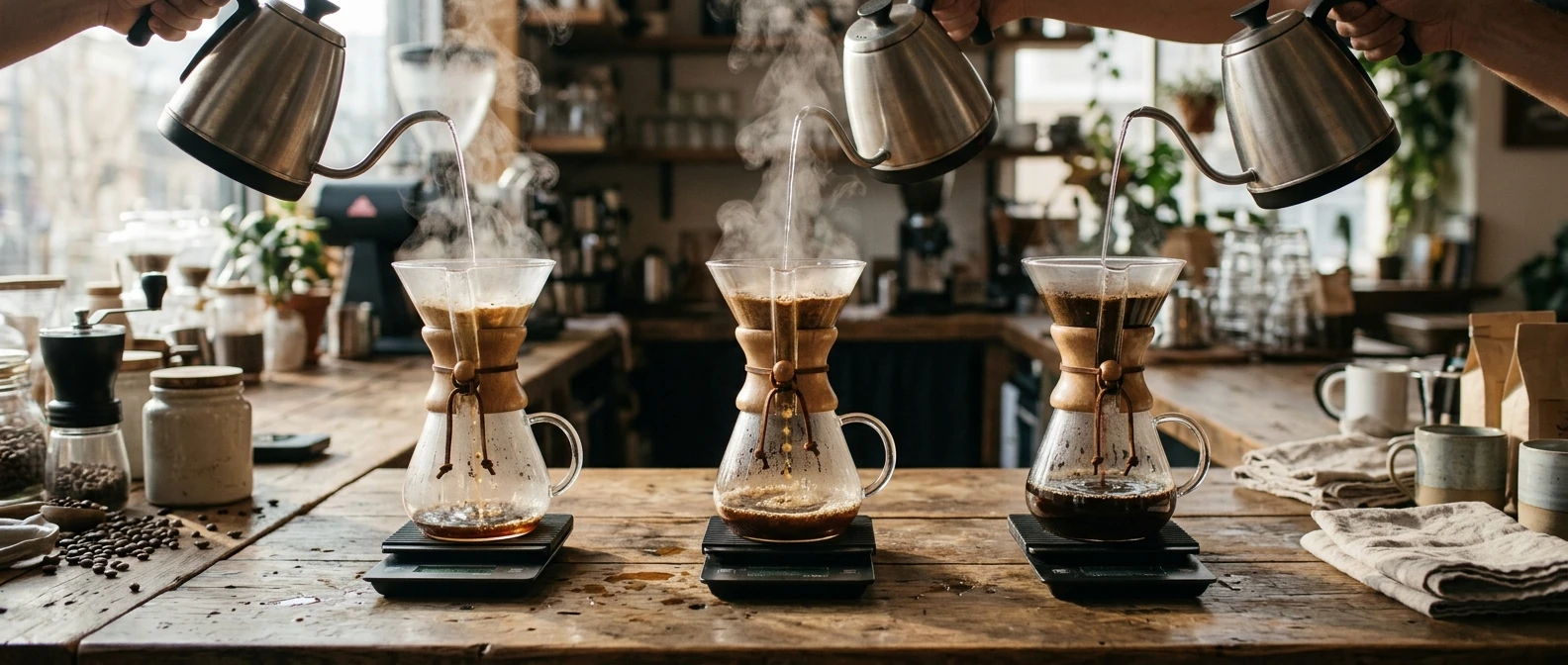
Roast level changes more than flavor. It changes how fast coffee grounds release their flavor into hot water, which means the same V60 recipe that makes a light roast taste bright and balanced can make a dark roast taste flat, and the same recipe dialed in for a dark roast will almost certainly make a light roast taste sour. If you have been using one grind size, one water temperature, and one ratio no matter what bag is on the counter, that mismatch is probably the reason your cups vary so much from one bag to the next.
This isn’t a tasting guide. It’s a brewing guide: what to actually turn when the roast on the bag changes, and why.
What a Roast Profile Actually Changes in the Cup
Roasting breaks down the sugars, acids, and cell structure inside a coffee bean. The longer and hotter the roast, the more that structure breaks down. A light roast keeps more of the bean’s original density and more of its acidity. A dark roast has a more porous, brittle structure and has already converted much of that acidity into other compounds, including some bitter ones.
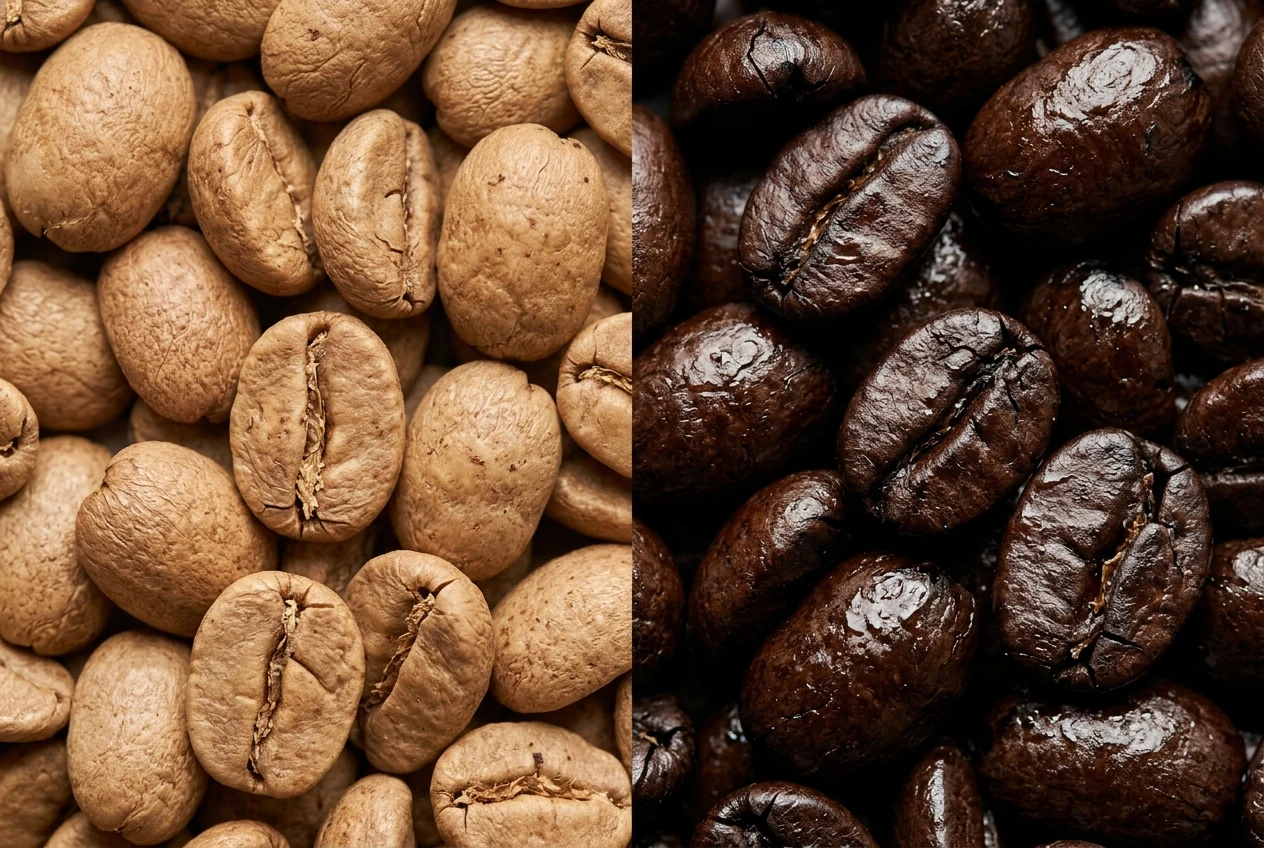
That structural difference is why extraction behaves differently at each roast level. Dense, light-roasted beans resist water. Hot water has to work harder and longer to pull sugars and flavor out of them. Porous, dark-roasted beans give up their flavor fast, sometimes too fast, which is why dark roast pour overs can turn bitter or flat if you treat them the same way you’d treat a light roast.
Grind size, water temperature, and ratio are the three levers you have to compensate for this. If you want a primer on how flavor itself shows up in the cup once extraction is right, this guide to tasting flavor notes is worth a look. But first, the brewing side.
Light Roasts: Why They Need Hotter Water and a Finer Grind
Light roasts are the most common source of sour pour over coffee, and it’s almost always an extraction problem rather than a bean problem. Because light roasts are dense and less broken down by heat, they need more energy and more contact time to extract fully. Under-extract a light roast and you get sharp, sour, sometimes salty notes instead of the fruit or floral notes the roaster intended.

To compensate, push water temperature toward the top of the usable range, generally 200 to 205°F. Grind slightly finer than you would for a medium roast, which increases the surface area of the coffee and gives the water more to work with in the same amount of time. You may also want to extend your brew time slightly, either by grinding a touch finer or by slowing your pour.
If a light roast still tastes sour after you’ve made these adjustments, the cause and the fix are worth reading in detail in this breakdown of sour pour over coffee, since grind and temperature aren’t the only variables that can leave a light roast underextracted.
Medium Roasts: The Forgiving Middle Ground
Medium roasts sit in the middle of the structural spectrum, and that’s exactly why most standard pour over recipes, including the default recipes for a V60, Chemex, or Kalita Wave, are built around them. A medium roast has given up enough density to extract predictably at moderate temperature and a standard grind, without the risk of flat, muted flavor that comes with pushing a dark roast too hard.
This is the roast level where a basic recipe, roughly 195 to 200°F water, a medium grind, and a 1:16 ratio, will usually get you a balanced cup with minimal fuss. If you’re still working out ratios in general, this explanation of pour over ratio is a good place to anchor your starting point before you start adjusting for roast level.
The forgiveness of a medium roast is also why it’s a useful baseline. Once you know what a well-extracted medium roast tastes like from your brewer, you have a reference point for judging whether a light or dark roast cup is under or overextracted.
Dark Roasts: Why Less Heat and a Coarser Grind Protect the Flavor
Dark roasts have the opposite problem from light roasts. Because the bean structure is already broken down by the extra time and heat in the roaster, dark roast coffee gives up its soluble compounds quickly, including the bitter compounds that form during roasting. Brew a dark roast the same way you’d brew a light roast, with hot water and a fine grind, and you’ll likely pull out too much too fast, leaving the cup bitter, ashy, or hollow instead of rich.
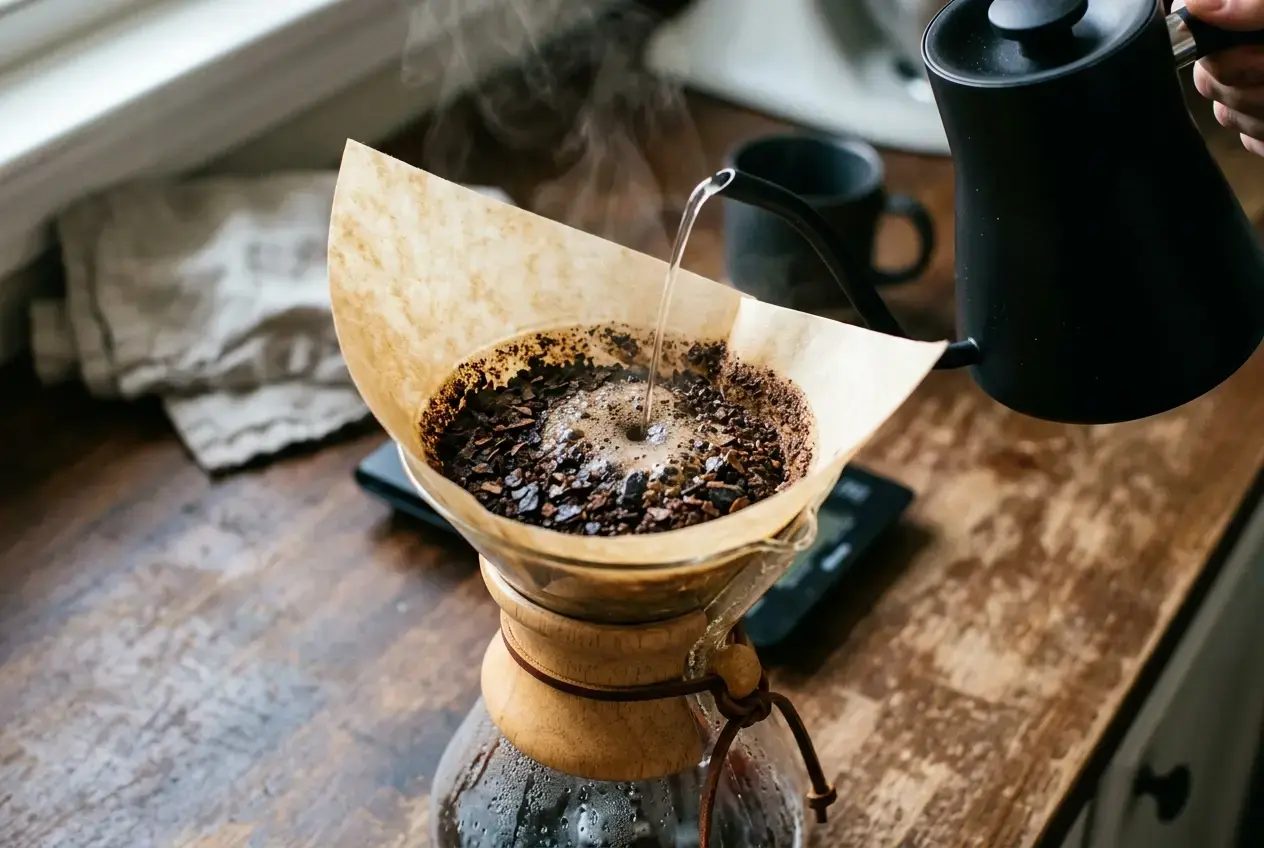
The fix runs in the opposite direction from light roasts. Lower your water temperature, somewhere in the 195 to 198°F range or even a bit cooler, and grind slightly coarser. This slows extraction down and gives you more control over how much flavor actually makes it into the cup before the bitter compounds dominate.
It’s worth noting that a flat, dull dark roast cup is not always a sign of overextraction. Sometimes it’s the opposite: beans ground too coarse or water too cool can leave a dark roast underextracted and tasting thin rather than rich, which is the kind of flatness this piece is referring to when it says dark roast recipes need protecting, not just toning down. If bitterness is the problem instead, this guide to bitter pour over coffee covers the adjustments beyond temperature and grind that can help.
Matching Grind Size and Water Temperature to Your Roast
Here’s how the two biggest levers move together as roast level shifts, assuming a standard 1:15 to 1:16 ratio as your starting point:
- Light roast: finer grind, 200 to 205°F water, slightly longer total brew time
- Medium roast: medium grind, 195 to 200°F water, standard brew time for your method
- Dark roast: slightly coarser grind, 195°F water or a touch below, watch for over-extraction even with less heat
These are starting points, not fixed rules. Your specific grinder, your brewer, and even your water will shift these numbers a little. If you’re not confident about where your grinder’s settings land relative to these ranges, this guide to grind size for pour over breaks it down more precisely by brew method.
Water temperature deserves its own attention too, since a few degrees matters more than most people expect, especially at the edges of the roast spectrum. This explanation of how water temperature affects extraction goes deeper into why that small range makes such a visible difference in the cup.
Reading the Cup: Signs Your Roast and Technique Are Mismatched
With a light roast, sourness, a thin or watery body, and a sharp, sometimes salty aftertaste all point to underextraction. That usually means your water wasn’t hot enough, your grind was too coarse, or your brew time was too short for how dense the beans still are.

With a dark roast, bitterness, an ashy or burnt aftertaste, and a harsh finish point to overextraction, meaning the water was too hot or the grind too fine for how quickly those beans give up their flavor. A flat or muted dark roast cup, on the other hand, usually means the opposite: the grind was too coarse or the water too cool, and you pulled out too little.
Medium roasts can drift either way, but because they’re more forgiving, the signs tend to be milder; a slightly sour or slightly flat cup rather than something sharply wrong. If you taste either sourness or bitterness and the usual grind and temperature fixes aren’t clearing it up, there may be another variable at play, like bloom time or pour technique, worth checking against this guide to pulse pouring if your pours tend to be inconsistent.
A Simple Roast-to-Recipe Cheat Sheet You Can Reuse
Keep this near your brewing station, or just remember the direction each lever moves:
- Light roast: water hotter, grind finer, brew time a bit longer
- Medium roast: standard recipe, your usual grind and temperature
- Dark roast: water cooler, grind coarser, watch closely for bitterness
Every time you open a new bag, check the roast level on the label before you default to your usual settings. That one habit will do more to fix inconsistent cups than almost any other change you can make to your technique.
Pick one bag of beans on your shelf, note its roast level, and run it through the cheat sheet before your next brew. If you’re still working out which beans to buy in the first place, this guide to choosing beans for pour over walks through that decision.