
You read a bag of specialty coffee that promises blueberry, jasmine, and honey, but all you taste is—well—coffee. If that sounds like you, you aren’t alone! The good news: coffee tasting doesn’t need a superpower palate or a pile of expensive gear. The flavors described on those bags aren’t hidden ingredients. They’re simply aromas and tastes your brain connects to familiar foods.
Here’s some reassurance: if you can taste chocolate in a chocolate chip cookie, you already have the ability to spot flavor notes in coffee. With some practice and the right approach, anyone can pick out interesting flavors—or at least enjoy trying! In this guide, I’ll break down what coffee flavor notes really are, why everyone tastes things a little differently, offer a simple way to taste coffee at home, go over common pitfalls, and share tips for slowly building your own tasting skills.
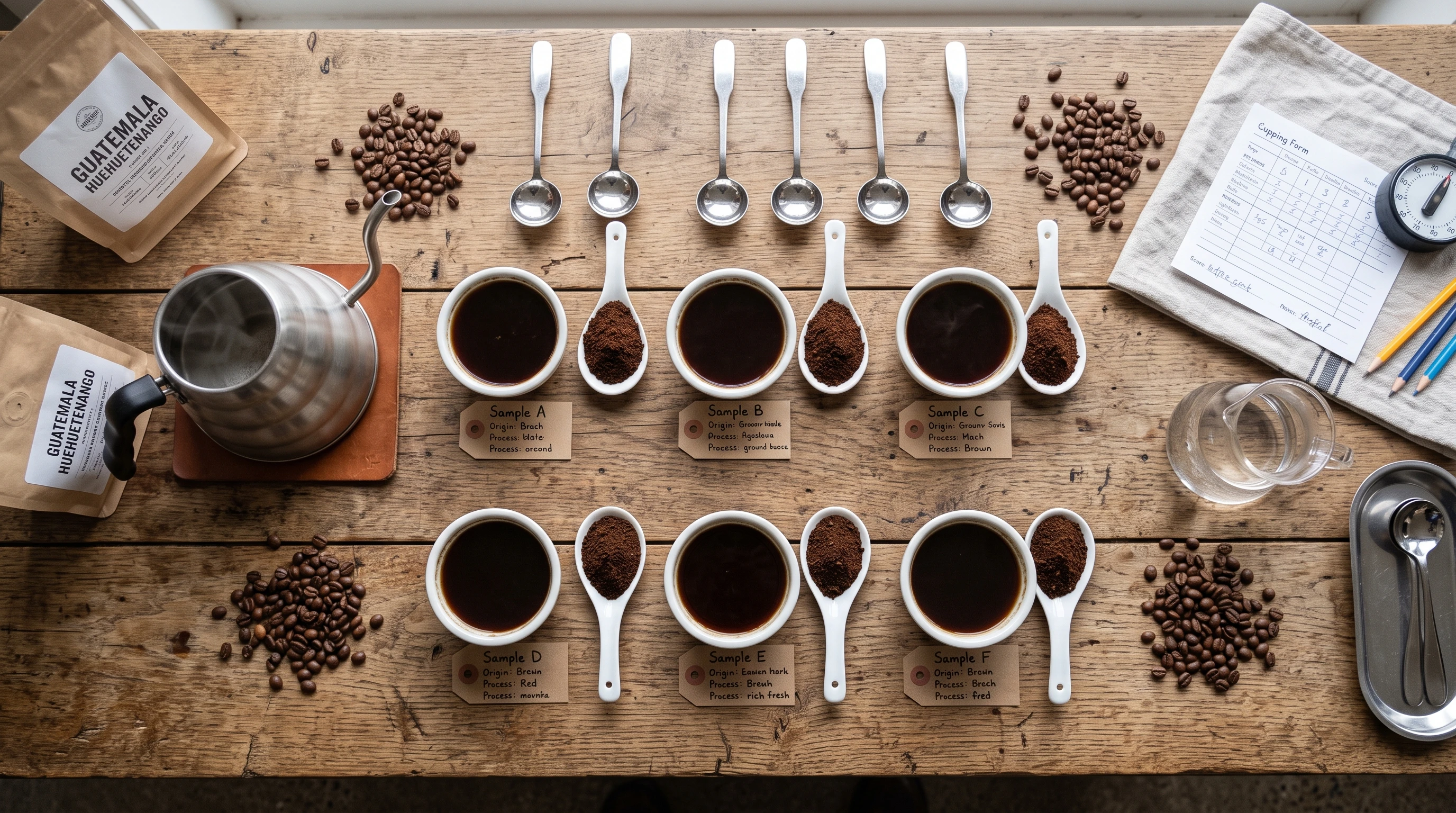
What Are Coffee Flavor Notes?
Quick Answer: Coffee flavor notes are natural characteristics that remind you of other foods and smells—like chocolate, flowers, berries, nuts, or caramel. These aren’t added; they result from how coffee is grown, processed, roasted, and brewed, appearing as distinctive aromas and tastes in your cup.
The word “notes” is just a fancy way of saying, “This coffee brings to mind chocolate, lemon, or nuts.” You won’t find actual blueberries, flowers, or spices in your bag unless it’s artificially flavored (that’s another story entirely). So, if someone says they taste peach or brown sugar, they mean the coffee’s aroma or aftertaste reminds them of those foods.
- Chocolate – Common in many medium or darker roasts.
- Lemon – Bright, zippy acidity, found in lots of African coffees.
- Blueberry – Big in Ethiopian natural processed coffees.
- Peach – Juicy and sweet, pops up in some lighter roasts.
- Brown sugar – Smooth sweetness, often in Central American coffees.
- Almond – Nutty notes, classic in many Brazilian coffees.
- Floral – Delicate aromas like jasmine or rose, often in high elevation coffees.
Coffee packs hundreds of different tastes and aromas (scientists have mapped out more than in wine!). Your brain links these to foods you’ve already tried. Since everyone’s flavor library is different, no two tasters always get the same result.
Why Coffee Doesn’t Taste the Same to Everyone
If you and a group of friends drink the same cup, each of you might pick up different flavors. That doesn’t mean someone’s palate is broken. It’s a mix of your background, habits, sensory memory, and expectations.
Personal Experience
You can’t spot a flavor you’ve never tasted before. If passion-fruit isn’t in your history, that note won’t click for you in coffee. Expanding your daily food experiences—through fruits, nuts, or spices—makes it easier to spot them in your mug.
Smell Is a Huge Part of Taste
Most “flavor” is actually aroma. That’s why having a cold or stuffy nose flattens even the best coffee. Breathing in the steam is as important as sipping, so let your nose get involved for a fuller experience.
Brewing Changes Flavor
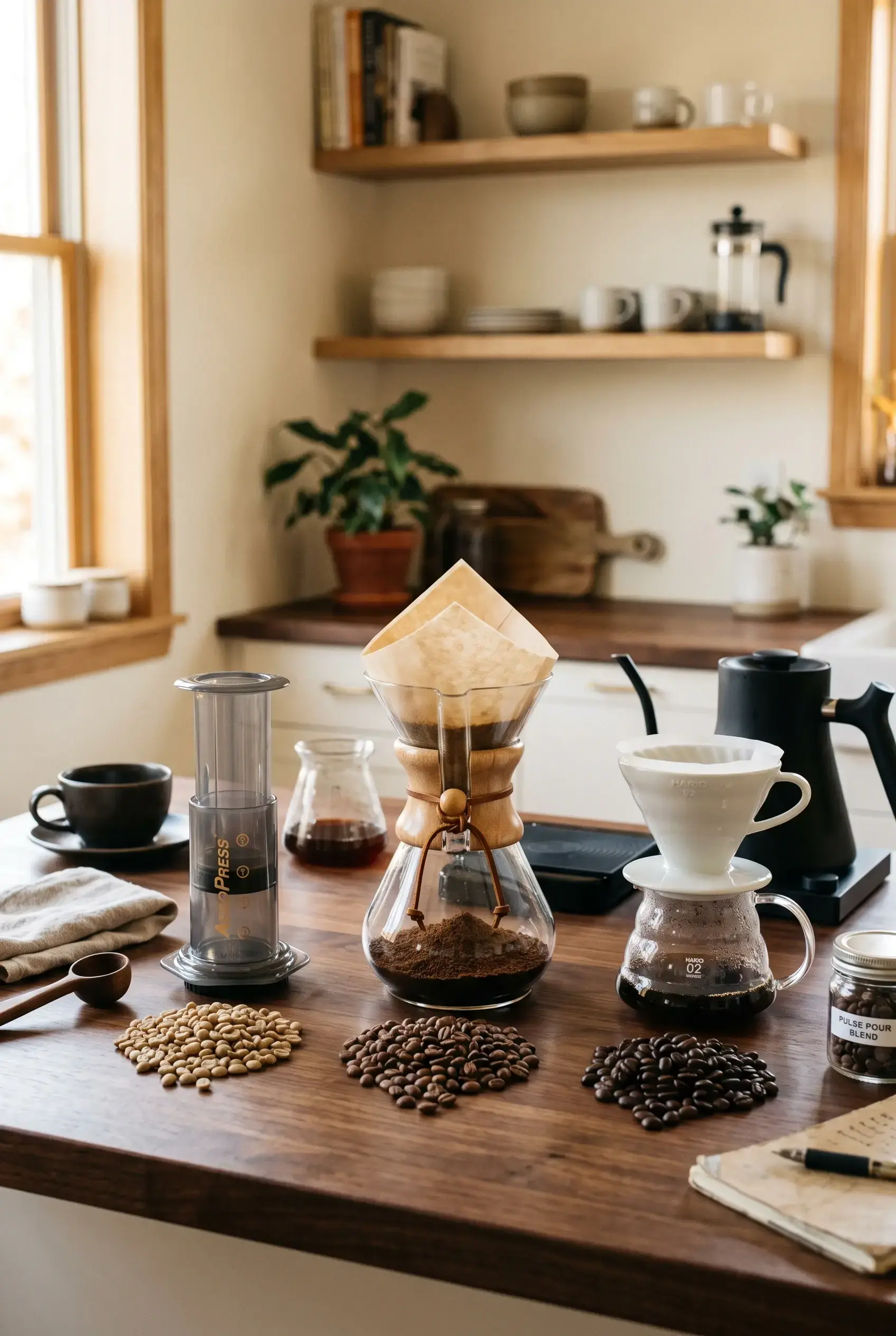
The same beans taste different depending on brew method. Pour over brings out brightness, French press adds more body, and espresso spotlights chocolate and caramel with intensity. Water temperature, grind size, and time all change which flavors emerge from the grounds.
Expectations Can Influence Perception
If someone announces “this tastes like strawberries,” you might look for berry flavors—even if you wouldn’t have noticed them on your own. Just reading tasting notes on the bag can prime your brain. That’s not cheating! Your honest impressions matter, so don’t stress if your tasting doesn’t match the label exactly.
The Five Basic Tastes in Coffee
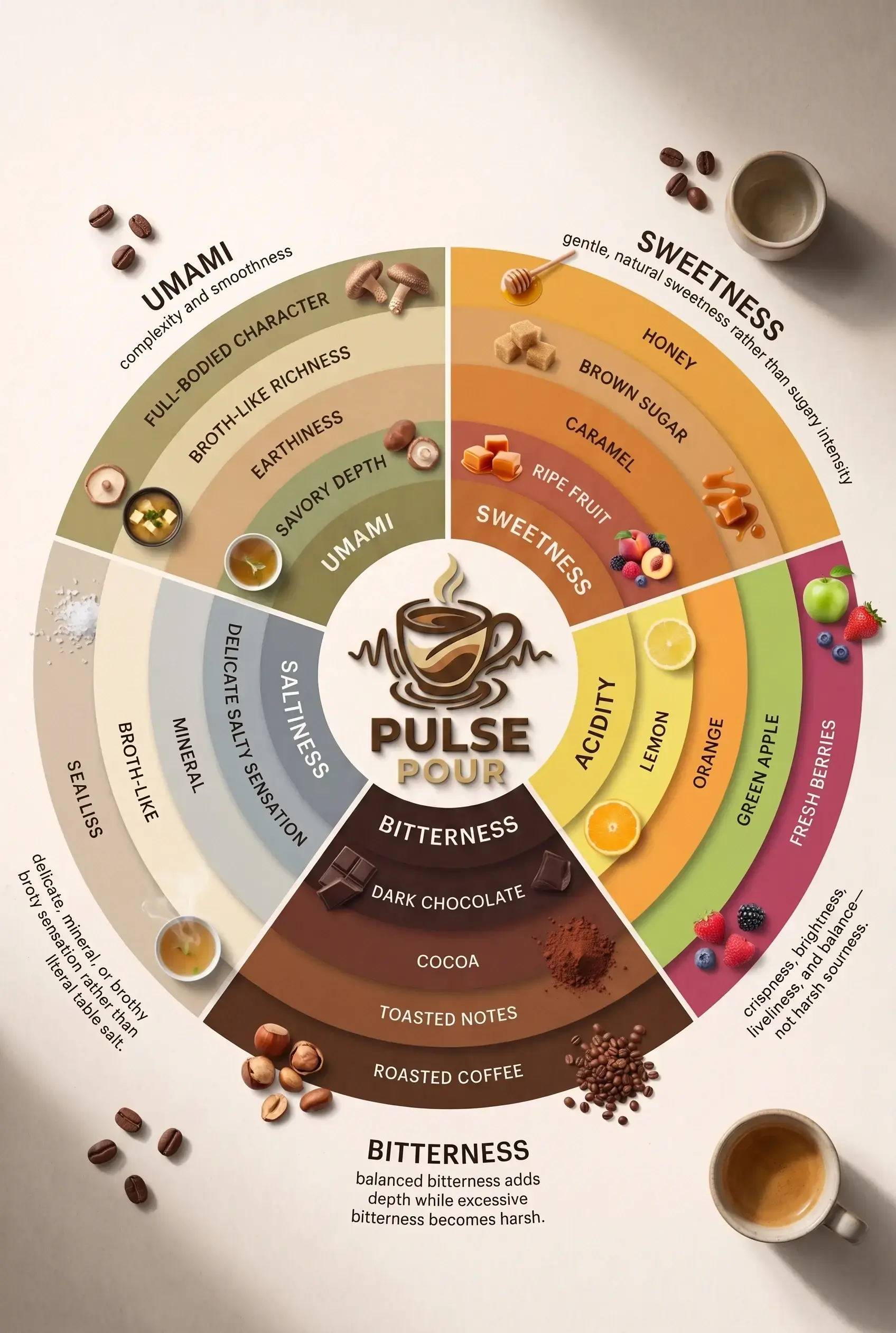
Coffee’s wild range of flavors mostly falls under five main taste groups. Getting familiar with these helps you track down more specific notes later.
Sweetness
Coffee is a fruit seed, so some beans are naturally sweet—think honey, brown sugar, caramel, or ripe fruit. Great coffee hints at gentle sweetness, not syrup, just pleasant flavor.
- Honey
- Brown sugar
- Caramel
Acidity
Acidity brings crisp, lively, bright notes—like green apple, lemon, or fresh berries. It keeps coffee from falling flat. Don’t confuse brightness with harshness; a good cup balances the zing.
- Lemon
- Orange
- Green apple
Bitterness
Bitterness is part of coffee’s character. When balanced, it’s pleasant (like dark chocolate). Too much can stand out in a bad way. Often a little bitterness rounds out a smooth cup.
Saltiness
This taste is rare, but sometimes a subtle, brothy, or salty touch comes through—especially in some Asian or low altitude coffees.
Umami
Umami gives coffee a savory depth—more common in rich, full-bodied brews. Though not present in every cup, it adds complexity and smoothness.
A Simple 5-Step Method for Tasting Coffee
No need for fancy equipment or a special setting. Here’s an easy-to-follow way to taste coffee at home or in a café.
Step 1: Smell the Dry Grounds
Before pouring water, get your nose near the ground coffee (fresh ground is best). Breathe in slowly. Are you getting chocolate, fruit, flowers, or something heavier? Dry aromas often hint at what’s coming.
Step 2: Smell the Brewed Coffee
Hot water releases a whole new set of smells. After brewing, breathe in the steam. The aroma might shift—maybe nuts or toast pop up, or you notice a first whiff of flowers.
Step 3: Take Small Sips
Let the coffee cool a minute—super hot cups can drown out nuance. Take tiny sips, let the coffee cover your tongue. Breathe out through your nose as you swallow to notice the aftertaste.
Step 4: Ask Simple Questions
Don’t worry about nailing an exact note. Try asking broad questions:
- Is it fruity?
- Is it sweet?
- Is it bright?
- Is it nutty?
- Is it chocolatey?
- Is it floral?
Relax and look for broad differences—there’s no need to be ultra-specific.
Step 5: Think of Familiar Foods
What does this remind you of from your own eating experiences? Maybe it calls to mind the chocolate in your favorite cookie, the tang of a lemon bar, or a sweet summer peach. Relating coffee to foods you know is way easier than guessing what “jasmine” or “black currant” is supposed to taste like if you haven’t had them before.
How to Recognize Common Coffee Flavor Families
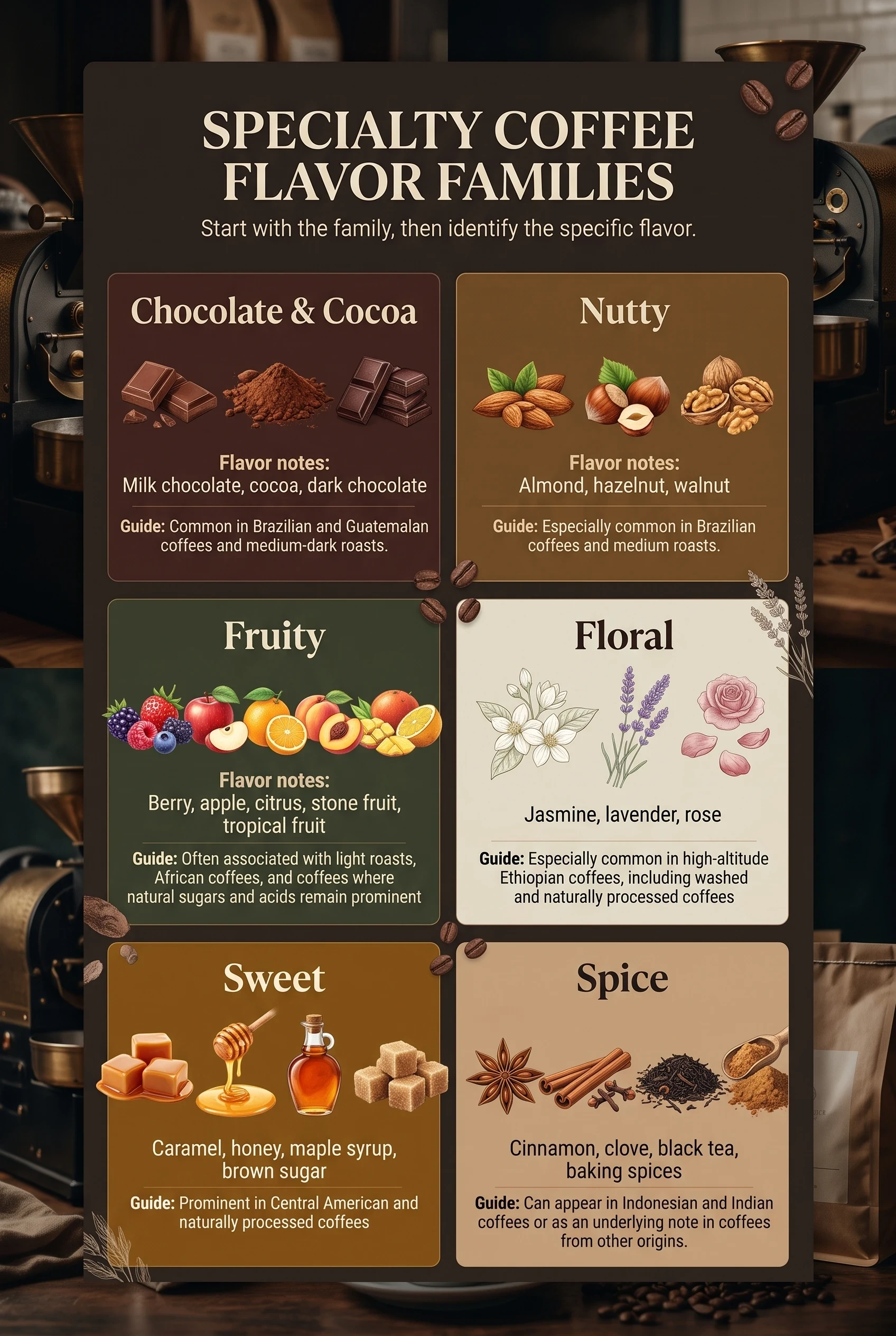
It’s easier to start with flavor groups instead of getting stuck on just one note. Here are the common “families” you’ll find in coffee:
Chocolate & Cocoa
Very common—especially in coffees from Brazil, Guatemala, or medium-dark roasts. These range from milk chocolate (sweet, creamy) to dark cocoa (deep, sometimes bitter).
Nutty
Almond, hazelnut, walnut—found most often in Brazilian coffee and many medium roasts.
Fruity
These notes—like berries, apples, citrus, stone fruit, even tropical flavors—show up when natural sugars and acids are preserved (especially in light roasts or African beans).
Floral
Think jasmine, lavender, rose. Most often found in high mountain Ethiopian coffees, especially washed or naturally processed ones.
Sweet
Caramel, honey, maple syrup, or brown sugar. Central American or natural processed coffees shine with sweetness.
Spice
Cinnamon, clove, black tea, or baking spice. These can show up in coffees from Indonesia and India, or as subtle undertones in other origins.
Why Your Brewing Method Changes Flavor Notes
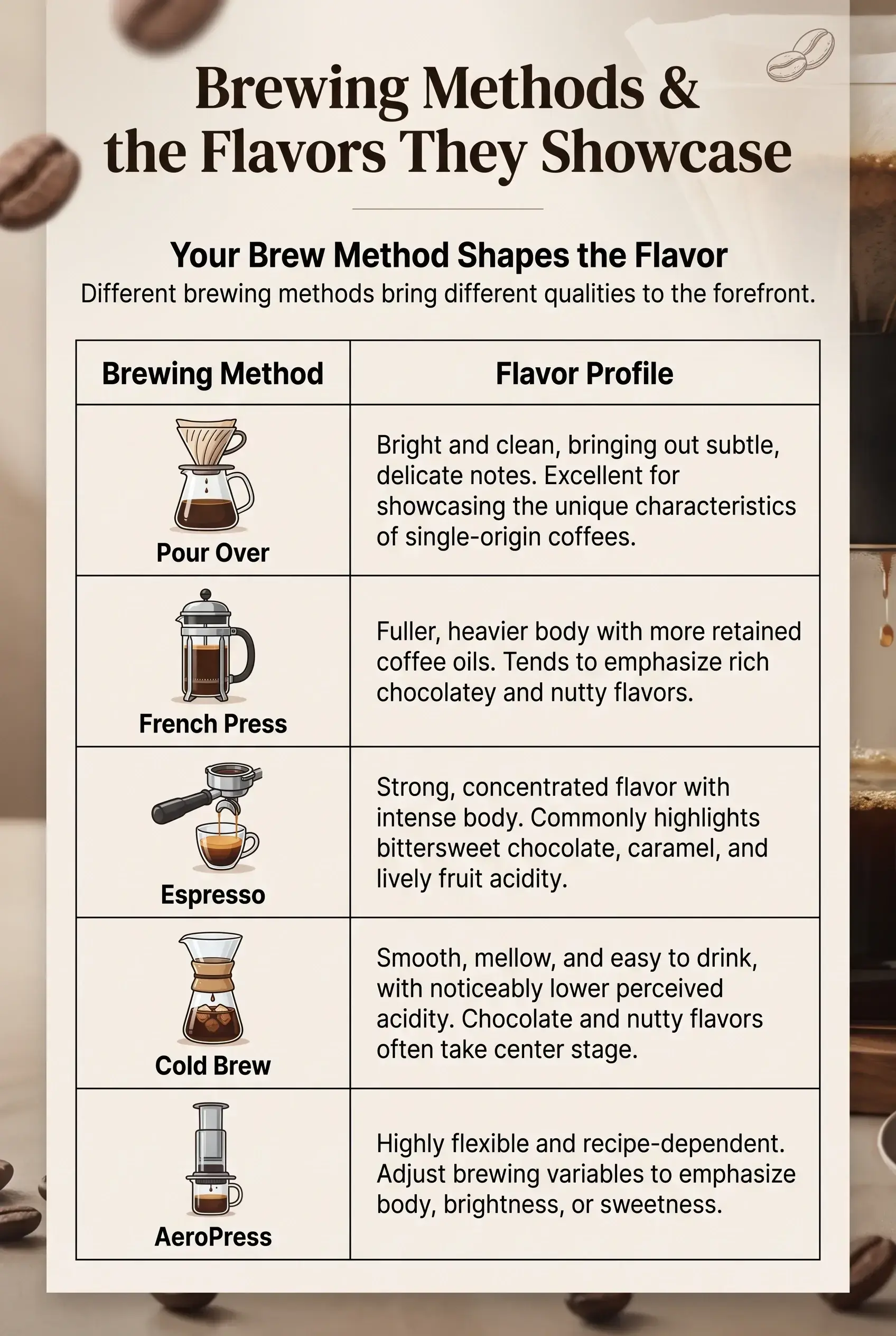
Most pros use pour over or cupping for exploring delicate notes—there’s less muddling from oils or over-extraction and the nuances really shine through.
Common Mistakes That Make Flavor Notes Hard to Taste
If you’re struggling to pick up flavor notes, you’re not alone! Here are some common reasons, and fixes, for missing out on those special flavors:
- Drinking Coffee Too Hot. Sipping too soon can burn your tongue, and most delicate flavors show up only once the brew cools a bit. Let it rest till it’s just above room temperature.
- Using Stale Beans. Coffee loses its aroma quickly. Fresh ground makes a huge difference, so buy whole bean and only grind what you need.
- Poor Water Quality. Bad tap water can flatten flavors or add weird tastes. Use a filter if your tap water isn’t great.
- Over-Extracting. Brewing too long or with too hot water pulls out harsh, bitter flavors that hide everything else. Stick to proper ratios and standard water temperatures (195-205°F).
- Under-Extracting. Rushing the process or using too cool water leads to sour, thin cups with muted flavors. Brew long enough and keep the temperature up.
- Expecting Exact Matches. Don’t stress out if “blueberry” doesn’t jump out. Tasting notes are suggestions, not rules. If you get a general fruity vibe or something sweet, that’s a win!
Advanced Tasting Tips: Boost Your Palate
Ready to take things up a notch? Here are some ways to bring your palate further along, used by hobbyists and pros alike:
- Eat more mindfully. Pay attention to what different foods taste and smell like—especially fruits, nuts, chocolate, and spices. This builds your internal flavor library.
- Try coffees side by side. Compare two brews at once and focus on overall differences instead of hunting for one note. You’ll start to spot which is sweeter, brighter, or fuller-bodied.
- Explore origins and processes. Sampling single origin and naturally processed coffees will expose you to bolder, unexpected flavors compared to standard blends.
- Take notes—if you like. Even jotting “nutty” or “bright” helps you remember your preferences and patterns over time.
Frequently Asked Questions
Question: Why can’t I taste the flavors on the coffee bag?
Answer: Most flavor notes reveal themselves with slow tasting. If all you sense is “just coffee,” try letting your cup cool, using fresh grounds, and inhaling deeply before a sip. Practice helps your palate pick up more each time.
Question: Is there a way to train my palate to taste more?
Answer: Yes! Taste a variety of foods, compare coffees side by side, and focus on broad differences first. It’s about growing your flavor memory, not always getting the “right” answer.
Question: Why does my coffee sometimes taste fruity?
Answer: Coffee is a fruit seed with natural acids and sugars that show up as fruit flavors—especially in certain origins like Africa or with natural processing and light roasts.
Getting Better at Tasting Coffee Flavor Notes
You don’t need to memorize a flavor wheel or train to taste perfectly. The main thing is to enjoy what’s in your cup, maybe notice a new detail, and share the experience next time with friends. If your goal is to understand why coffee sometimes tastes fruity, learn how to spot flavors in a chill way, or even taste coffee like a pro, you’re already halfway there. Keep exploring new beans, slow down, and your palate will keep surprising you.