
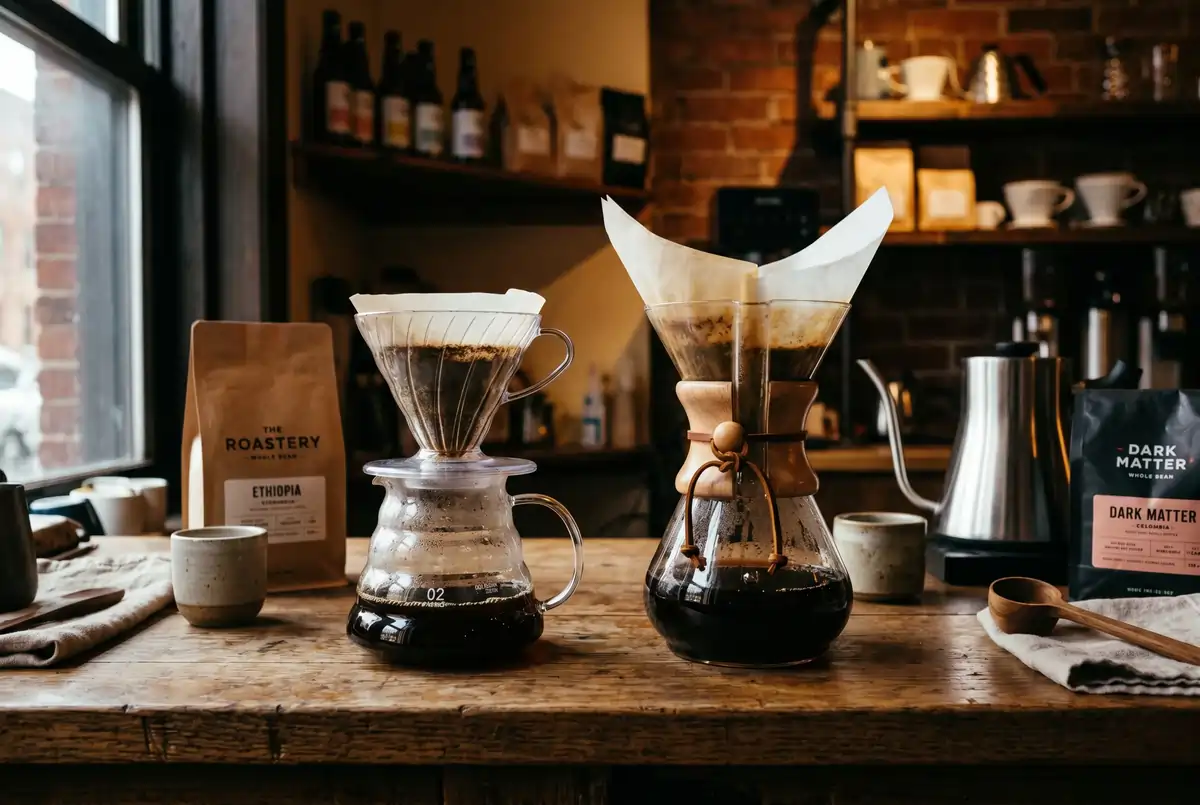
If you’re torn between getting a V60 or a Chemex for pour over coffee, you’re definitely not alone. Both are favorites in the coffee world, and they each bring something different to the table. I’ve brewed hundreds of cups with both, and I get questions all the time: Which one tastes better? Which is easier to use in the morning? And which is best if you’re trying to up your coffee game without overcomplicating your daily routine?
The truth is, choosing between V60 and Chemex depends on what you want from your coffee, and your lifestyle. These brewers aren’t just different in design; they shape the flavor, texture, and even the pace of your morning. I put together this practical guide to help you decide which one is right for you, complete with brewing tips, beginner advice, and what to expect with each method.
Note: Both of these brewers are recognized in the Specialty Coffee Association.
Disclaimer: This page contains affiliate links. If you make a purchase after visiting a link I may receive a small commission. This in no way affects my recommendations and carries no impact on price.
V60 vs Chemex: The Quick Answer
Brew style, taste, and convenience are the main things to think about when choosing between the V60 and the Chemex. Most coffee lovers end up with a clear favorite once they’ve tried both, but if you want a quick answer to who should pick which, here’s the lowdown:
Choose the V60 if you want more control and a brighter cup
The V60 is a classic for hands-on brewing. If you like tinkering with recipes and pulling out every subtle detail from your beans, the V60 is a great pick. It brews a clear, lively cup, and the cone shape plus spiral ridges let you control water flow and extraction.
You can grab the Hario v60 Brewing Kit. It comes with the ceramic v60 dripper, glass carafe’, 100 filters, a measuring spoon, and a cover for the carafe’ to keep it hot. This is basically the set-up I use.
Choose the Chemex if you want a smoother cup and a slower morning routine
The Chemex leans into clean, mellow coffee and ritual. The thick filter softens flavors and reduces bitterness, perfect if you like a less acidic, almost tea-like brew. The process is slower and more relaxed, great for those chill mornings.
You can grab a complete Chemex Brewing Bundle. It comes with the brewer and 100 square filters.
Best choice for beginners, busy mornings, and flavor-focused brewers
The V60 calls for focus and practice, so it’s awesome for brewing geeks and anyone who wants complete control. The Chemex is a bit more forgiving, and it really shines if you brew for more than one person at a time. For quick single cups, the V60 is hard to beat. For mellow group brews, the Chemex is worth checking out.
What Is The Main Difference Between A V60 And A Chemex?
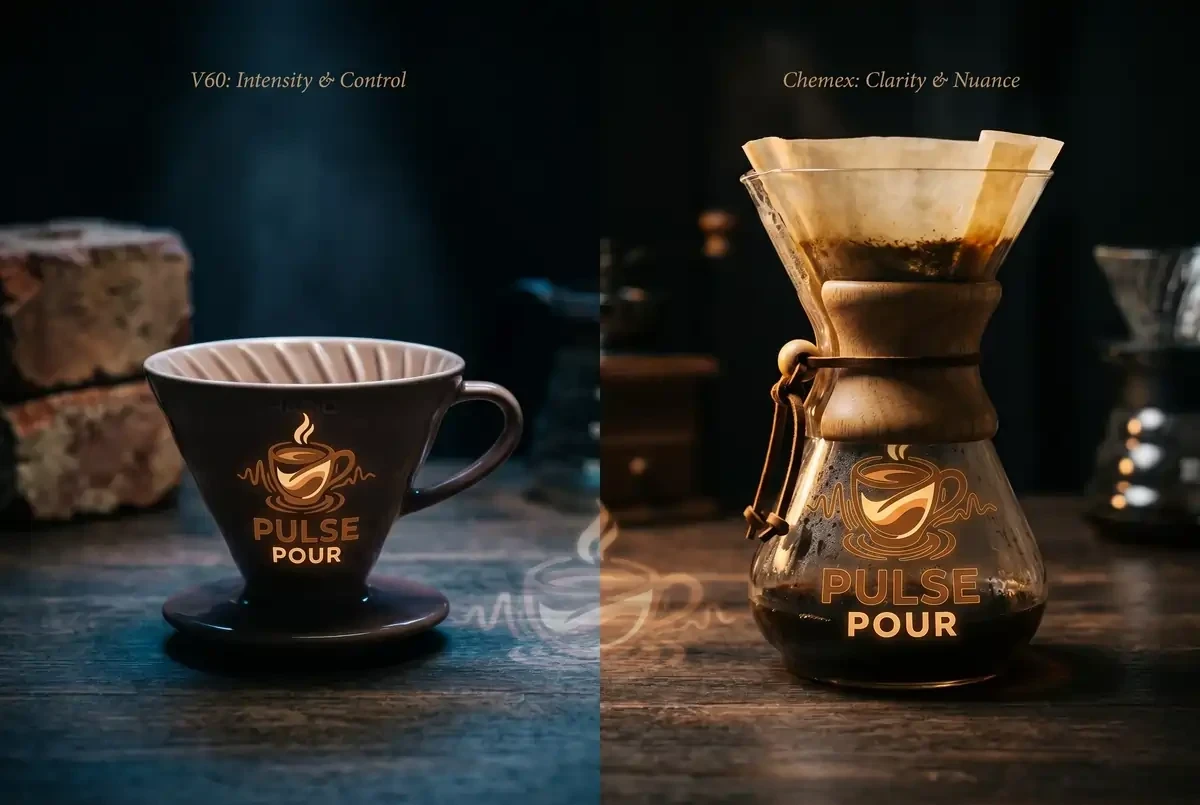
Both gadgets make pour over coffee, but everything from their filter design to brew time affects your daily cup. Here’s the real scoop on what divides these two brewers.
The V60 is smaller, faster, and more hands on
The V60 brewer is a single cup cone that sits on your mug or carafe. You use a thinner paper filter that lets oils and tiny particles through, giving you more of the coffee’s natural flavor and body. The spiral ridges inside help keep airflow steady and water moving evenly, but your pouring speed and pattern change the outcome a lot. This hands on style means every tweak makes a difference, even the kettle you use can shape the brew.
The Chemex is larger, slower, and more forgiving
The Chemex brewer is one solid piece, brewer and carafe in one. It comes in sizes from three to ten cups, so it’s perfect if you often make coffee for two or more. The filter is way thicker, trapping more oils and fine particles. The coffee comes out clear and super smooth, less bitter, and the method is more forgiving if your pouring isn’t spot on. It also looks beautiful on the countertop, which is a nice bonus if you like stylish kitchen gear.
Why filter thickness changes the flavor so much
The main reason these brewers taste so different comes down to filter thickness. The V60’s thin filter lets more oils and fine coffee particles through, giving you a more vibrant, complex cup. The Chemex’s filter is almost three times as thick, so it blocks out more, resulting in a final brew with less bitterness and a “lighter” clean feel. If you like a rich mouthfeel with bold, sparkling flavors, the V60 is where it’s at. If you prefer gentle, smooth coffee, the Chemex makes it easy to get there.
V60 Flavor Profile: Bright, Clear, And Easy To Adjust
I never get tired of the V60’s punchy, transparent coffee. It’s kind of like a spotlight for your beans; the good (or bad) flavors come right through. Here’s why V60 coffee stands out:
Why the V60 brings out acidity and delicate tasting notes
The shape of the brewer and the thinner filter let delicate acids and aromatic compounds shine. This is why fruity or floral single origin beans can taste lively and layered in the V60. The spiral ridges mean water drains fast, especially if you pour quickly. If you crave complex flavors and sparkling acidity, this brewer really highlights those.
How grind size and pouring style affect the final cup
With the V60, your grind size and pouring motion actually change the taste a lot. A finer grind and slow, steady pour will bring more body and sweetness, while a coarser grind and quick pour make it lighter and more acidic. This level of control is super satisfying if you love fine tuning your coffee. On the flip side, small mistakes can show up as bitterness or sourness, so it pays to experiment and keep notes.
For more information on grinding coffee beans, check out How To Grind Coffee Beans For Pour Over: Avoid These 5 Common Mistakes .
Who will enjoy the V60 most?
- Coffee geeks who like to adjust variables
- Anyone who loves bright, complex cup profiles
- Home brewers looking for ultimate control over taste
If you’re the type who likes comparing different beans or dialing in new recipes, this brewer is seriously fun and rewarding.
Chemex Flavor Profile: Smooth, Clean, And Less Bitter
Chemex coffee is all about balance and clarity. Every cup I brew with the Chemex feels softer and more refreshing, with less bite. Here’s why many people love it:
Why Chemex coffee often tastes lighter and cleaner
The thicker filter traps a lot more oils, so the cup comes out extra clean and almost silky. This method really reduces harsh or muddy notes. If you’ve ever found coffee too bitter or strong, you’ll probably prefer Chemex style brewing. A lot of people say it’s almost like tea in terms of body and smoothness.
How the thicker paper filter softens the cup
The filter does most of the work by holding back fine grounds and oils, so you rarely get a gritty or heavy cup. This lets mild and chocolatey beans shine, and it can turn even dark roasts into gentle, drinkable coffee. I also notice that Chemex makes it easy to share a whole pot without worrying that one cup will taste way stronger than another.
Who will enjoy the Chemex most?
- People who like mellow, less acidic coffee
- Anyone brewing for families or friends
- Those who want a simple, forgiving method with less room for error
If you want super smooth, cleared up coffee that’s ridiculously easy to drink, Chemex is a winner.
V60 vs Chemex For Beginners: Which One Is Easier To Learn?
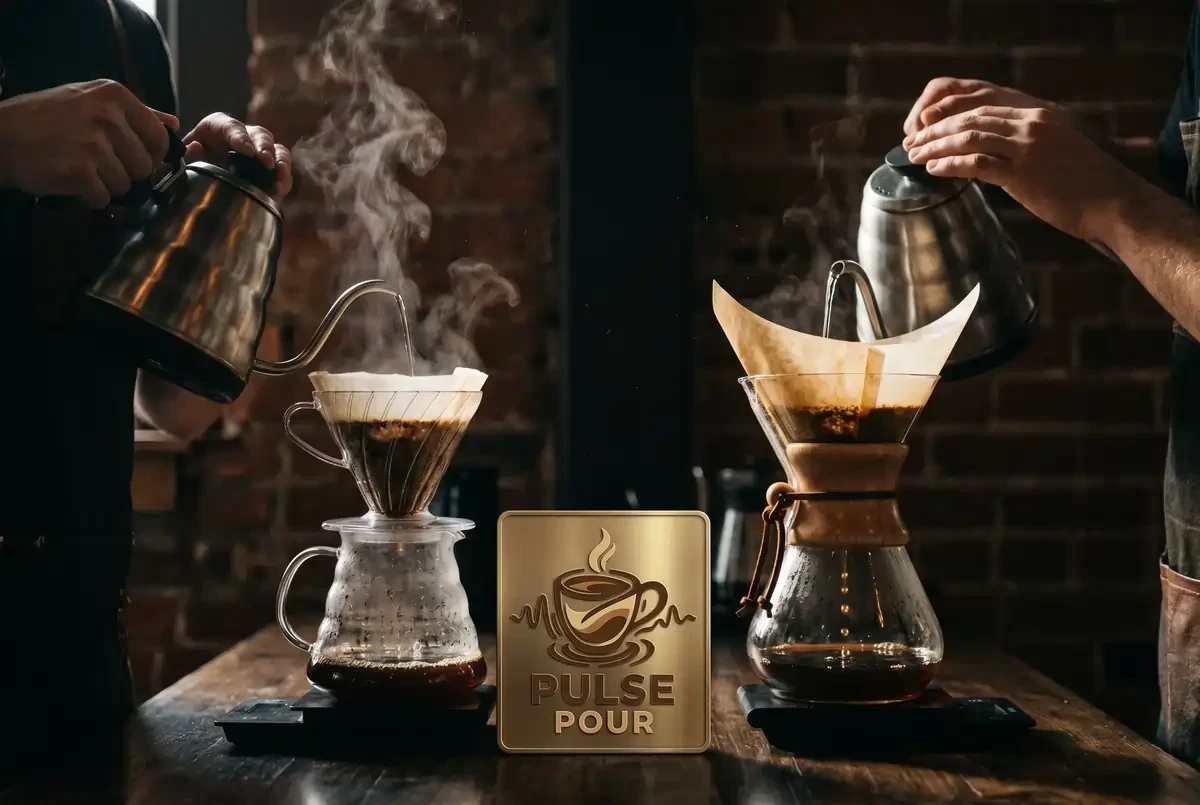
If you’re brand new to pour over coffee, you might wonder which brewer will set you up for more wins, especially early on. Here’s what I’ve learned from teaching a bunch of first timers.
Why the Chemex may feel more forgiving at first
The Chemex forgiving nature means you can pour a little unevenly or mess up your timing and still get a tasty pot. It’s not as picky as the V60. The thicker filter smooths out small mistakes, which is a relief if you’re not quite ready to nerd out over every step of the process. Plus, since you typically brew more than one cup at a time, it’s a good intro to bigger batches without worrying about exact technique.
Why the V60 has a steeper learning curve
The V60 is a blast for anyone eager to geek out, but it can be finicky. The brew is very sensitive to grind size, pouring speed, and even tiny changes in your recipe. Beginners sometimes get frustrated if their first few attempts come out too sour or bitter (I’ve been there!). Once you get the hang of it, though, the control is amazing, and there are endless guides and tutorials out there to help you dial it in.
Common beginner mistakes with each brewer
- V60: Using pre ground coffee (often too fine), pouring too slowly or too quickly, inconsistent water flow, or measuring imprecisely.
- Chemex: Under-extracting by pouring way too fast, using water that’s not hot enough, or forgetting to pre wet the filter (which impacts flavor).
Either way, both brewers reward a bit of practice, but the Chemex lets you go on autopilot sooner if you want to keep things chill.
Which Brewer Fits Your Morning Routine Better?
There’s no point buying a brewer that doesn’t match your mornings. Here’s how V60 and Chemex fit different coffee routines:
Best option for one quick cup
The V60 is made for single cup brewing. It’s ready in a flash, easy to set up and clean, and perfect if you only want a cup (not a whole carafe). If you’re often pressed for time, the V60 saves you a few minutes every morning.
Best option for brewing multiple cups
The Chemex nails multi-cup brewing. It comes in larger sizes, and the brew stays consistent for every guest. Cleanup is about the same, but it’s much easier to serve coffee for a group with a Chemex than cycling through several V60 brews.
Best option if you like slow, mindful brewing
If your coffee time is as much about the ritual as the taste, the Chemex is super satisfying to brew. It takes its time, which makes the process feel intentional and calm. The V60 can do the same if you want, but it’s generally built for speed and precision rather than slow mornings.
V60 vs Chemex Grind Size: What You Need To Know
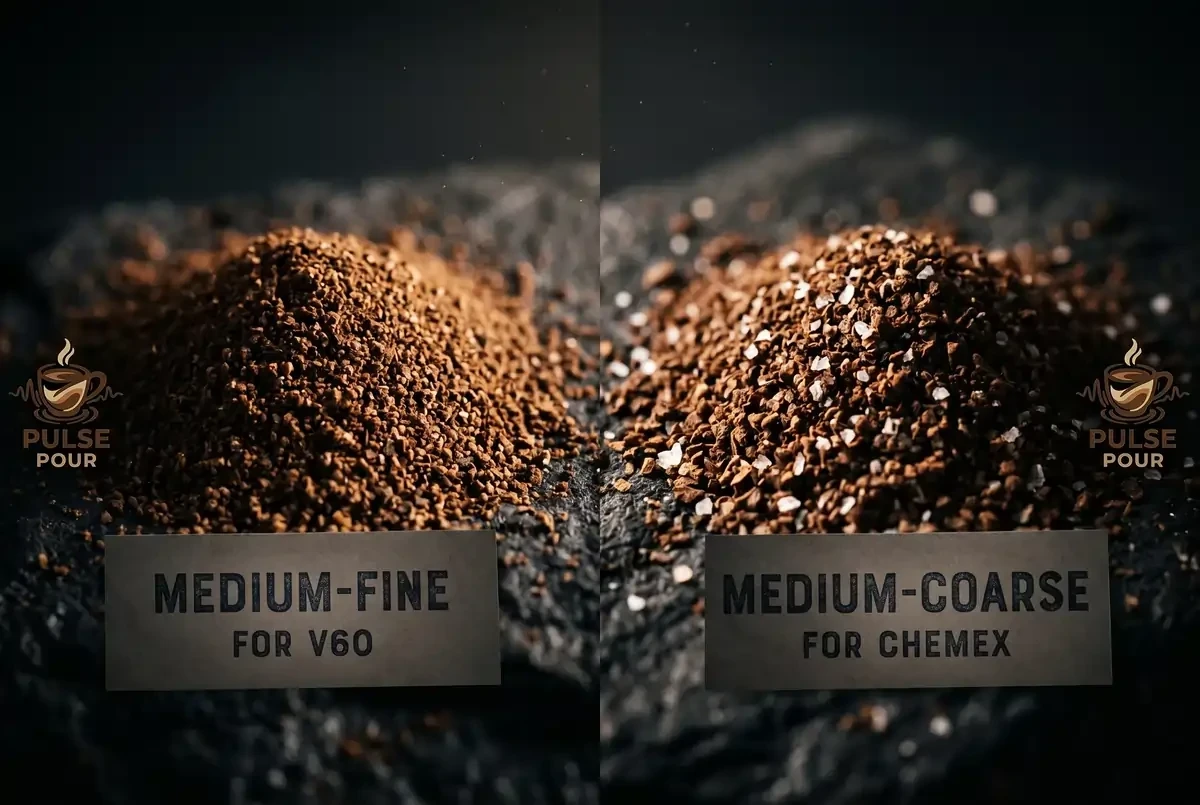
The right grind is the backbone of every good pour over brew. Here’s how to dial it in for each brewer.
Best grind size for V60
I go for a medium-fine grind with the V60, about the texture of table salt. Too fine, and the water gets stuck, resulting in bitterness. Too coarse, and the water rushes through without proper extraction, leaving the cup sour or weak. If your coffee drains in about 2.5 to 3 minutes, you’re on track.
Best grind size for Chemex
The Chemex needs a medium-coarse grind, like beach sand. The thick filter slows things down, so a coarser grind helps keep the brewing pace right. If it takes longer than 5 minutes for the water to pass through, try a coarser grind; if it drains in less than 3 minutes, go finer.
How to tell if your grind is too fine or too coarse
- Too fine: Coffee tastes bitter or overdone, water just sits in the brewer.
- Too coarse: Coffee is thin, sour, or salty, and water flies through the filter.
I recommend a burr grinder for anyone serious about pour over; consistency matters way more than a fancy brewer.
Brewing Time And Technique: How Much Effort Does Each One Take?
If you’re worried about time or effort, here’s how V60 and Chemex compare when it comes to the hands on brewing process.
V60 brew time and pour control
Most V60 brews finish in 2.5 to 4 minutes, depending on recipe and grind. The actual pouring is active, and you’ll want to use a gooseneck kettle for steady, precise circles. It’s a bit like cooking; your attention matters the whole time. The quicker pace is nice, but it means you can’t just walk away in the middle of brewing.
Chemex brew time and pouring pace
Chemex brewing is slower. Expect around 4 to 6 minutes, counting your prep and bloom phase. The thicker filter slows extraction, and the pouring style can be a bit more relaxed. You can pour in stages or even add all your water in a few large pours, giving you a nice break during the brew. This mellow pace is relaxing, but it does take longer.
Which brewer gives you more room to experiment?
The V60 is famous for tweaking. There are endless recipes, and your changes show up fast in the cup. The Chemex is more stable, so it’s a little less reactive if you mess with variables. That’s handy for consistency, but you’ll get less dramatic differences with each adjustment.
Cost, Filters, And Gear: What Should You Buy First?
Both brewers are pretty affordable, especially compared to espresso setups. Here’s what you’ll need to get started (and what those filters really cost over time):
V60 brewer, filters, and basic setup cost
- V60 dripper: $10 to $30 depending on material (plastic is cheapest, ceramic and glass look nice)
- V60 filters: Around $6 for 100, available almost everywhere
- Optional: Glass server, but it’ll brew right onto any mug
The V60 is super budget-friendly, and the filters are dirt cheap. Most people also grab a gooseneck kettle (starting at $20) for control, but it’s not 100 percent mandatory if you’re just experimenting. You can get the v60 bundle, minus the kettle here.
Chemex brewer, filters, and basic setup cost
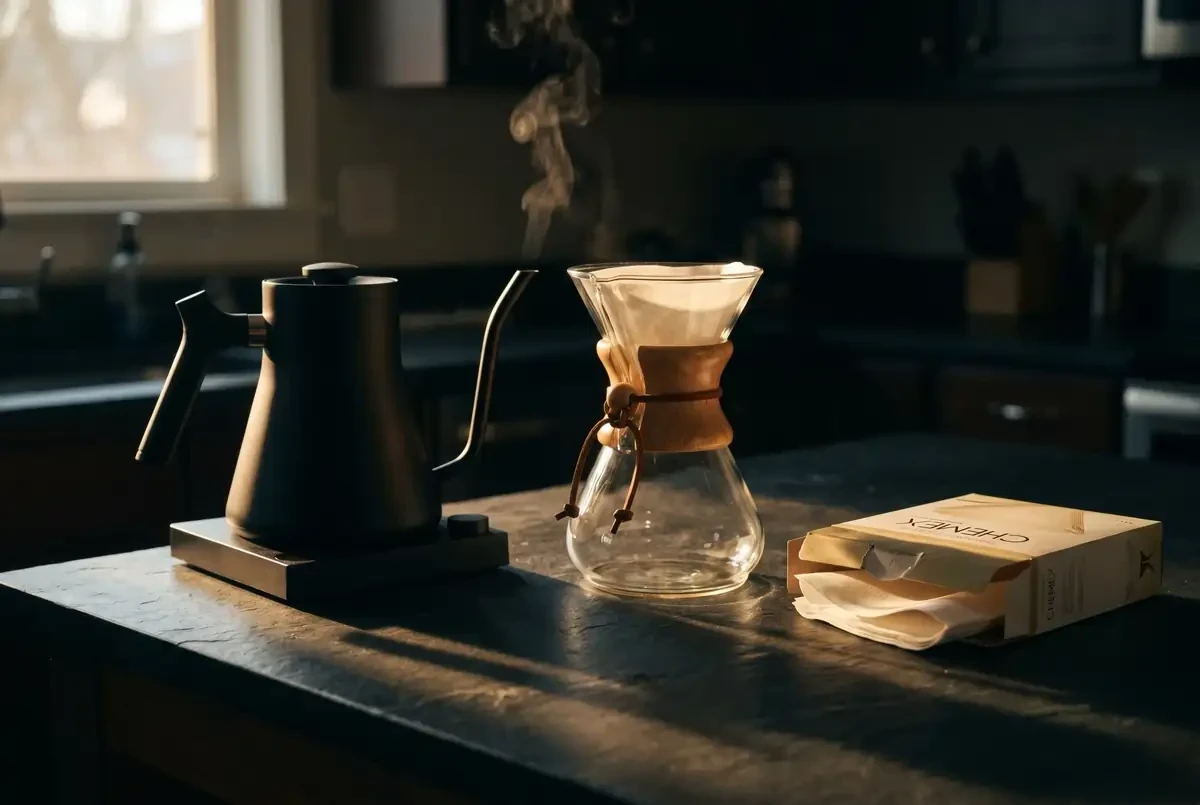
- Chemex brewer: $40 to $50 for the six cup version (more for bigger sizes)
- Chemex filters: Around $9 to $12 for 100, only fit Chemex shapes
- Comes with built in carafe; nothing else needed
The biggest difference is filter cost and availability; Chemex filters are harder to find locally, but you can always order them in bulk online. The Chemex itself lasts forever if you don’t break it (it’s pretty sturdy for glass).
You can get the Chemex bundle.
Do you need a gooseneck kettle for either one?
You’ll see the best results with a gooseneck kettle, especially for the V60, since pouring control has such a big impact on taste. Chemex is a little more flexible; a regular kettle with a steady hand can work if you’re just starting out. If you’re making pour over once a day, the investment pays off quickly with better brews.
V60 vs Chemex Taste Test: Which One Matches Your Coffee Preferences?
Flavor is the main reason people pick one brewer over the other. Here’s how I describe it to friends who are deciding:
If you like bright, fruity, or floral coffee
The V60 is your friend. It really lifts up the lively, unique notes in specialty beans. Floral, citrusy, or berry-flavored coffees shine and come across crisp and intense. It’s basically made for unique single origins and lighter roasts.
If you like smooth, tea like, or mellow coffee
Chemex is ideal for gentle, balanced coffees. If you add milk or want something that tastes refined but soft, it’s hard to beat. The thicker filter mutes some of the sharp edges and leaves a super clean cup, amazing with chocolatey, nutty, or stone fruit notes.
If you want less bitterness and a cleaner finish
Chemex really stands out by producing very little bitterness. If you’ve ever found pour over coffee a tad sharp for your taste, Chemex soothes that right out. For those who want zero lingering aftertaste, this is the way to go.
Best Coffee Beans For V60 And Chemex
Bean choice really comes alive with both brewers, but the same beans can taste super different depending on which you use. Here’s what I recommend for each:
Light roast coffee for V60
V60 gets along amazingly with light, fruity, or floral beans. Ethiopia, Kenya, and Colombia single origins taste sharp and exciting. The V60’s clarity means all the subtle fruit and floral notes pop. If you’re in the mood to taste every delicate layer, go light roast all the way.
Medium roast coffee for Chemex
Chemex really makes the most of medium and medium dark roasts. These beans offer sweet, rich, and mellow flavors that play perfectly with the softer extraction. Central and South American blends, or any beans with notes of chocolate, caramel, or mild spice, come out smooth and balanced.
How roast level changes the final flavor
- Lighter roasts in V60: Vibrant, crisp, and complex
- Darker roasts in V60: Can become sharp or overwhelming if you’re not careful
- Lighter roasts in Chemex: Smooth, but sometimes a little too muted
- Darker roasts in Chemex: Super gentle, with body toned down and no bitterness
I love having both brewers on hand to match the bean or my mood; some days call for zingy, some call for cozy.
V60 vs Chemex: Pros And Cons
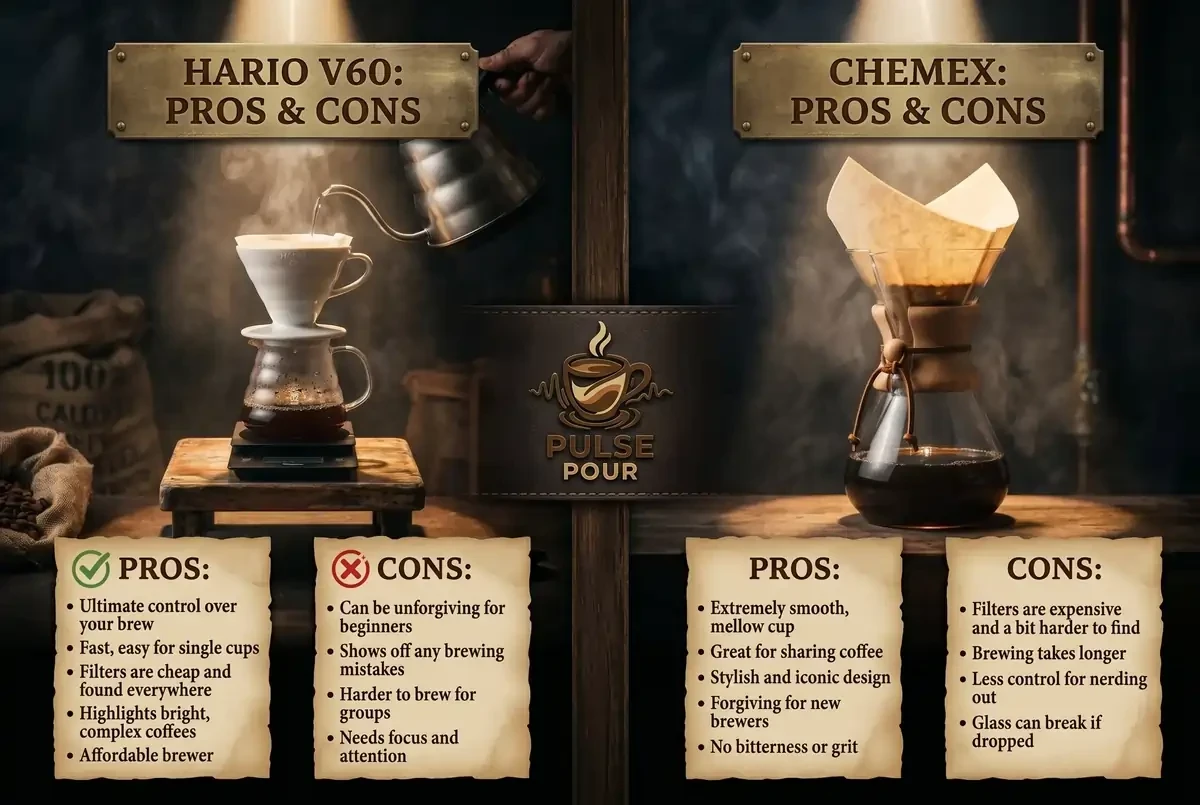
If you’re making a quick decision, here’s what I find most helpful; why someone might love each brewer, and why it may not be ideal for you.
V60 pros and cons
Pros:
- Ultimate control over your brew
- Fast, easy for single cups
- Filters are cheap and found everywhere
- Highlights bright, complex coffees
- Affordable brewer
Cons:
- Can be unforgiving for beginners
- Shows off any brewing mistakes
- Harder to brew for groups
- Needs focus and attention
Chemex pros and cons
Pros:
- Extremely smooth, mellow cup
- Great for sharing coffee
- Stylish and iconic design
- Forgiving for new brewers
- No bitterness or grit
Cons:
- Filters are expensive and a bit harder to find
- Brewing takes longer
- Less control for nerding out
- Glass can break if dropped
The biggest trade-off to consider before choosing
If you want speed, control, and single cup brewing, the V60 is really hard to top. If you care more about smoothness, sharing, and simple rituals, the Chemex makes more sense. Think about whether you value control or comfort more; your daily routine will be happier for it.
So, Is The V60 Or Chemex Better?
There’s no universal winner, but I always ask myself what matters most: flavor, ritual, or convenience. Here’s how I’d break it down for anyone on the fence.
Best overall choice for flavor control
The V60 rewards you for paying close attention. If you love geeking out over brewing variables and want the tastiest, brightest coffee your beans can offer, this brewer’s a great fit. It packs a punch and lets you try endless recipes.
Want to learn more? Check out this guide on How To Use A V60,
Best overall choice for smooth, simple brewing
Chemex is made for chill coffee moments. It makes an elegant, mild, super clean brew, is awesome for hosting, and you don’t need to worry quite as much about technique. That peace of mind plus its good looks make it popular for a reason.
Want to learn more? Check out this guide on How To Use A Chemex.
My recommendation for most home brewers
If you mostly make coffee just for yourself and want to explore new beans and methods, go with the V60. If you love brewing for friends or crave an easy, foolproof process with dreamy smooth coffee, Chemex is totally worth the splurge. Of course, some folks (like me) end up using both, depending on the day!
Final Thoughts: Pick The Brewer That Matches Your Taste And Routine
Start with the cup you actually enjoy drinking
It’s easy to get swept up in hype, but the right brewer is the one that matches your own flavor cravings. Whether you love zingy, complex sips or gentle, easygoing cups, pick the device that helps you wake up happy every morning.
Keep your setup simple while you learn
You don’t need fancy scales or kettles to start. Focus on learning your brewer, taking notes, and figuring out what you enjoy about your coffee. The extra gadgets can come later; great flavor comes from paying attention, not overspending on gear.
Track your brews so you can repeat your best cups
This is a tip I wish I’d learned sooner: jot down your recipes and tweak one thing at a time. Pour over is all about small adjustments. If you find a cup you love, having your brew notes helps you lock in the routine, so you get great coffee every time, no guesswork needed.
Here is a free tasting journal and flavor wheel you can download to start tracking your cups, and brewing variables. All you have to do is enter your e-mail, and I’ll send it right over!
Whether you start with a V60 or Chemex (or even both), you’ll have a solid foundation for exploring the world of pour over coffee, and some seriously tasty mornings ahead.How To Perfect Your Pour Over Coffee Brewing (Step-by-Step Guide That Actually Works)
Continue Learning

The Best Pour Over Coffee Methods
The best pour over coffee methods don’t require expensive gear or fancy equipment. You can get by with just the essentials and make extraordinary cups of coffee

How To Perfect Your Pour Over Coffee Brewing
Want better-tasting pour over coffee? Learn how to enhance pour over coffee flavors with easy tips for grind size, water temperature, bloom, and pouring method
Honestly, choosing between these two is just deciding whether you want high-design carafe energy or indestructible single-serve efficiency. As someone balancing client emails with tiny humans climbing my legs, the quick-brewing V60 wins my heart every time. Super helpful post. Now excuse me while I go adjust my grind size!
“High-design carafe energy” versus “indestructible single-serve efficiency” might be my favorite description of the V60 and Chemex yet!
And honestly, with client emails and tiny humans climbing your legs, I completely understand why the V60 wins. Sometimes you just need great coffee without turning your morning into a full production.
Glad the post was helpful—and yes, go adjust that grind size! That little tweak might be the difference between a good cup and a really good one.
-Happy brewing!
I didn’t realize how much difference the brewing method itself could make in the taste of pour over coffee. I would have assumed that the V60 and Chemex were simply two different ways of accomplishing basically the same thing.
Your explanation of the filters was especially interesting. It makes sense that the thicker Chemex filter would remove more oils and fine particles and produce a smoother, less bitter cup, while the V60 allows more of the individual characteristics of the beans to come through.
I also like that you didn’t really declare one the winner. It sounds like the better choice depends as much on the person and their morning routine as it does on the coffee itself. Someone making one quick cup has very different needs from someone brewing several cups and enjoying the whole process.
For someone completely new to pour over coffee who normally drinks a traditional drip coffee, would you recommend starting with the more forgiving Chemex or learning the V60 from the beginning?
– Scott
Thanks, Scott! I actually started with the Hario V60 myself, so I’d definitely say you can learn with the V60 from the beginning.
It does have a bit of a learning curve, but that’s part of what I enjoyed about it. Once you get a feel for your grind size, pouring technique, and brew ratio, it becomes much easier to get consistent results. And the nice thing is that you really start to see how small changes affect the flavor.
That said, if you’re looking for something a little more forgiving and want a smoother, cleaner cup with less fuss, the Chemex is a great place to start too.
Personally, I’d lean toward the V60 for someone who wants to really learn pour-over. It’s the brewer that got me hooked!