
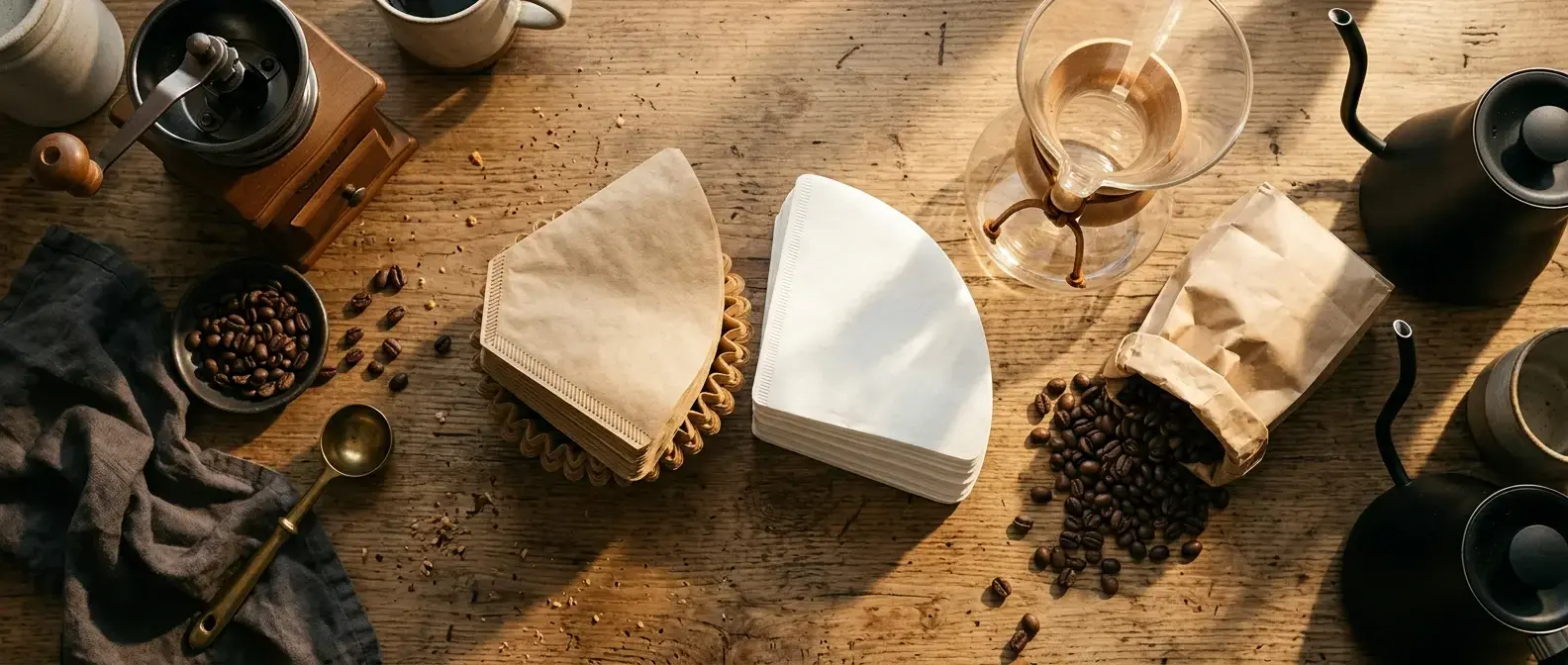
Grab a filter off the shelf at the grocery store and you’re choosing between a stack of white ones and a stack of brown ones, usually with zero explanation on the box about why that matters. Most pour over advice tells you to use paper instead of metal and stops there, which leaves out the part that actually affects what’s in your cup: bleached and natural filters aren’t just a color choice, and the weight and weave of the paper matter just as much as which chemical process made it white.
Why the Filter You Grab Matters More Than You Think
The filter is the last thing your coffee touches before it hits your cup. Everything you did right before that, the grind size, the water temperature, the pour technique, passes through a few grams of paper on its way out. If that paper is too thin, too thick, or leaves its own flavor behind, it can undo work you put into dialing in the rest of the brew.
This isn’t a minor detail reserved for people chasing competition scores. A filter that clogs easily will slow your drawdown and push you into over extraction. A filter that imparts a cardboard taste will mute the brighter notes you’re trying to taste. Getting this one piece right is cheap and easy, which makes it one of the better places to tighten up your setup.
Bleached vs Natural: What Actually Happens During Processing
Coffee filter paper starts out as wood pulp, and in its raw state that pulp is brown. Natural, or unbleached, filters skip any whitening step. What you’re buying is paper close to its original color, with the plant compounds still in the fibers.
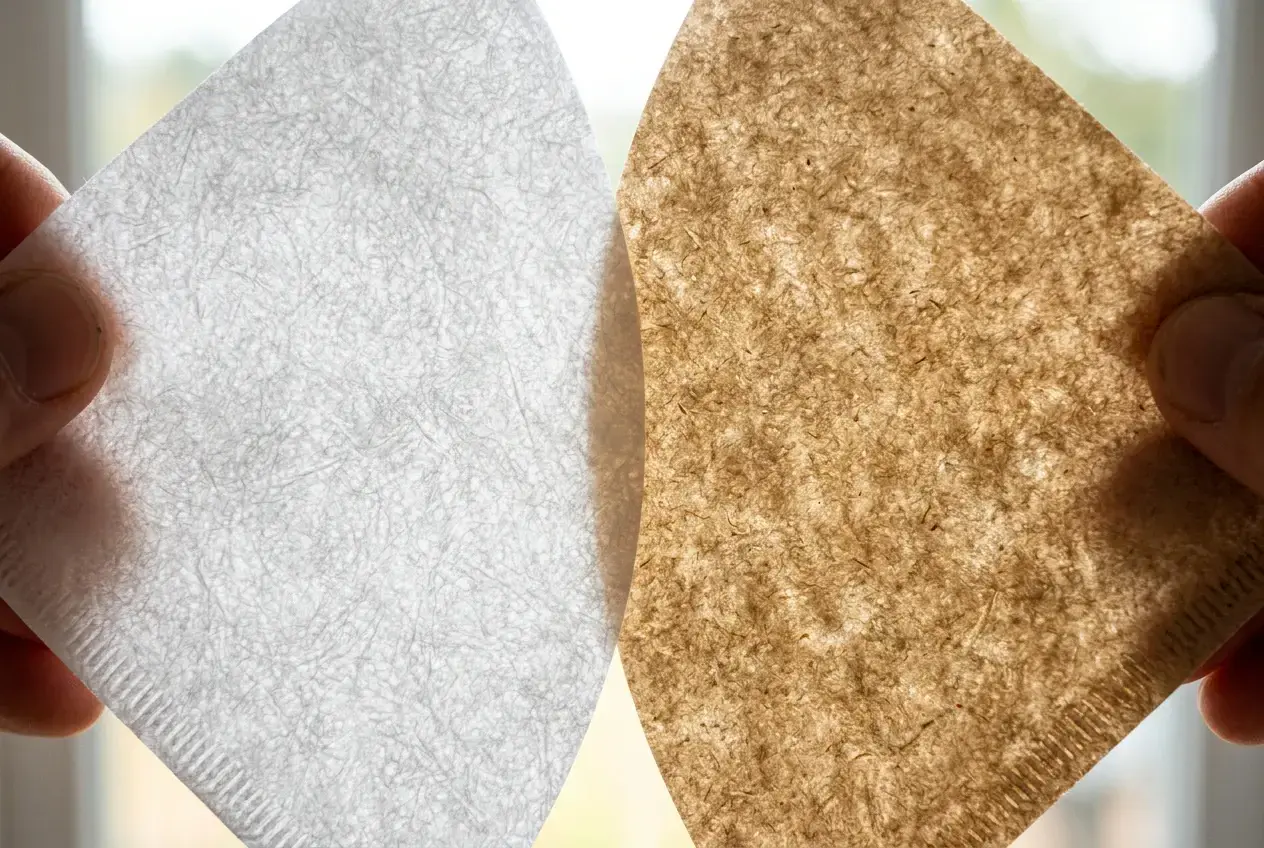
Bleached filters go through one of two processes to turn that pulp white. Older methods used chlorine, which left behind a noticeable chemical smell and taste if the filter wasn’t rinsed well. Most bleached filters sold today use oxygen bleaching instead, which whitens the paper without the harsh residue chlorine bleaching was known for. The result is a filter that looks pristine but has had some of its natural compounds stripped or neutralized in the process.
That stripping is the actual difference between the two. Bleaching doesn’t change the paper’s thickness or how tightly it’s woven. It changes the surface chemistry, and the practical effect is that bleached filters are less likely to pass any paper flavor into your coffee, while natural filters carry a bit more of that raw pulp taste until you rinse it away.
Does Bleaching Change the Taste? Separating Myth From Reality
Here’s where a lot of filter advice gets sloppy. The claim “natural filters make your coffee taste like paper” is true, but it’s true for bleached filters too if you skip the rinse. The myth is that bleaching is what eliminates papery taste. It isn’t. Rinsing is what eliminates papery taste, in both filter types.
What bleaching actually buys you is a head start. An unrinsed natural filter will almost always carry more of a cardboard note than an unrinsed bleached one, because there’s more raw pulp flavor sitting in the fibers to begin with. Once you rinse either filter properly, that gap closes a lot. Plenty of experienced brewers run unbleached filters daily and can’t tell the difference from bleached once the rinse is done right.
The other myth worth retiring: that bleached means worse for you, or that natural is automatically the “purer” choice. Oxygen bleached filters don’t carry the chlorine residue that gave old bleached paper a bad reputation. The choice between the two is a taste and workflow question, not a safety one.
Paper Thickness and Weave: The Other Half of the Clarity Equation
Bleaching gets all the attention because it’s the visible difference on the shelf, but thickness and weave do more to shape your cup’s clarity and body. A thicker filter with a tighter weave traps more fine particles and oils, giving you a cleaner, lighter cup with sharper separation between flavor notes. A thinner filter with a looser weave lets more fines and oils through, which adds body and a slightly heavier mouthfeel at the cost of some clarity.
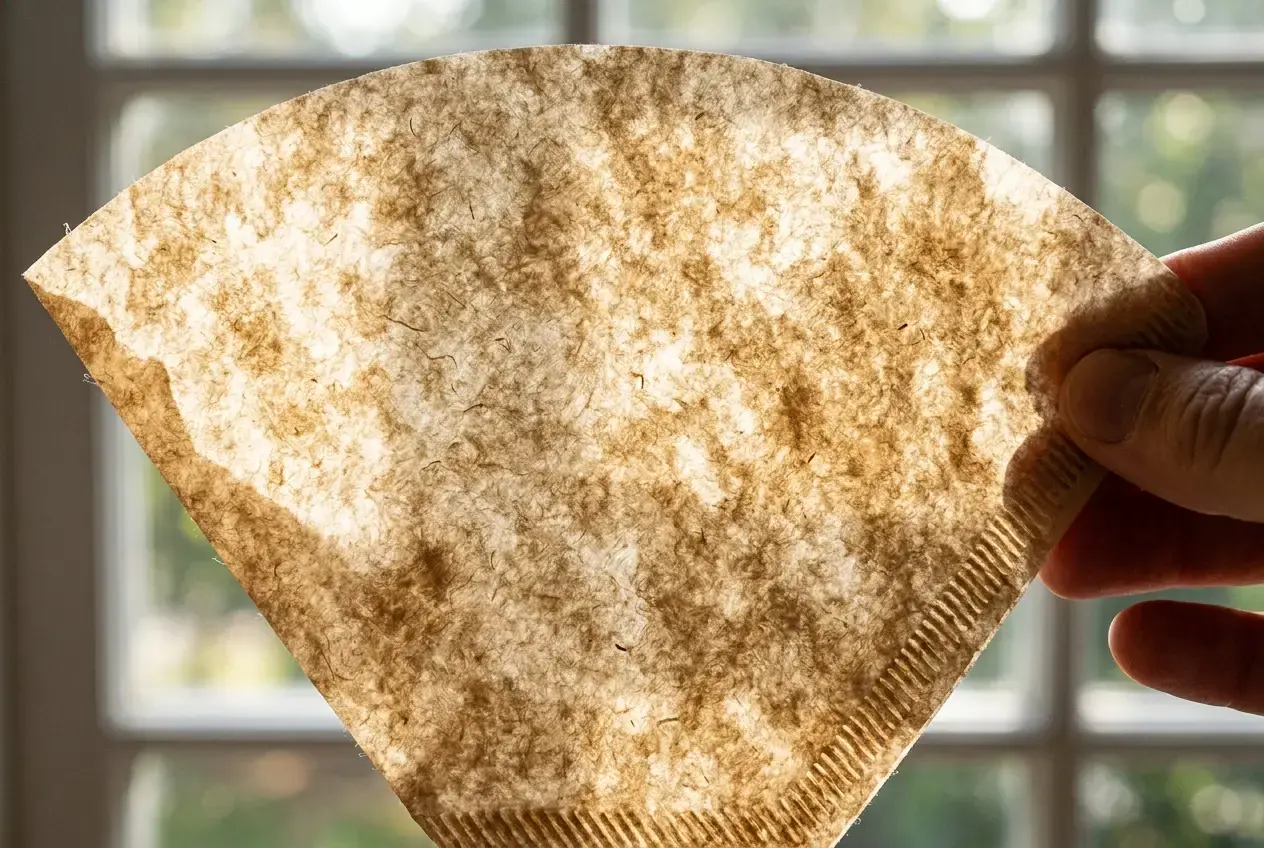
This is why two filters of the same material, one bleached and one natural, can still taste noticeably different from each other if their weave and thickness aren’t matched. It’s also why the same brewer can produce a cleaner or muddier cup depending on which filter brand you’re using, independent of bleaching at all. If you’ve ever ended up with a cup that tastes dull despite dialing in your grind and pour, it’s worth checking whether the filter itself is the bottleneck. Why Your Pour Over Coffee Tastes Muddy Or Flat & How To Clean It Up walks through more of the variables that flatten a cup beyond just the filter.
Thicker filters also drain more slowly, which affects your total brew time even if your pour technique hasn’t changed. If you switch filter brands and suddenly your drawdown is running long or short, that’s often the weave, not something you did wrong.
Matching Filter Material to Your Brewer
Different brewers were designed with a specific filter shape and paper weight in mind, and matching that intent matters more than chasing bleached or natural for its own sake.
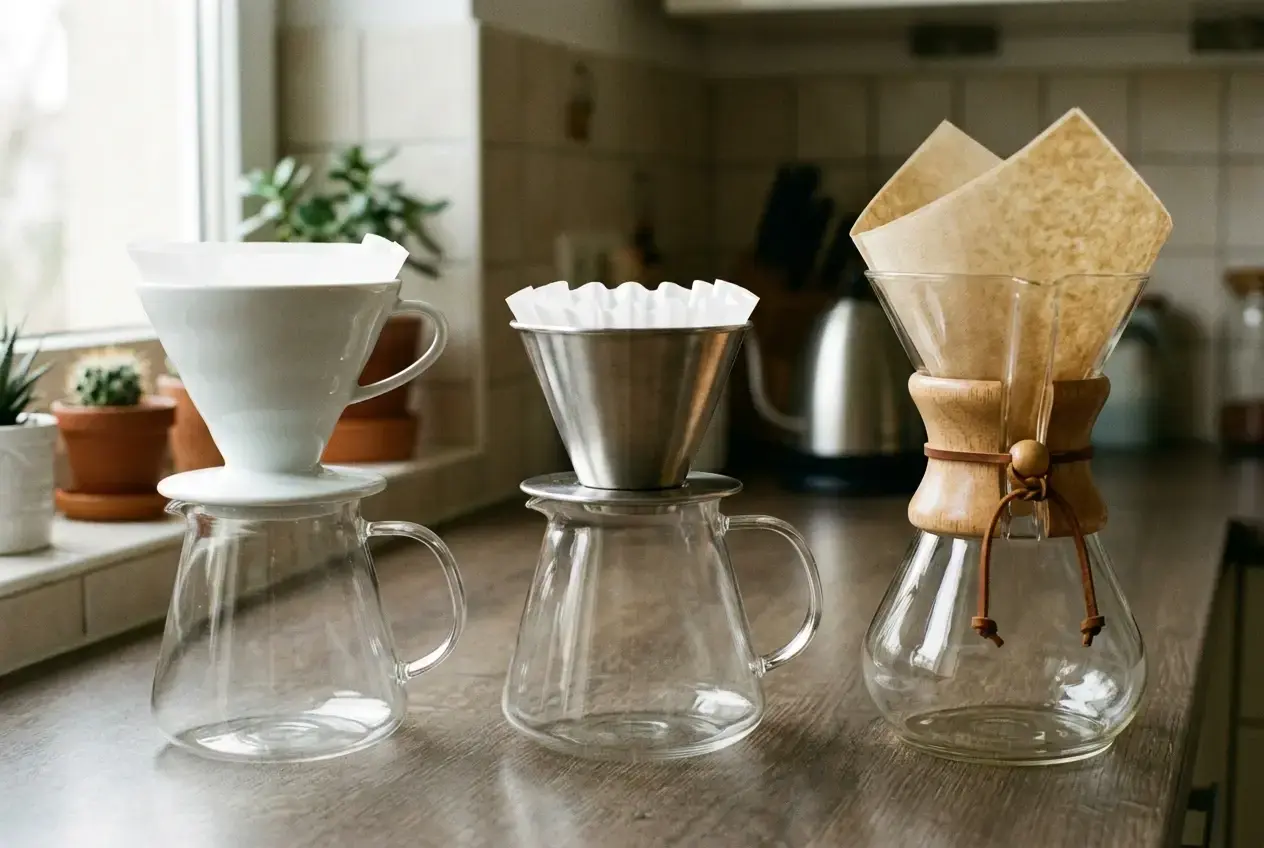
- V60: These filters are thin and fast draining by design, built to let the conical shape and large single hole do most of the extraction work. Either bleached or natural works fine here, but because the paper is already thin, a natural filter’s papery taste is more noticeable if you skip the rinse.
- Kalita Wave: The flat bottom and pleated sides use a slightly heavier filter than the V60’s. Both bleached and natural versions are widely available, and the flat bed tends to buffer small weave differences better than a cone does.
- Chemex: This is where filter choice matters most. Chemex filters are noticeably thicker than standard cone filters, which is part of why Chemex coffee tends to come out so clean and tea like. Natural Chemex filters exist but are less common, and the extra thickness means any papery taste from an unrinsed natural filter is more pronounced, simply because there’s more paper for water to pass through.
If you’re still deciding between brewers rather than filters, Hario V60 vs Kalita Wave: Which One Will Be The Daily Driver covers how the two handle day to day use, filters included.
The Rinse Test: How to Kill Papery Taste Before It Starts
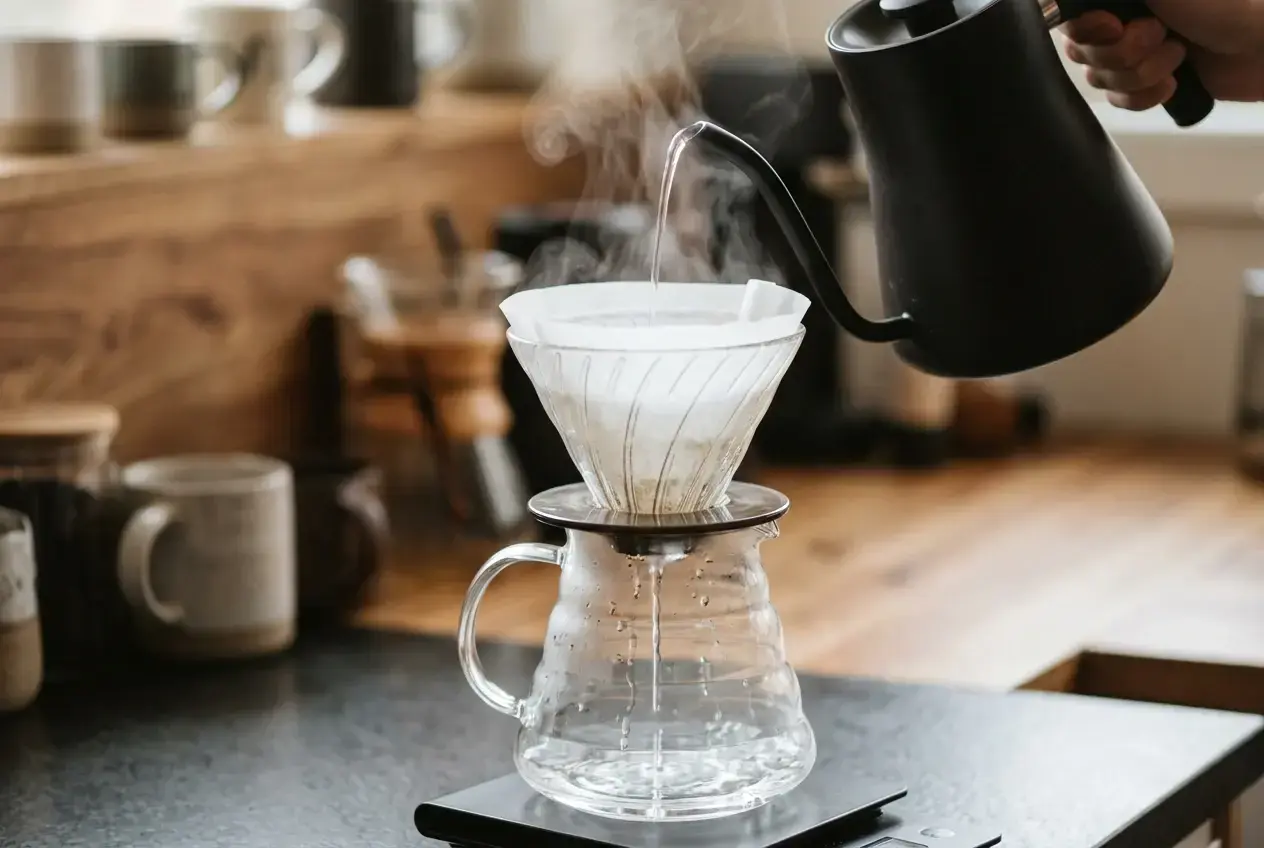
Rinsing isn’t optional if you care about clarity, regardless of which filter type you’re using. The process is the same for bleached and natural filters:
- Place the filter in your brewer.
- Pour hot water through it, enough to fully saturate the paper and run into your carafe or cup.
- Discard that rinse water before adding your grounds.
- Make sure the brewer itself is still warm, since the rinse also preheats it and helps keep your brew temperature stable.
A ten second rinse is usually enough for a V60 or Kalita Wave filter. Chemex filters, being thicker, benefit from a slightly longer and more thorough rinse to flush out more of the paper’s natural compounds. Skipping this step is the single most common reason people blame “papery taste” on the wrong variable, when the real fix was sitting in their rinse habit the whole time.
Which Filter You Should Actually Reach For
If you want the smallest chance of any paper flavor showing up, bleached filters give you a bit more margin for error, especially if you sometimes forget to rinse. If you’d rather avoid bleaching altogether, or you simply prefer the look and feel of natural paper, an unbleached filter will perform just as well once you build the rinse into your routine.
What matters more than the color is matching the paper’s thickness and weave to the brewer you’re using, and rinsing it properly every time. Get those two things right and the bleached versus natural debate becomes a minor preference rather than something that’s quietly working against your cup.
If you’re still assembling the rest of your setup, the pour over kit guide at How To Build A Pour Over Coffee Kit, From Your First Cup To Your Dialed-In Setup walks through every piece worth owning, filters included.