
If you’ve ever searched for pour over coffee tips, you’ll probably stumble upon guides recommending a digital scale like it’s the only way to get a proper cup. Truth is, scales are awesome for dialing in precision and repeatable results, but it’s totally possible to brew tasty pour over coffee without one. Plenty of home baristas, and even experienced coffee fans, make fantastic coffee using simple kitchen tools and a bit of practice.
I’m walking you through everything you need to know to skip the scale and brew confidently by eye: why people rave about scales, when you can skip using one, how to measure coffee and water easily, helpful brewing tricks, mistakes to avoid, and how to decide if a scale is worth adding to your setup.
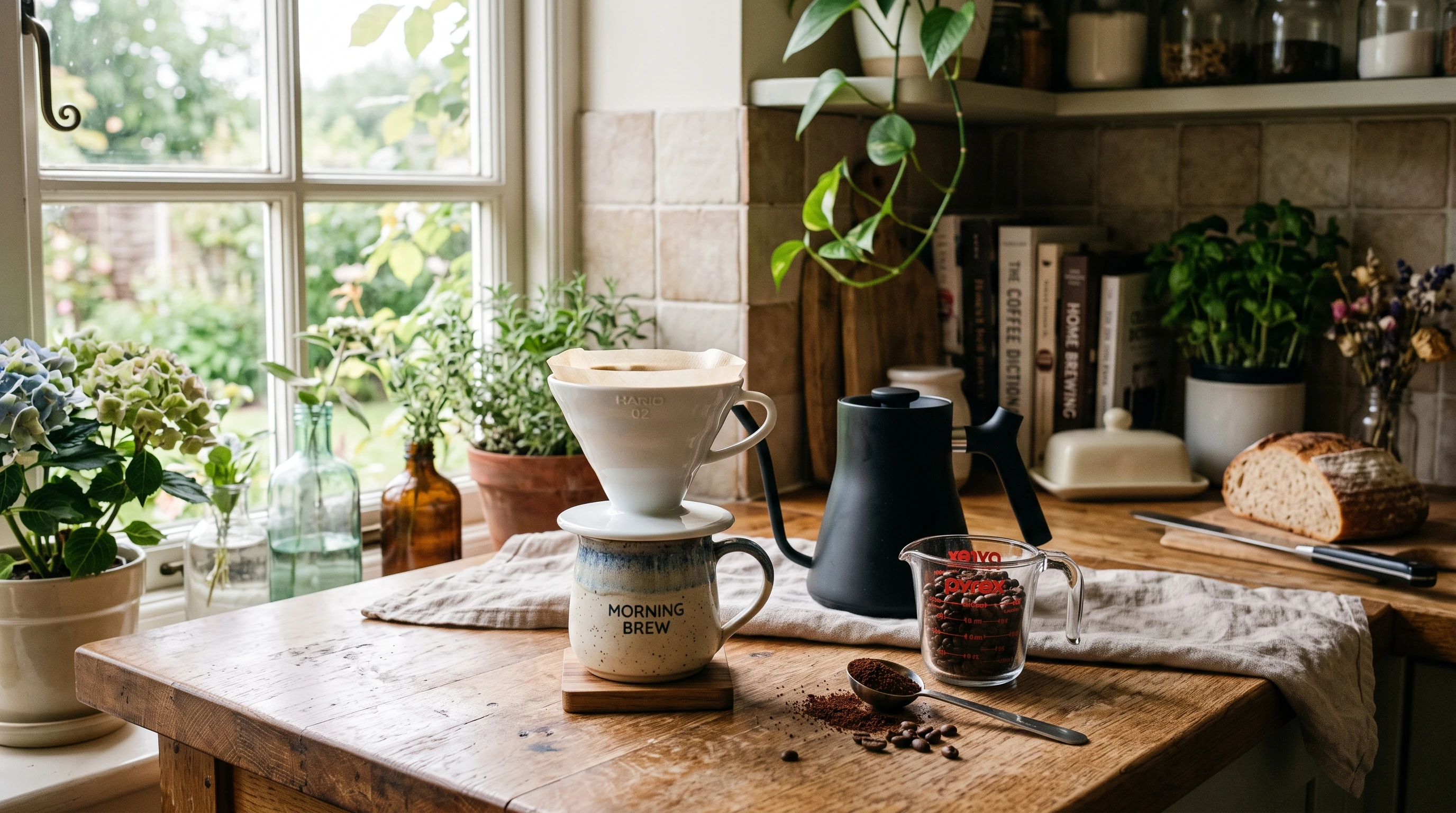
Is a Coffee Scale Really Necessary?
Coffee lovers and pros like scales because they help you brew with accuracy every single time. Coffee beans aren’t all the same, since some are light and fluffy and others are denser and compact. Grabbing a scoop can mean more or less coffee depending on your beans. Measuring by volume (like with tablespoons) won’t always be as precise as measuring grams on a scale. Even a small difference in coffee or water can change how your cup tastes—sometimes for the better, sometimes not so much.
Even so, people all over the world regularly make delicious pour over coffee with nothing but scoops and heatproof mugs. You’ll definitely notice if you’re way off in your measurements, but hitting the right range usually gets you great results.
Bottom line: A scale improves consistency, not whether your coffee tastes good.
Why Coffee Scales Make Brewing Easier
They Give Consistent Coffee-to-Water Ratios
Ratios are just how much ground coffee versus how much water you use. For pour over, most people aim for something between 1:15 and 1:17—that’s one part coffee for every fifteen to seventeen parts water. Here’s a quick cheat sheet so you can get the feel:
| Ratio | Taste |
|---|---|
| 1:15 | Strong and rich |
| 1:16 | Balanced |
| 1:17 | Lighter and brighter |
They Remove Guesswork
With a scale, if you stumble upon a cup you absolutely love, you can repeat it every day. If you want to experiment, like change your grind or water, using precise amounts makes it easy to spot what actually changed. Scales make it easy to track what’s working or not.
They’re Especially Helpful for Beginners
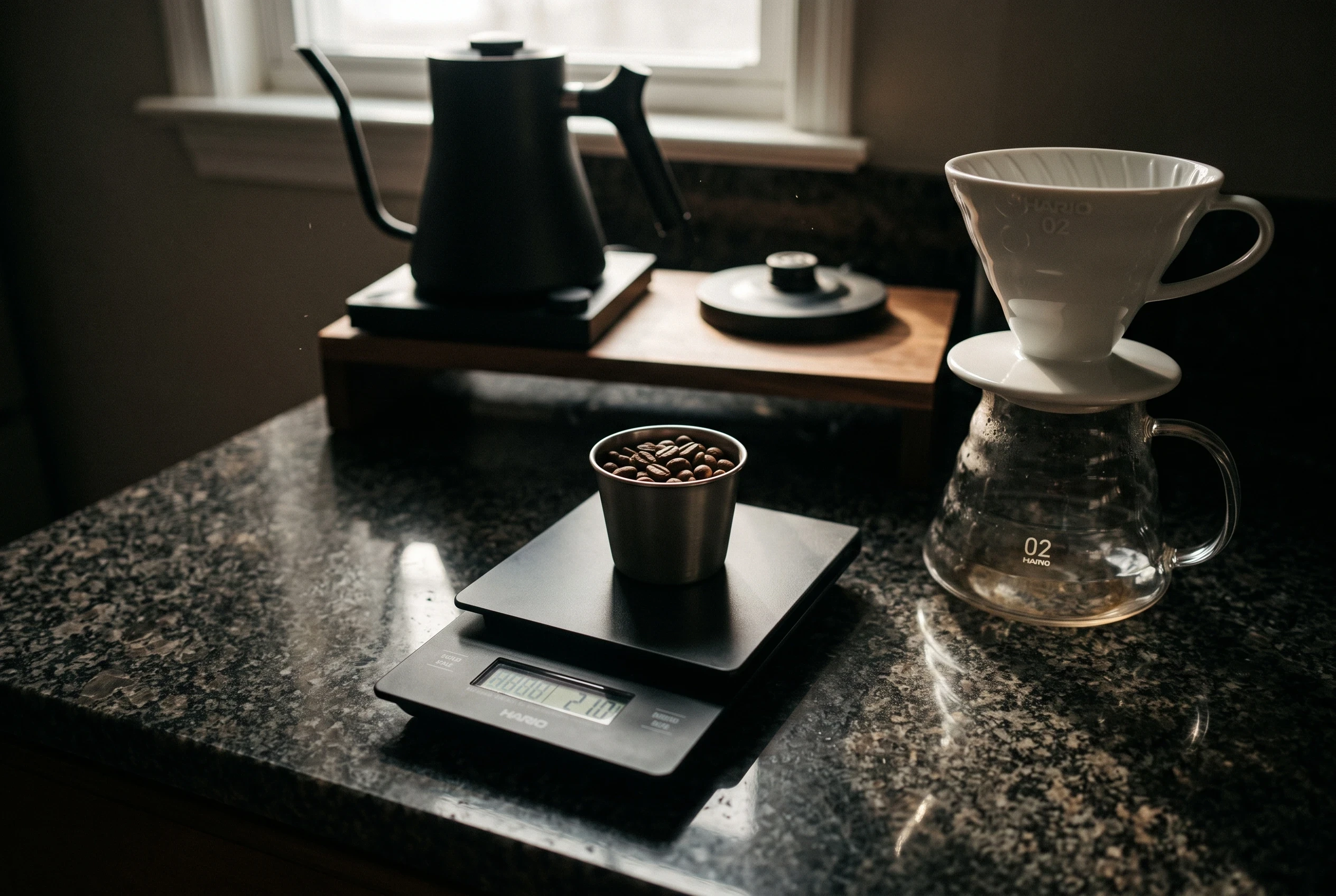
If you’re new to pour over, a scale can give you a solid foundation before you start freestyling or experimenting. It takes one variable out so you can focus on learning good pouring technique and timing instead of worrying about how much coffee went into your filter.
How to Make Pour Over Coffee Without a Scale
If you don’t own a coffee scale, here’s the easiest way to nail your brew until you’re ready to take things up a notch.
Step 1: Measure Your Coffee With a Scoop or Tablespoon
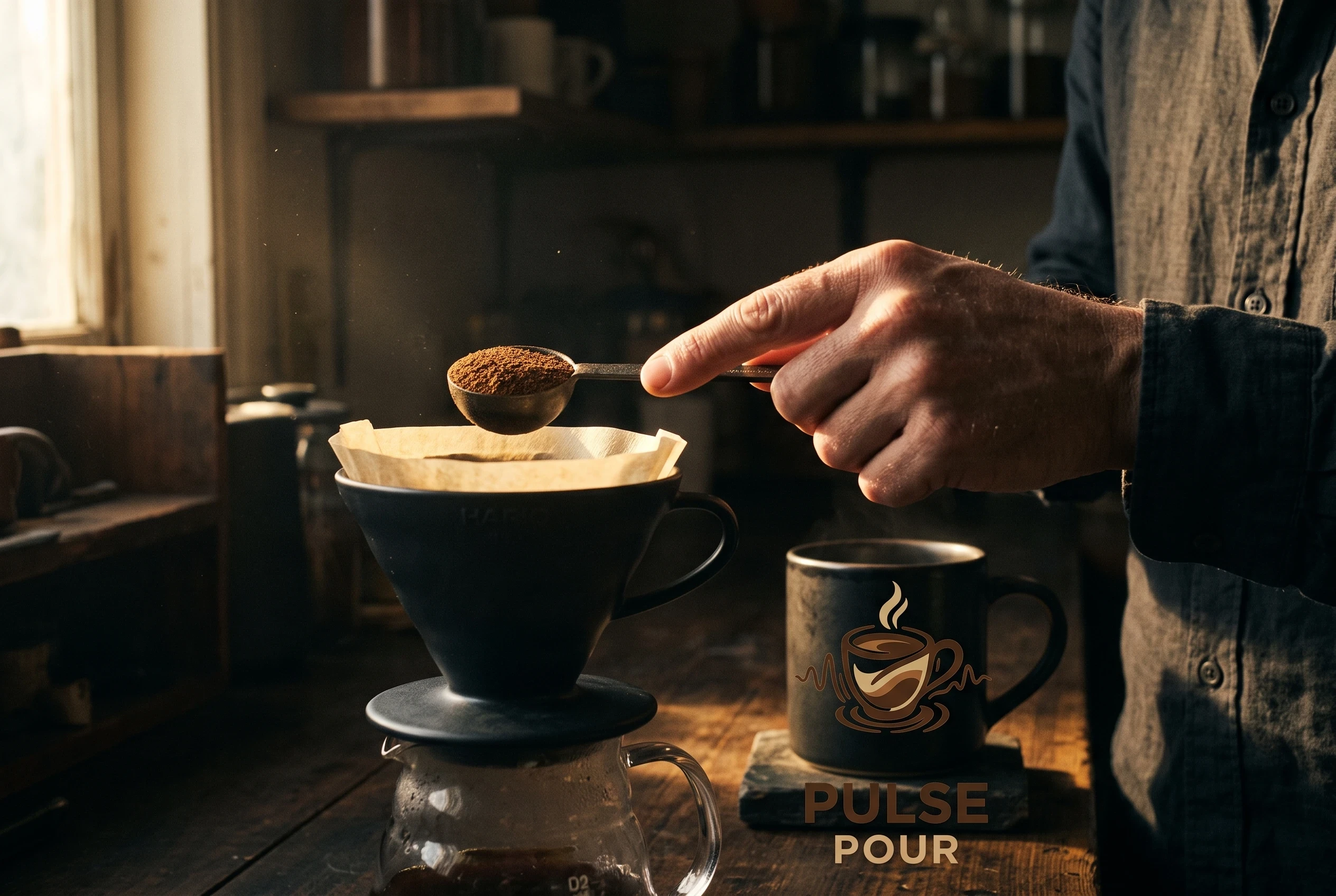
You can use a standard tablespoon or one of those dedicated coffee scoops. Here’s what you need to know about rough conversions:
| Coffee Amount | Approximate Weight |
|---|---|
| 1 level tablespoon | 5–6 g |
| 2 tablespoons | 10–12 g |
| 3 tablespoons | 15–18 g |
| 4 tablespoons | 20–24 g |
Some beans take up more space than others, but this table will help you land in the right ballpark every time.
Step 2: Measure Water Using Your Kettle or Measuring Cup
If your kettle has measurements, you’re all set. If not, you can use a glass measuring cup, or even a mug if you know its size. Here’s a quick reference for water conversions:
| Water | Milliliters |
|---|---|
| 8 oz | 237 ml |
| 10 oz | 295 ml |
| 12 oz | 355 ml |
| 16 oz | 475 ml |
Step 3: Aim for a Simple Ratio
A super easy rule: use one tablespoon of ground coffee for every 4 ounces of water. This keeps you pretty close to a classic pour over strength most people enjoy.
Step 4: Adjust Based on Taste
If your coffee doesn’t taste quite right, small tweaks will usually get you where you want to be. If it’s too sour, use more grounds or slow down your pour. If it’s too bitter, use a bit less coffee or a coarser grind. If it tastes too weak, add another half-tablespoon of coffee. Too strong? Add a splash more water.
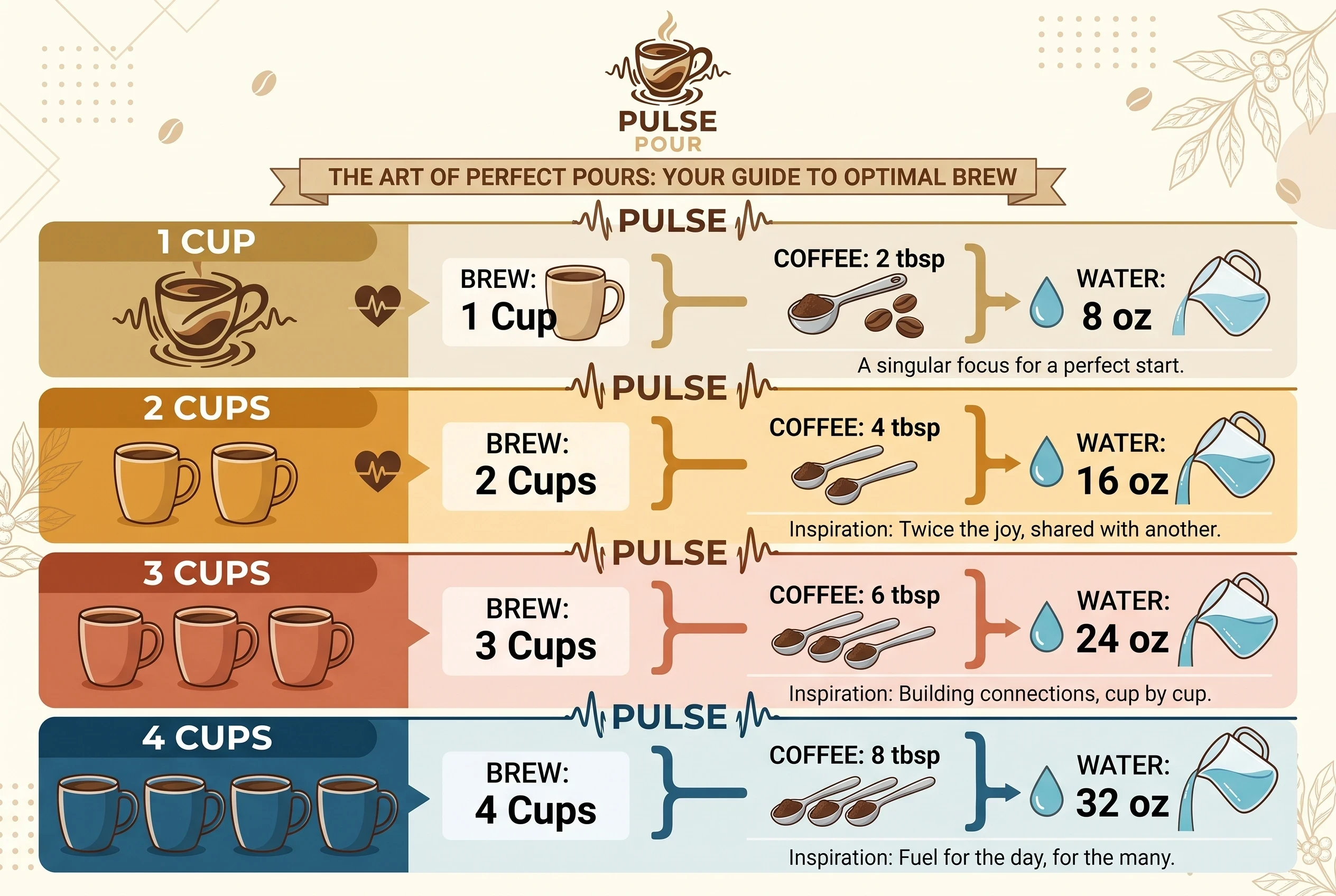
The Best Coffee Scoop-to-water Cheat Sheet
Here’s a quick table that you can print or save on your phone for coffee brewing any time (tablespoons are level, not heaped):
The Importance of Grind Size When You’re Not Using a Scale
If you aren’t weighing your coffee, learning how to get your grind size right becomes even more important. It’s the main thing that can switch your brew from awesome to off.
Too Fine
- Bitterness and harsh flavors show up
- Coffee turns muddy
- Water takes a long time to pass through
Too Coarse
- Coffee ends up weak and a bit sour
- Brews really quickly
- Flavors aren’t developed
Recommended Grind
I usually shoot for something like sand or sea salt. Medium-fine is the sweet spot for most pour over methods.
Water Temperature Still Matters
Even if you don’t have a thermometer, water straight off the boil is a little too hot. I recommend boiling your kettle, waiting around 30 to 45 seconds, then pouring over your grounds. That usually gets the water down to between 195 and 205°F (90–96°C), which is a great range for pulling out flavors just right. Too hot and the coffee can taste burnt or flat. Too cool and the flavors might not come through fully. How water temperature affects extraction is worth a read.
Focus on Consistency Instead of Perfection
Instead of stressing over perfection every time, try to repeat your process. Use the same scoop or spoon, the same mug or measuring cup, the same grind, and pour at a steady pace. I like to keep my bloom (the first pour that makes the coffee puff up) at about 30 to 45 seconds. Build your morning routine around a simple process, and your coffee will taste reliably good.
Common Mistakes When Brewing Without a Scale
- Using Heaping Scoops. Level off every tablespoon for accurate measuring.
- Switching Mugs Every Brew. New mugs may change water amounts and throw off your ratios.
- Eyeballing Water Levels. Guessing leads to variations you might not want.16 oz 475 ml
- Pouring Too Fast. Fast pouring means under-extracted, weak coffee. Pour slow and steady.
- Ignoring Brew Time. Stick to 3–4 minutes for classic pour over strength.
Tips for Better Pour Over Coffee Without Extra Equipment
- Buy freshly roasted beans. Flavor fades fast with stale coffee.
- Grind just before brewing for best aroma and taste.
- Use filtered water to avoid strange flavors.
- Wet your paper filter first to wash away paper taste.
- Let coffee bloom for at least 30 seconds before starting the main pour. Learn all about how to bloom coffee here.
- Pour slowly, making gentle circles to keep the coffee bed nice and even.
- Don’t stir or agitate the grounds very much. Gentle is best.
When You Should Consider Buying a Coffee Scale
If you brew pour over every day, buy specialty beans, or enjoy playing with recipes, a scale is definitely a handy upgrade. It’s especially useful if you switch brewing methods, since the perfect scoop for one coffeemaker might not work for another.
Scales are also great when you want to weigh coffee beans before grinding to keep from grinding more beans than you’re going to use. It’s actually very budget conscious because you are eliminating waste.
Digital coffee scales are available for less than a nice mug these days and can make your setup feel more intentional, but they’re not required unless you want to double down on repeatable results. If you’re brewing casually, you’ll be just fine without one.
Frequently Asked Questions
Can I use tablespoons instead of grams?
Absolutely. A standard tablespoon is about 5 to 6 grams of ground coffee. Just keep your tablespoons level, and you’ll be in the ballpark.
How much coffee should I use for one cup?
Start with two level tablespoons (roughly 10–12 grams) for 8 ounces of water. Adjust after your first try to suit your taste.
Can I use a regular kitchen measuring spoon?
Yes, you can. Just avoid oversized or tiny spoons—consistency counts more than being perfect.
Why does my coffee taste different every time?
If you guesstimate amounts, use different mugs, or scoop unevenly, expect your coffee to change a bit. A steady routine fixes most issues.
Can pros brew without a scale?
Most professionals use scales for recipes and public brewing, but plenty make delicious coffee at home by taste and feel.
Is a kitchen scale good enough?
For pour over, any digital kitchen scale that reads whole grams is perfect. Tare or reset functions are helpful too for a clean setup.
Final Thoughts: Great Coffee Is About Technique, Not Just Tools
Pour over coffee gets most of its magic from your bean quality, grind consistency, and the way you brew—not from fancy measurements. If you brew with care, using level scoops and the same cup every time, you’ll get repeatable results that taste fantastic. Sure, a scale can make things tidier and help optimize, but you definitely don’t need one to make memorable coffee at home. Focus on enjoying the adventure, and your morning cup will always be something to look forward to.