
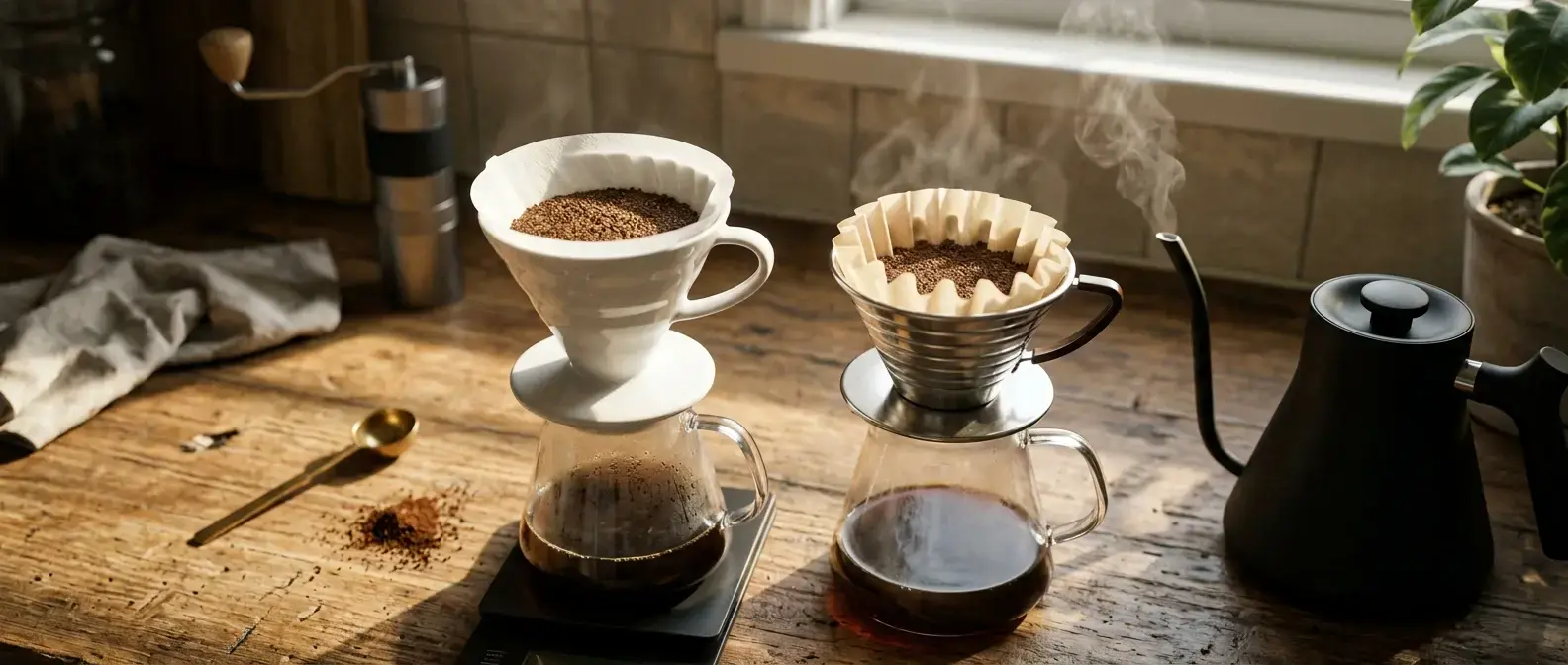
The question comes up in almost every pour over group, forum thread, and comment section: V60 or Kalita Wave. Both are respected, both show up on “best pour over brewers” lists, and both will make a genuinely good cup of coffee in the right hands. But “which one is objectively better” is the wrong question to ask. The right question is which one fits the fifteen minutes you actually have on a Tuesday morning, and which one you’ll still enjoy using on a slow Saturday when you’ve got nowhere to be.
This isn’t a spec sheet. It’s a decision tool for someone who either owns one of these already and wants to know if it’s really the right daily brewer, or is standing in front of two boxes trying to figure out which one comes home.
Why This Comparison Actually Matters for Your Morning Routine
The V60 and the Kalita Wave solve the same basic problem, getting hot water through a bed of ground coffee, in two genuinely different ways. The V60 is a cone with a single large hole at the bottom and spiral ribs running up the inside wall. The Kalita Wave is a flat-bottomed brewer with three small holes and a pleated “wave” filter that sits just above the base.
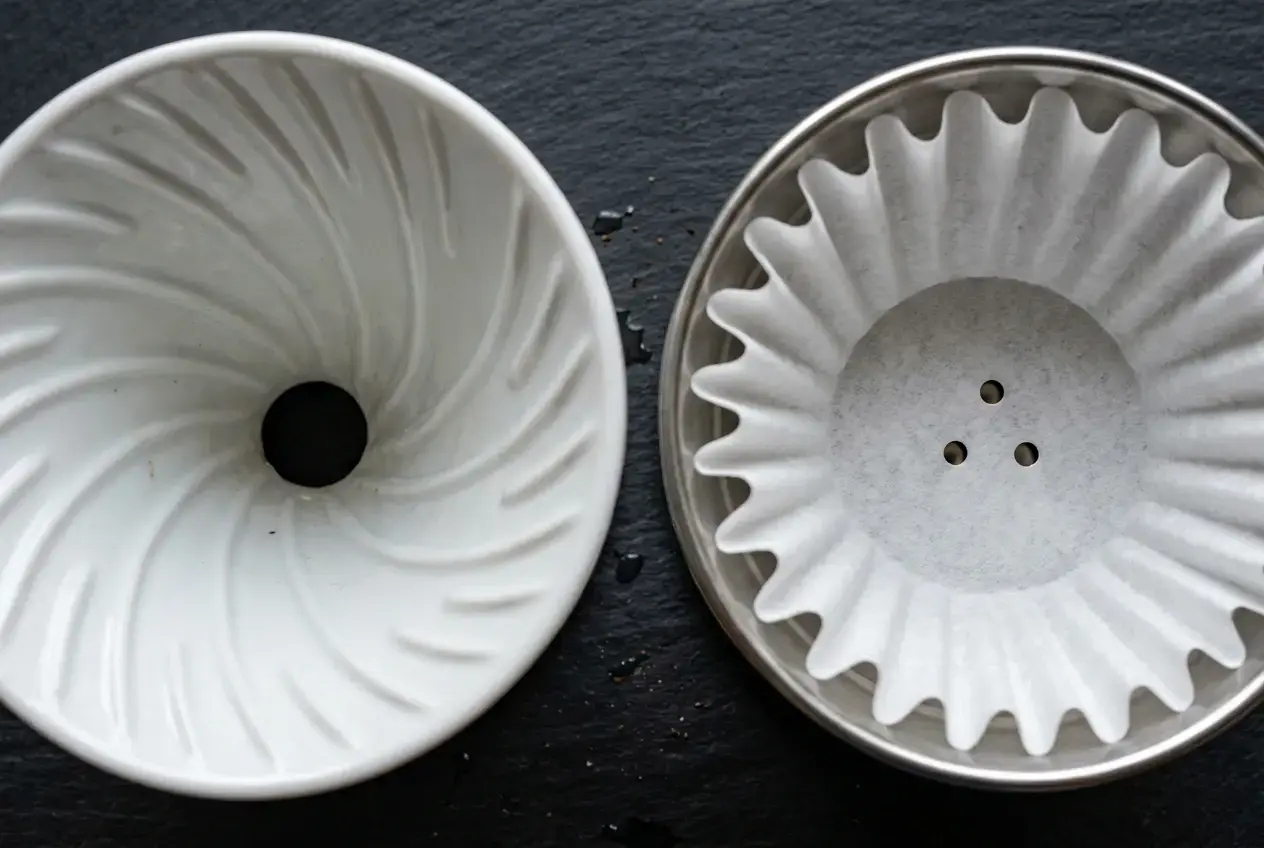
That difference in geometry changes how water moves through the coffee, and that changes what the brewer asks of you. A cone concentrates flow through one point and drains fast, which means your pour rate and pattern do a lot of the work. A flat bed spreads water more evenly across the grounds and drains slower and more predictably, which means the brewer itself is doing more of the work for you.
Neither of those is automatically better. It depends on whether you want to be the variable that controls the cup, or whether you want the hardware to control more of it for you. That’s the actual decision hiding inside “V60 vs Kalita Wave,” and it’s worth being honest with yourself about which one you are before you buy either.
The Honest Flavor Difference: Clarity vs Body
People argue about this more than the actual difference deserves, but there is a real one. The V60’s fast drain and cone shape tend to produce a cup with more clarity: distinct flavor notes, a lighter body, and a brighter finish. When a V60 pour goes well, you can often pick out individual notes in the cup more easily than you can with a flatter, slower brew. If you want to get better at identifying flavor notes in your coffee, the V60 gives you more to work with because it separates those notes out rather than blending them together.
The Kalita Wave produces a rounder, more even cup. Body tends to be a touch heavier, sweetness tends to come through more consistently, and the flavor notes sit closer together rather than standing apart. It’s a gentler cup, in the way a flat bed of coffee releases its flavor more gradually than a cone draining quickly through one hole.
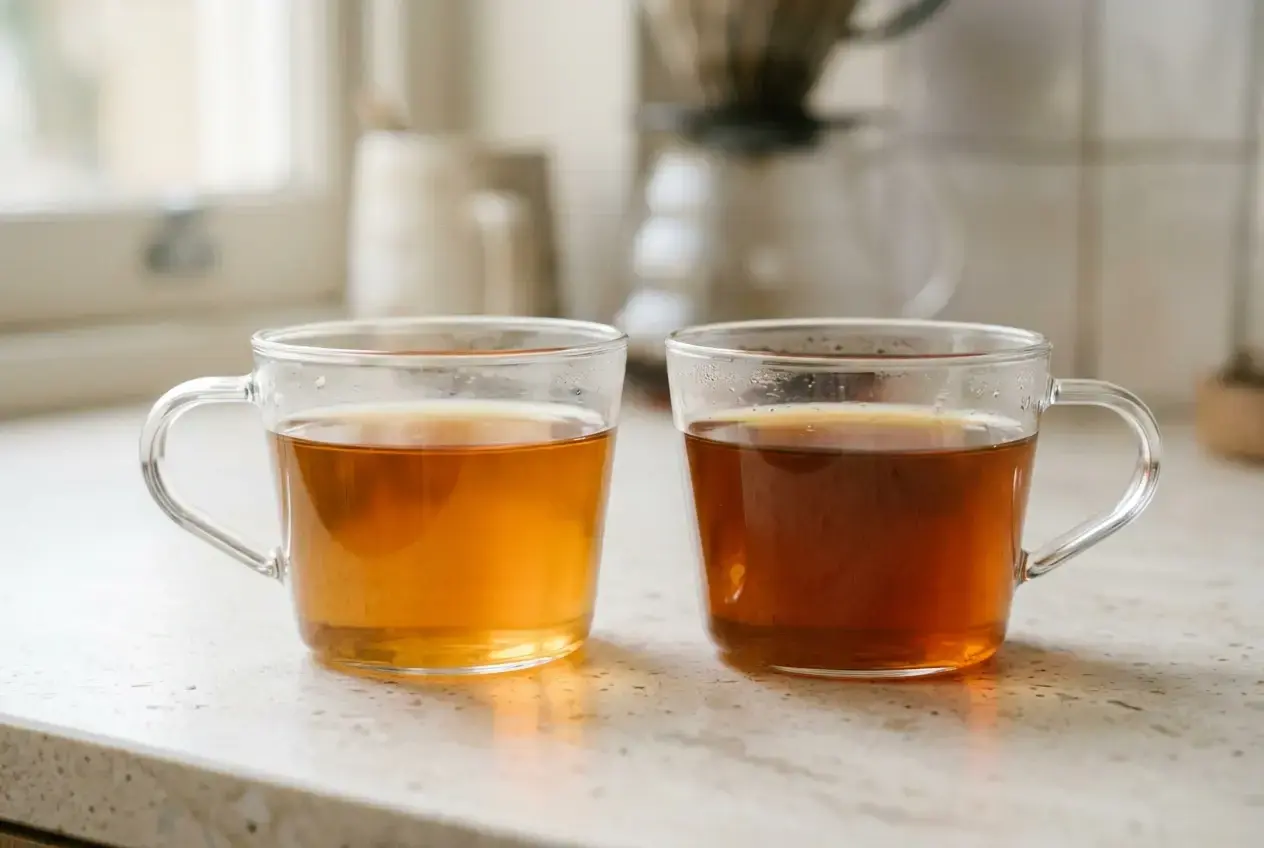
Neither cup is “more correct.” If you’re someone who wants to taste the specific story a particular bean is telling, the V60 tells it with sharper edges. If you want a cup that tastes good and consistent every single time without needing to think about what the bean is doing, the Kalita leans that way. Most people who drink one cup a day, every day, actually prefer the Kalita’s evenness once they taste the two side by side. Most people chasing a specific roaster’s tasting notes prefer what the V60 reveals.
Which One Forgives a Bad Pour
This is where the real daily-driver decision usually gets made, and it’s not close.
The V60’s single large hole and fast drain mean your pour technique has a direct line to the cup. Pour too fast, too close to the center, or too unevenly, and you’ll taste it: channeling, uneven extraction, a cup that’s sour in one sip and bitter in the next. Getting consistently good results from a V60 usually means learning a pulse pour technique and sticking to it, because the brewer won’t correct for you.

The Kalita Wave’s three small holes restrict flow no matter how you pour. Pour a little fast, pour a little off-center, and the brewer buffers it. The flat bed and restricted drain mean water spends more time in contact with the grounds regardless of your exact technique, which flattens out a lot of the variation that would otherwise show up in the cup.
If your mornings are rushed, if you’re pouring with one eye on the clock, or if you’re newer to pour over and still building a feel for pace, the Kalita Wave will bail you out more often than the V60 will. The V60 rewards practice and punishes inconsistency. The Kalita Wave is more tolerant of the kind of pour you make when you’re half awake and haven’t had coffee yet, which is, for a lot of people, exactly the situation they’re brewing in.
What Each Brewer Demands From the Rest of Your Setup
Neither brewer exists in isolation, and this is the part people skip when they’re comparing specs instead of routines.
The V60 is more sensitive to grind size and freshness than the Kalita Wave. Because the cup is more exposed, flaws show up more clearly too: stale beans taste flatter, an uneven grind produces a muddier cup, and a cheap grinder with a lot of fines will show up as unwanted bitterness. If your grinder is inconsistent, the V60 will expose it every time.
The Kalita Wave is more forgiving of all of that, not because grind and freshness stop mattering, but because the slower, more even extraction buries small inconsistencies a little better. That doesn’t mean you can use stale beans and a blade grinder and expect a great cup. It means the margin for error is wider.
Filters are a smaller but real difference. V60 filters are widely available and cheap. Kalita Wave filters are a bit more specific to the brand and sometimes a little harder to find locally, though they’re easy enough to order. If you travel with your brewer or buy filters on the fly at a grocery store, that’s worth knowing before you commit.
Water quality and temperature matter to both equally, so that part of your setup doesn’t change based on which brewer you pick. If you haven’t already sorted that out, it’s worth doing regardless of which brewer you land on.
Cleanup, Durability, and Living With It Daily
This is the unglamorous part that actually decides whether a brewer becomes your daily driver or ends up in a cabinet after a month.
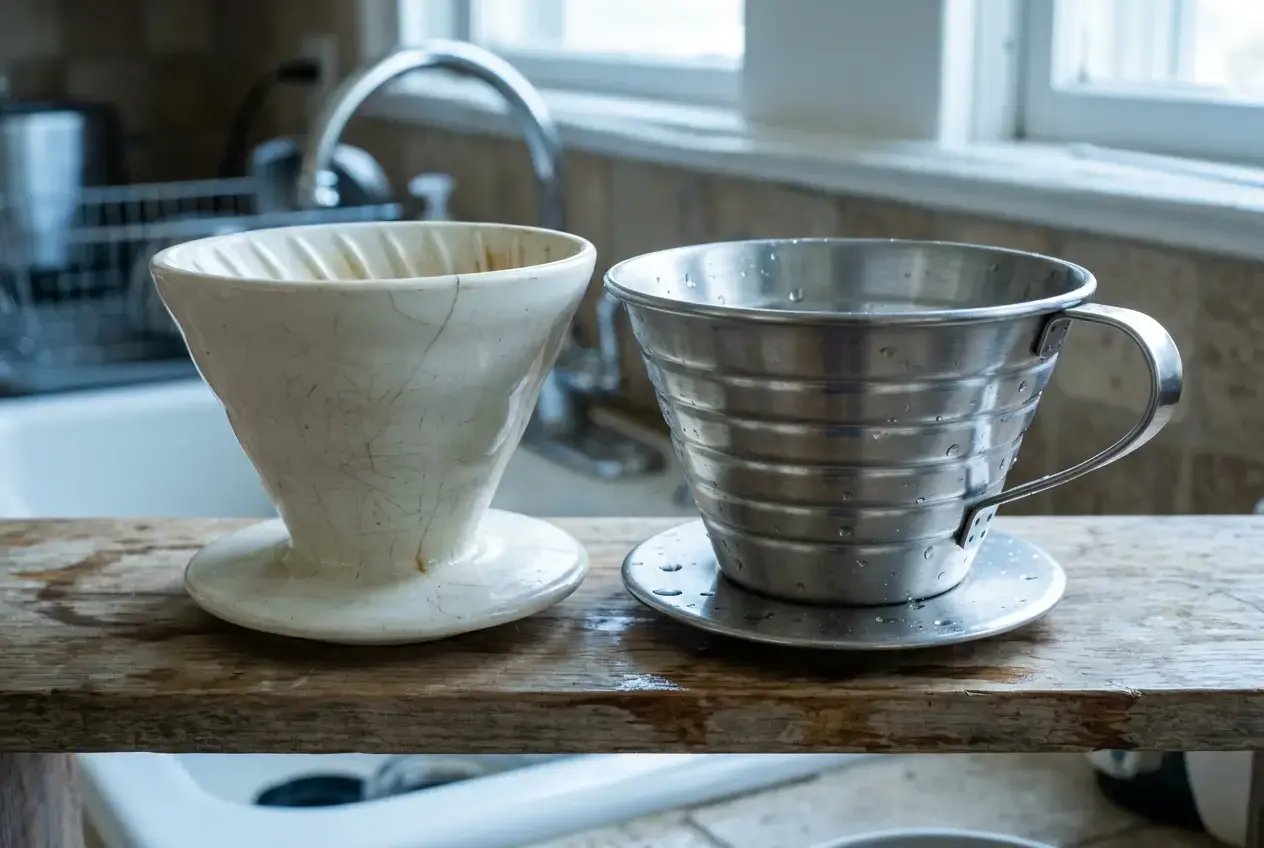
Both brewers clean up the same way: dump the spent grounds and filter, rinse, done. Neither one has nooks that trap coffee oils the way some immersion brewers do. On a day-to-day basis there’s no meaningful difference here.
Durability is where they diverge a little. Glass and ceramic V60s are elegant but breakable, and if you’re brewing before sunrise in a kitchen you share with other half-awake people, that’s a real risk. Plastic V60s solve that but feel less substantial. The Kalita Wave is commonly available in stainless steel, which is closer to indestructible and doesn’t retain heat the way ceramic does, for better or worse depending on your climate and how hot you like your water to stay through the brew.
If you’re brewing one cup, alone, in a kitchen where nothing gets knocked around, this won’t matter much either way. If your kitchen is busier than that, the steel Kalita Wave is the lower-maintenance choice to live with.
Do You Actually Need Both
Plenty of pour over enthusiasts end up owning both, and that’s not an outrageous idea. The Kalita Wave as the weekday brewer, for the fifteen minutes before work when consistency matters more than exploration. The V60 for a slow weekend morning when you want to actually taste what a new bag of beans is doing and don’t mind giving the pour your full attention.
But if you’re reading this because you want one brewer, not two, you don’t need both to drink good coffee every day. Plenty of people brew exclusively on a V60 for years and never miss a flat bed. Plenty of people brew exclusively on a Kalita Wave and never feel like they’re missing clarity. The “need both” answer is really only true if you’ve already decided coffee is a hobby you want to spend time on, not just a drink you want to get right.
So Which One Is Your Daily Driver
If your weekday mornings are rushed, if you’re still building confidence with your pour, or if you just want a reliably good cup without fussing over technique every time, the Kalita Wave is the better daily driver. It trades a little bit of flavor clarity for a lot more consistency, and consistency is usually what “daily” actually needs.
If you already enjoy the process, you’re comfortable with a pulse pour, and you want a cup that shows you exactly what a bean is doing, the V60 is worth the extra attention it demands. It’s a brewer that rewards the time you put into dialing it in, and punishes the mornings you don’t have that time to give.
Neither choice is permanent, and neither one is wrong. Pick based on the mornings you actually have, not the mornings you wish you had.
If you’ve landed on the V60, this beginner recipe will get you brewing a solid cup from day one. If the Kalita Wave is calling your name instead, this guide walks through a forgiving method built for exactly this brewer. And since this piece touches on gear you may end up buying, our affiliate disclosure is worth a quick read too.