

Dialing in the right pour over coffee ratio makes a huge difference in how your coffee turns out: smoother, brighter, or just plain delicious. Without a little guidance, it’s easy to end up with a brew that tastes muddy or watery. I’m breaking down the basics and a few pro tricks for measuring out your grounds and water, so you can confidently nail your brew every single time.
What Pour Over Coffee Ratio Really Means
Getting your head around the pour over coffee ratio is actually pretty straightforward, even if it sounds fancy. The simple version is: this ratio describes how much coffee and water you use to brew your cup. It’s usually shown as something like 1:15 or 1:17, which really just means 1 part coffee to 15 or 17 parts water by weight.
What Coffee Ratio Means in Simple Terms
If you see a pour over ratio of 1:16, for every 1 gram of ground coffee you use, you’ll want to add 16 grams of water. So if you use 20 grams of coffee, you’ll pour in 320 grams of water. It’s a handy way to keep things consistent and make sure your coffee doesn’t taste like brown water, or end up too bitter and strong.
Why This One Number Affects Your Whole Brew
Your coffee to water ratio pour over style kind of sets the stage for your entire brewing process. Even if you use fresh beans and a great kettle, ignoring the ratio can throw off your results. Too much coffee and your drink can taste overpowering or even a bit chalky. Not enough, and you’ll wonder where all the flavor went.
Coffee Ratio vs Brew Strength
People sometimes mix up coffee ratio and strength, but they aren’t exactly the same. “Ratio” is about the starting mix of grounds to water, while “strength” is how concentrated your finished drink feels. Messing with the ratio is one way to tweak strength, but grind size, brew time, and even water temperature all play a role in what you taste in your cup.
To fully optimize you’re pour over coffee, there are some other things to consider. Try the suggestions in this guide to perfect your pour over coffee.
The Best Pour Over Coffee Ratio To Start With
If you’re just getting started or want a super reliable brew, I recommend starting with a 1:16 pour over coffee ratio. It’s balanced, works well with most beans, and is easy to remember. Some folks like it a bit richer, others like it a little more mellow, but 1:16 rarely disappoints.
A Reliable Starting Ratio for Most Brews
Most people will be happy if they start with 1 gram coffee to 16 grams water—that’s the best pour over ratio for beginners and works great for medium roasted beans. If you don’t have a scale, that’s about one tablespoon coffee per 110-120 ml water (but I’ll get to more details on measuring later).
When To Go a Little Stronger
If your beans are light roasted, or you like a more robust flavor, you might prefer 1:15 or even 1:14. This higher coffee to water ratio pour over style boosts flavor and body, but if you go too far, you’ll start to lose some of the clarity and sweetness. When using exceptionally fresh or denser beans, a slightly stronger ratio helps unlock more body and brings out hidden notes that lighter ratios might miss.
When To Go a Little Lighter
If your coffee tastes a little too aggressive, or if you’re brewing with darker roasts, a 1:17 or 1:18 ratio can produce a cleaner, lighter cup. You might also want to use more water when you’re brewing larger volumes at once, but don’t overdo it or you risk making the coffee taste slightly flat. Lighter ratios are especially nice if you’re enjoying your coffee black, as they allow you to really track down subtle flavors unique to each origin.
How Much Coffee and Water You Actually Need
You don’t have to memorize complicated charts to brew great pour over. Keeping a couple of easy numbers in your head makes it simple, whether you’re making a mug for yourself or two cups to share.
Easy Coffee and Water Amounts for One Cup
For a typical 12-ounce cup (about 340 ml), I like to use:
- 21 grams of coffee
- 340 grams (or ml) water
If you’re using tablespoons instead of grams, that’s roughly 3 heaping tablespoons of ground coffee. It won’t be as exact, but it does the trick if you’re just starting out.
Easy Coffee and Water Amounts for Two Cups
Want to brew two 12-ounce cups? Double everything:
- 42 grams of coffee
- 680 grams (ml) water
Just make sure you have a large enough dripper or cone. Otherwise, split up the brewing into two separate rounds for the best results. Brewing for two is a great way to share your favorite beans and experiment with adjustments together.
A Simple Pour Over Coffee Ratio Chart
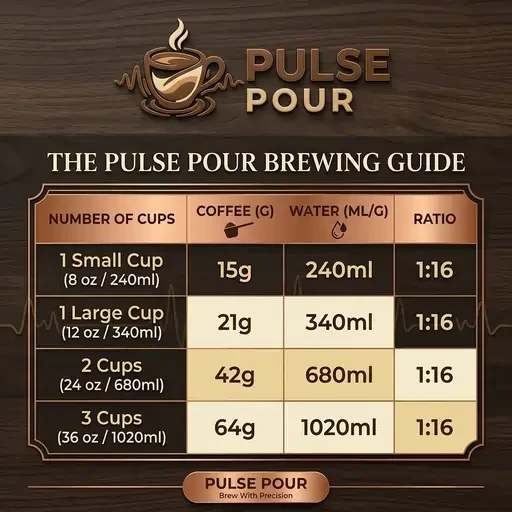
This table makes it easy to whip up delicious coffee no matter how many people you’re serving. Once you have a favorite ratio, these numbers are easy to memorize for next time.
How To Measure Your Pour Over Ratio Without Overcomplicating It
Techy gadgets may seem intimidating, but actually, measuring your pour over coffee is easier than ever. Here’s how to pick what works for you, whether you love kitchen scales or just eyeballing things at 7 a.m.
Why a Scale Makes Things Easier
A small digital scale is the single biggest upgrade you can add to your coffee game. It takes the guesswork out, gives you repeatable results, and makes it easy to try different ratios until you find your favorite. A pocket-sized scale is cheap online and takes up almost no space in your kitchen. With a scale, you can also measure your bloom (that first pour to wet the grounds), which improves how evenly your coffee extracts.
For more information on blooming your pour over coffee, visit this post on blooming pour over coffee
How to Measure Coffee and Water in Grams
I scoop the grounds right onto a small cup or filter on my scale (hit “tare” so the weight of the cup doesn’t count). After adding coffee, put your brewer and mug on the scale and pour water slowly, keeping an eye on the number until you hit your target—say, 340 grams for a big cup. Tracking your pours also lets you tweak your timing and ensure all grounds get evenly soaked, leading to a cleaner, next-level cup.
Can You Make Good Pour Over Coffee Without a Scale?
You can still brew a great cup without a scale by using tablespoons for coffee and a standard measuring cup for water, but your results might be less consistent. A good rule of thumb: one level tablespoon of coffee weighs about 5-6 grams. For a 12-ounce mug, use 3 to 3½ tablespoons of ground coffee and fill the cup with hot water. It’s not perfect, but it works in a pinch. Try to keep your method the same each time to make your morning coffee more dependable.
Tips for Making Consistent Pour Over Coffee
Consistency is key in pour over brewing. Try to use the same brand or shape of scoop for coffee, fill it the same way, and use the same measuring cup for water each time you brew. If you do pick up a scale later on, you’ll immediately notice your cups get even tastier and more reliable.
If you’re like me, and even more experimental then most with your coffee, then check out the best pour over coffee methods to switch things up and discover even more possibilities
How Ratio Changes the Flavor in Your Cup
Playing with pour over coffee measurements is the key to shaping flavors. Even a tiny tweak can take your cup from “meh” to “yum.” Here’s what really happens when you push your ratio up or down:
What Happens When You Use Too Much Coffee
Going heavy with the coffee makes your drink taste bolder and richer, but it can start to feel dense or bitter if you add more coffee than your taste buds want. Sometimes, you’ll notice your coffee feels “sludgy” or almost chewy, especially if your grind is a bit off or your water is too cool. Using too much coffee can also make your brew finish with a dry feeling on your tongue, something that’s not always pleasant first thing in the morning.
What Happens When You Use Too Little Coffee
On the other end, skimping on coffee leaves you with a cup that tastes weak, watery, and a bit hollow. The sweetness, acidity, and nuanced flavors get lost. Even the best beans in the world can’t shine if you dial back the coffee just to save a gram or two. Sometimes, using less coffee can even make the cup taste a bit sour, as there’s not enough strength and body to balance out acidity.
How Ratio Affects Body, Clarity, and Balance
Balance is probably my favorite thing about pour over. The right ratio gives you a full-bodied cup that still feels delicate and crisp. Pour over brewing, especially with a standard 1:16 or 1:17 ratio, highlights clarity (how clean flavors taste) and balance (how nothing overwhelms your senses). If your coffee tastes a little off, it’s usually because the ratio is out of whack or your grind is out of sync with your ratio. As you get more comfortable, you’ll start to spot which ratios bring out juicy flavors, which ratios give chocolatey richness, and how small changes can make every new bag taste its best.
If you really want to enhance the subtle flavors in your brew, check out How to Enhance Pour Over Coffee Flavors.
How To Adjust Your Ratio Based on Taste
If you’re looking for a more full-flavored brew, cranking up the coffee side of your ratio will do the trick. If you want your coffee lighter, add more water. Simple, right? The key, though, is to only change one thing at a time, so you know what’s working (or not). Keeping a coffee journal with notes about your favorite ratios can really help you replicate your best cups—or keep track of experiments that weren’t as tasty as you hoped.
How to Tweak Your Ratio for a Stronger Cup
If your brew feels too thin, add more coffee or use less water next time. For example, go from 1:16 to 1:15. If you use 20 grams of coffee, drop your water to 300 grams instead of 320. Or bump coffee up to 21 grams and keep water the same. Even a one-gram difference can set free extra punch and complexity, highlighting richer and deeper notes that might be hiding with a milder ratio.
How to Tweak Your Ratio for a Lighter Cup
For a gentler, rounder result, try 1:17 or 1:18. The biggest thing is to taste after every adjustment. Even a 5-gram difference can totally change the vibe of your cup. Don’t be afraid to experiment, but remember what you changed for next time. Pay attention to how your brew’s aroma changes with each adjustment—it can be an eye-catching transformation and help you tune the cup to your taste.
Why It Helps to Change One Variable at a Time
If you change your ratio, grind, water temp, and pour speed all in one brew, it’s tough to know why your coffee tastes different. By tweaking just the coffee to water ratio pour over method, you get a clear idea of what that change actually does for the flavor, body, and acidity. Once you’ve got a ratio you like, play with other factors like grind size or water temperature. Over time, you’ll develop your own playbook for making coffee uniquely yours every morning.
Common Pour Over Ratio Mistakes To Avoid
Getting consistent, satisfying pour over isn’t just about using premium beans. Here are some mistakes I’ve seen (and made myself) that can throw off your brews:
- Eyeballing your measurements: Even a little too much or too little coffee can switch up the flavor dramatically. Measuring helps keep things tasting just right every time.
- Changing grind size and ratio at the same time: This makes it really hard to figure out what improved (or ruined) your cup. Stick to one change at a time for better control.
- Using the same ratio for every coffee: Some beans just shine brighter at a stronger or weaker ratio. Use your favorite ratio as your base, then experiment when you switch beans or roast levels.
- Ignoring water temperature and pour speed: Not everything is about ratio! If your coffee still tastes off after adjusting the ratio, check your pour time and water temperature. Small tweaks in these areas can give a boost to your next cup. Water Quality also plays a major role in the final product.
- Not taking notes: With every new bag of coffee, your perfect ratio might change slightly. Jotting down what worked—and what didn’t—helps build confidence in your process.
An Easy Pour Over Ratio To Try Right Away
If you want something you can rely on in the morning, start with this easy pour over recipe:
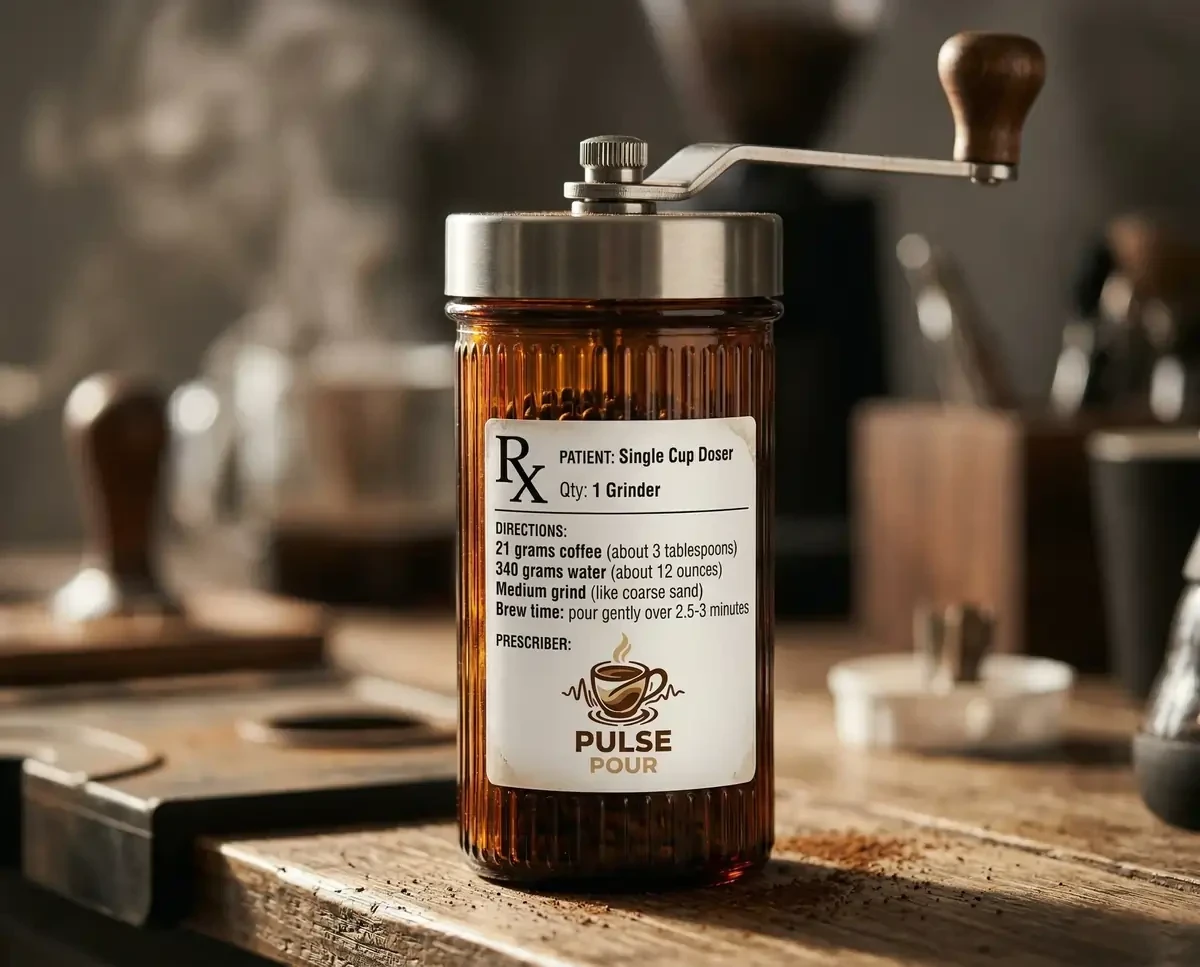
- 21 grams coffee (about 3 tablespoons)
- 340 grams water (about 12 ounces)
- Medium grind (like coarse sand)
- Brew time: pour gently over 2.5-3 minutes
This method gives you a balanced, vibrant cup every time. Once you’re used to it, feel free to jumpstart your coffee adventure by experimenting with new beans, grind sizes, and pouring techniques.
How to Adjust It Once You Taste the Result
If it’s too strong or intense, try a touch more water or a little less coffee next time. If it feels too light, either tighten up the ratio or try grinding a bit finer for a richer taste. Take notes on the results so you don’t forget what actually improved your cup. The fun of pour over is that each cup is a mini project—you’re always a step away from leveling up your coffee skills!
When to Keep It the Same and When to Experiment
If you’re thrilled with how the cup tastes, stick with that recipe. But if you pick up a new bag of beans or feel like mixing things up, nudge your ratio and see what happens. Consistency helps you threshold good days from bad ones; experimentation keeps your morning cup interesting and lets you stumble upon new favorites.
Pour Over Coffee Ratio FAQs
What is a good pour over coffee ratio for beginners?
Starting with a 1:16 ratio is pretty foolproof. It’s balanced and works for most roasts and brewing styles. From there, change it up a little at a time to find your own personal favorite.
Is 1:15 or 1:17 better for pour over coffee?
There’s no single right answer. 1:15 makes a stronger, heavier brew, so if you love your coffee bold, that’s worth trying. 1:17 comes out lighter and can bring out floral or delicate notes, especially with single origin beans. I like both depending on my mood and the beans I have on hand.
How much coffee should I use for 300 grams of water?
For a classic 1:16 ratio, divide 300 by 16. You’ll get 18.75 grams of coffee. Rounding up, use 19 grams for a nice, full cup.
Can I use tablespoons instead of grams?
You can! One tablespoon of ground coffee weighs about 5-6 grams. While scooping isn’t as precise as weighing, it’s pretty handy if you’re in a rush. Just try to use the same scoop each time and keep your grounds level for the best results.
Bottom line: learning how to nail your pour over coffee ratio is a life-changing skill for coffee lovers. Don’t stress perfection—play with your measurements, use a scale if you can, taste often, and have fun as you craft your perfect cup one morning at a time. Time to start pouring and find your next favorite ratio!
Continue Learning
Best Pour Over Methods
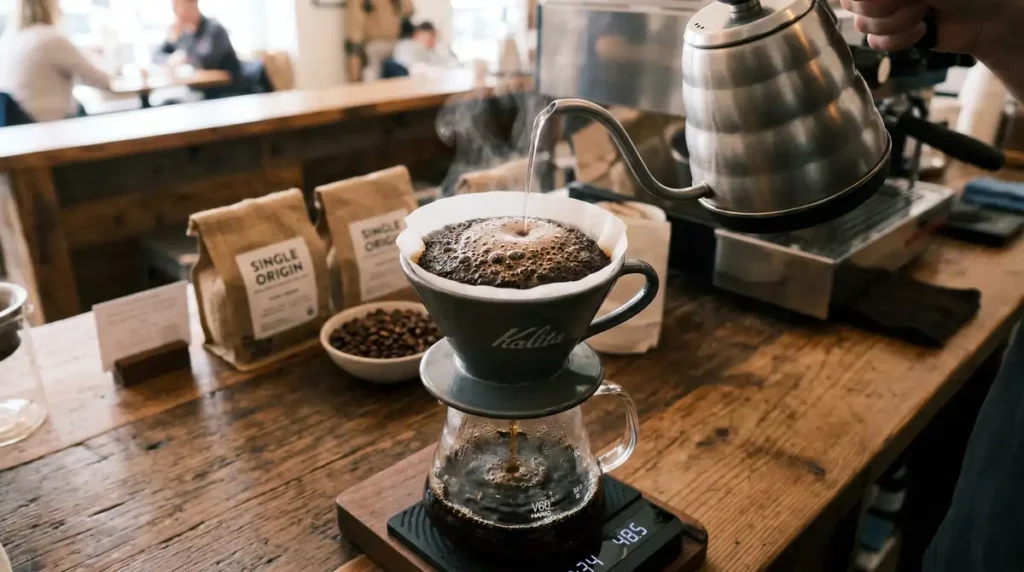
The best pour over coffee methods don’t require expensive gear or fancy equipment. You can get by with just the essentials and make extraordinary cups of coffee
Perfecting Pour Over
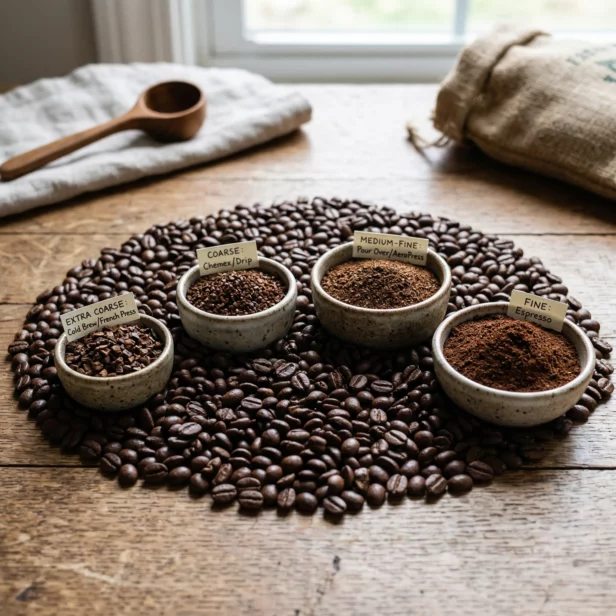
Want to perfect your pour over coffee? It may seem simple, but there’s a lot that can go wrong on your path to perfection. Try this instead.