
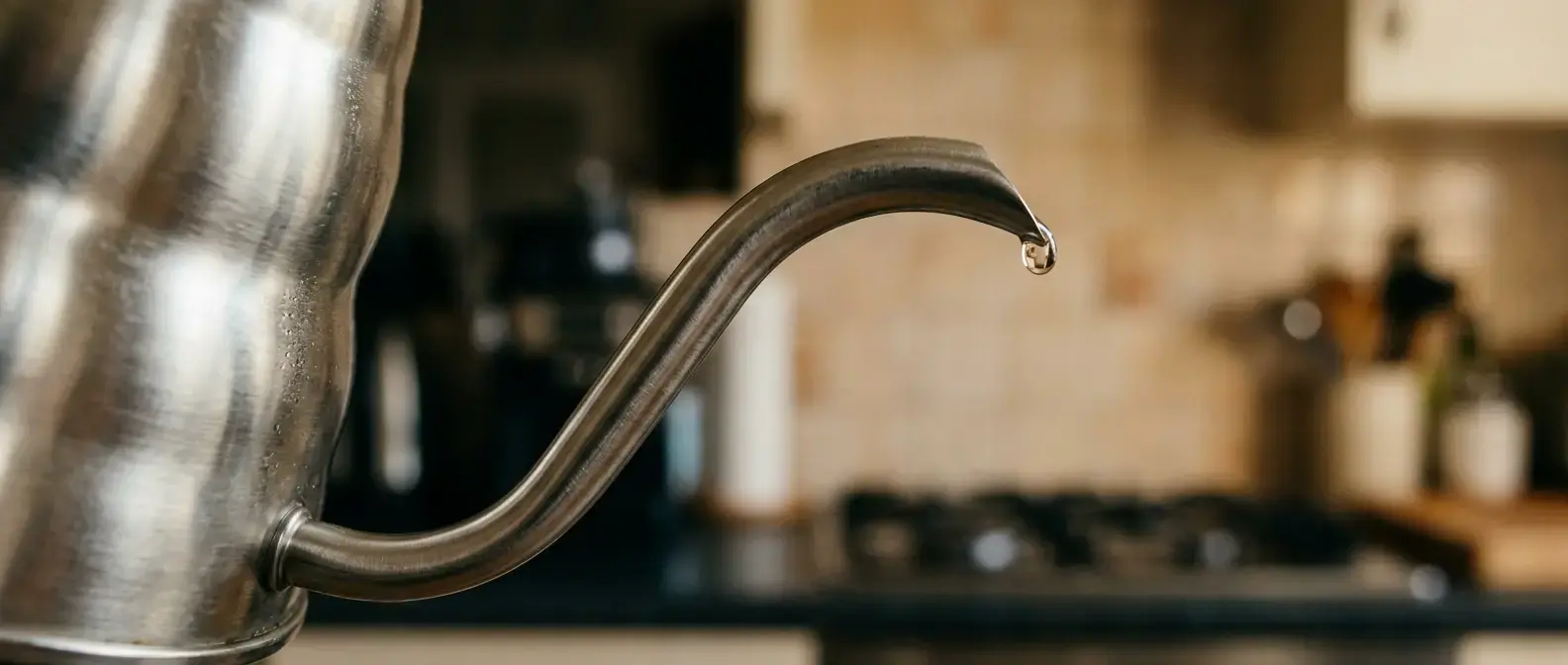
The spout on a cheap kettle and the spout on a good one look similar from across the kitchen. Up close they are different tools. A gooseneck kettle built for pour over tapers gradually from the body down to a narrow tip, and that taper is what lets you control water flow down to a thin, steady thread instead of a splash. A kettle without that taper, no matter how nice the handle feels or how shiny the body is, will fight you every time you try to slow the pour down for a bloom or a gentle spiral.
Why the Spout Shape Matters More Than the Brand Name
A lot of buyers assume the brand on the box tells them how the kettle will pour. It doesn’t. What tells you is the internal diameter of the spout at the tip and how evenly it narrows from the base.
A spout that stays wide almost to the end and then suddenly pinches will surge when you tip it, then dribble when you try to back off. A spout that narrows gradually gives you a wider window where small changes in tilt produce small changes in flow, which is exactly what you need when you’re pouring in slow circles over a bed of coffee.
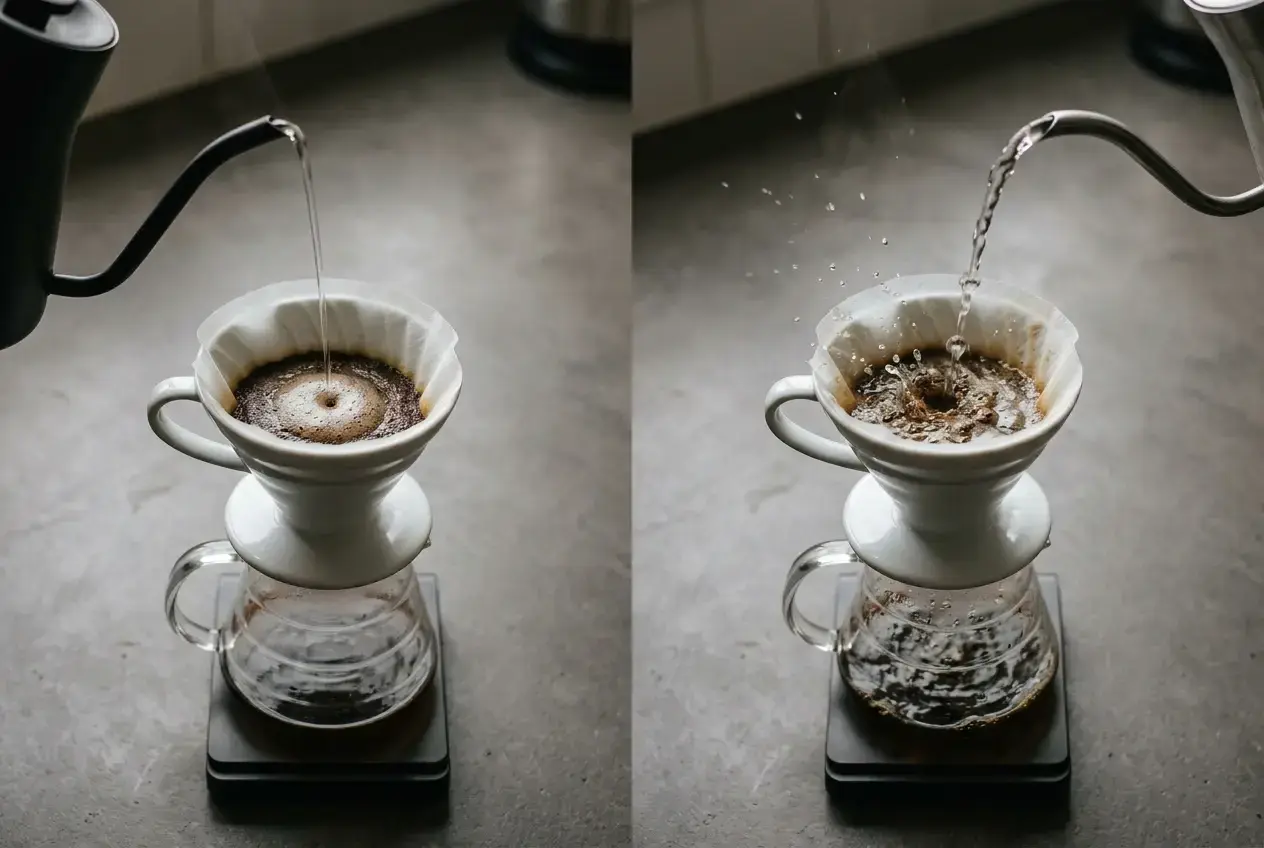
This matters more than anything else on the kettle. A plain-looking kettle with a well-shaped spout will outperform an expensive one with a poorly tapered spout every single time you brew.
Electric vs Stovetop: Which Gives You Steadier Temperature
Stovetop gooseneck kettles heat the water, then you pour, and the water starts cooling the moment it leaves the heat source. For a four-minute pour over, that drop can be enough to pull your extraction out of the range you were aiming for by the time you finish the pour, especially in a cold kitchen or with a smaller brew.
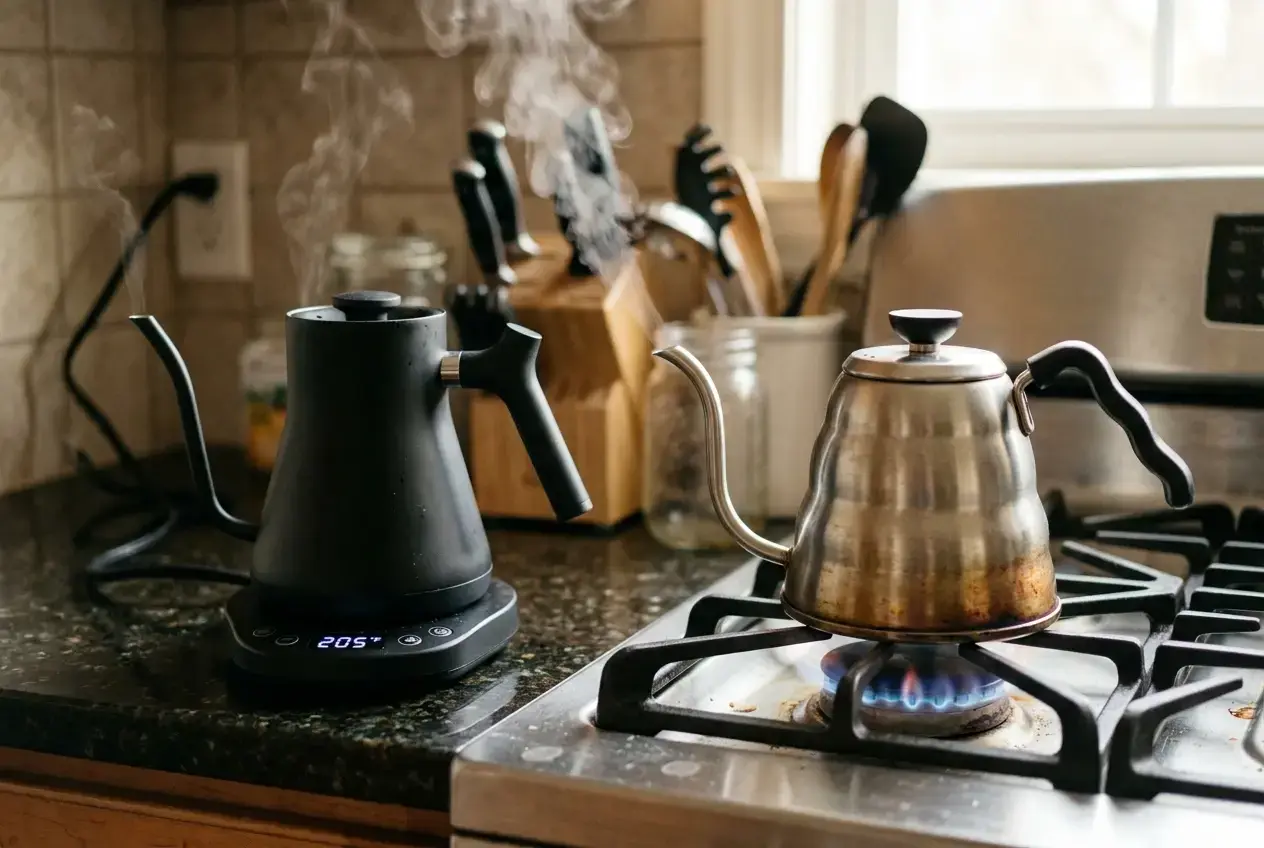
Electric gooseneck kettles with built-in temperature control solve a different problem than you might expect. The real benefit isn’t that they hit an exact number once. It’s that many models hold the kettle at that number, or let you reheat quickly between pours, so your second and third pours start at close to the same temperature as your first.
If you brew one cup a day and you’re not fussy about a few degrees of drift, a stovetop kettle paired with an instant-read thermometer works fine. If you brew multiple cups back to back, or you’ve noticed your coffee tasting different depending on how long the kettle sat before you poured, an electric kettle with temperature hold removes that variable from the equation entirely.
Flow Control: How to Tell a Precise Kettle From a Gimmick
Flow control gets used as a marketing phrase on packaging that has nothing behind it. The way to test it yourself, before or after you buy, is simple: fill the kettle with water, tilt it just enough to start a pour, and see how fine a stream you can hold steady for ten seconds without the flow surging or stopping.
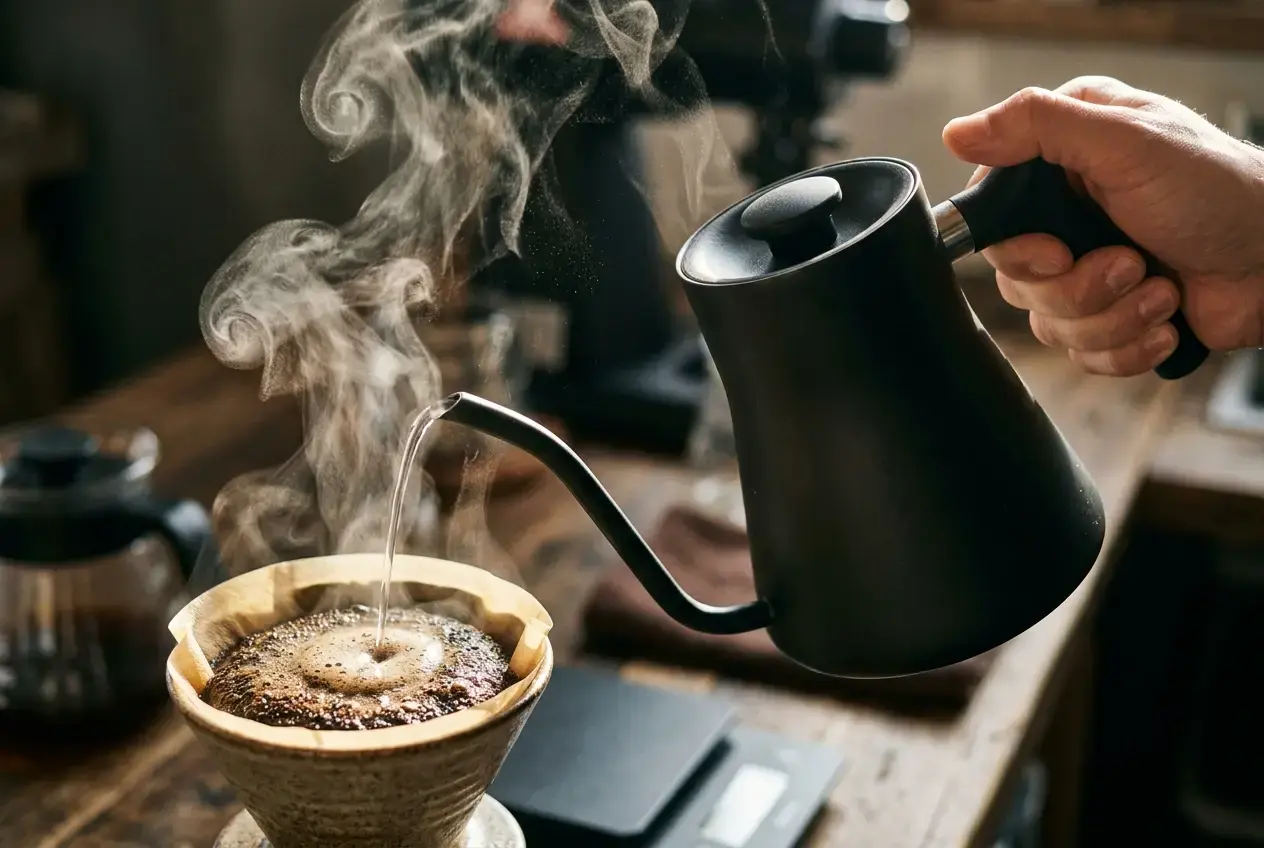
A precise kettle lets you dial in anything from a thin thread to a heavier stream using small wrist movements. A gimmick kettle only really works at one or two flow rates, and anything in between feels unstable, like the water is deciding for itself when to come out.
Weight matters here too, separate from the spout. A kettle that’s awkward to tilt slowly, because it’s too heavy at the back or too light up front, makes fine control harder no matter how good the spout is. The best kettles balance weight so the pour feels like an extension of your hand rather than something you’re wrestling into position.
Best Budget Gooseneck Kettle for Getting Started
For a first gooseneck kettle, you want a simple stovetop model with a well-tapered spout and nothing else to worry about. The Hario Buono is the kettle most beginners end up with, and it’s a reasonable starting point: no electronics, no settings, just a kettle shaped correctly for pour over.
The tradeoff is temperature control. You’ll need a separate thermometer, and you’ll need to pour a bit faster than you might with a held-temperature kettle to avoid losing too much heat partway through. For someone still learning the basics of ratio, bloom, and pour pattern, that’s a fair compromise. You’re learning technique first, and a simple kettle keeps the number of things you’re thinking about to a minimum.
Best Mid Range Pick for Most Pour Over Drinkers
Most people who brew pour over regularly end up happiest with an electric gooseneck kettle that has basic variable temperature settings and a reasonably precise spout. The Fellow Stagg EKG and the Bonavita variable temperature kettle both sit in this tier, and either one removes the guesswork of hitting your target temperature without asking you to pay for features you won’t use.
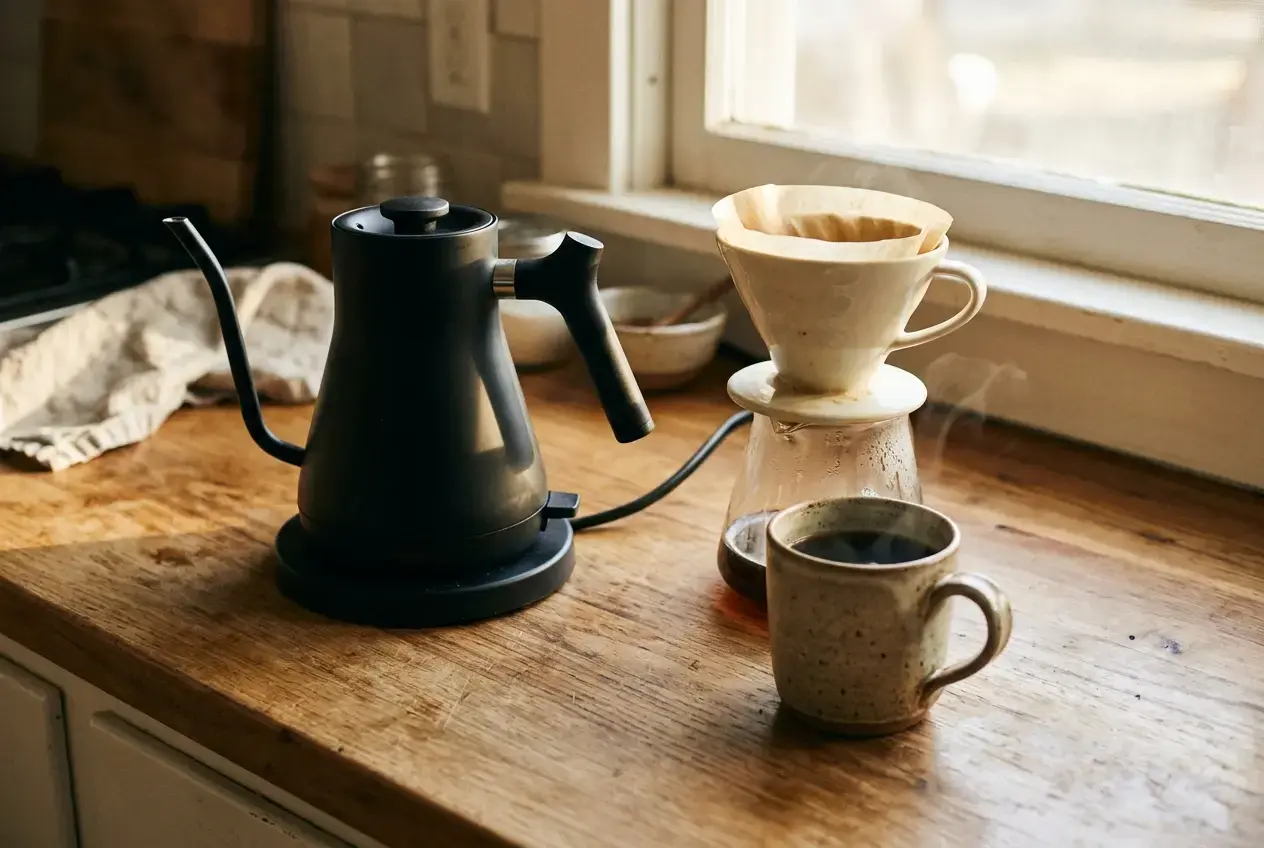
What you’re paying for at this level is consistency pour after pour, not a dramatic jump in flow control over a well-shaped stovetop kettle. If you brew most mornings and you’ve noticed your cup tasting slightly different depending on how hot your water actually was, this is the upgrade that fixes it.
This tier is also where handle design starts to matter more, since you’ll be holding the kettle for longer total pour time across multiple cups. A handle with a comfortable angle and a bit of insulation near the grip makes a real difference once you’re brewing daily rather than occasionally.
Best Premium Kettle for Chasing Total Control
At the top end, you’re paying for finer temperature precision, often down to single-degree settings, and spout engineering refined further than the mid-range options. The Fellow Stagg EKG+ and similar higher-end electric kettles add features like hold timers, finer temperature increments, and sometimes brewing presets.
Whether this tier is worth it depends on what you’re chasing. If you’re dialing in a single origin coffee and testing how a two-degree temperature shift changes sweetness or acidity, that precision earns its price. If you’re making pour over for yourself most mornings without that level of experimentation, the mid-range tier gets you most of the way there for less money, and the difference in your cup may be hard to notice.
Premium kettles also tend to have the best-balanced handles and the most refined spout tapers, so if flow control is the thing you care about most, that’s where the extra cost shows up most clearly.
Capacity, Handle Comfort, and Other Details People Overlook
Capacity gets ignored until it causes a problem. A kettle that holds enough water for one cup forces you to reheat mid-brew if you’re making coffee for two people, and reheating means a temperature drop at exactly the point you don’t want one. If you ever brew for more than yourself, look for a kettle with enough capacity to cover a full pour without a refill.
The flip side is that an oversized kettle filled with a small amount of water pours differently than one filled near capacity, since the angle needed to start the flow changes with the water level. If you mostly brew single cups, a kettle sized closer to that volume will give you more consistent pours than a large kettle you’re always underfilling.

Handle comfort is easy to dismiss until you’re holding a full kettle at a tilt for three or four minutes. A handle set too close to the body can put your knuckles near a hot surface. A handle set too far back can make the kettle feel front-heavy and harder to control at a slow pour. Pick one up before you buy if you can, or check reviews that mention hand size specifically, since this is one spec that genuinely varies by comfort rather than by any objective measurement.
A few smaller things worth a glance: a lid that stays put during a pour instead of rattling or falling forward, a base wide enough that the kettle doesn’t tip easily on a stovetop grate, and for electric models, a cord length that actually reaches your outlet comfortably from where you brew.
Matching Your Kettle to Your Pour Over Technique
The right kettle depends partly on how you actually pour. If you brew with a continuous, slow spiral pour, a kettle with the finest possible low-flow control matters more than one built for quick, heavier pours. If you use a pulse pour method, adding water in stages rather than one continuous motion, you’ll care more about how quickly the kettle starts and stops a clean stream than about sustaining a thin pour for minutes at a time.
Your brewer matters too. A V60’s cone shape rewards a kettle that can hold a tight spiral close to the center. A Kalita Wave’s flat bed is more forgiving of small variations in pour pattern, so a slightly less precise kettle won’t hurt your cup as much there.
None of this means you need the most expensive kettle on the list to brew well. It means the kettle you pick should match the way you actually pour, not just the budget tier you’re willing to spend in.
Once you’ve picked a kettle, put it to work. See how water temperature affects extraction and learn the technique that makes precise flow control actually pay off with the pulse pour method.