
If you enjoy coffee with a bright, clean taste, learning how to use a V60 is a pretty smart move. Pour over brewing with a V60 has become super popular among home baristas because it gives you a chance to control every variable, which means better coffee once you get the hang of it. If you’re new to the V60, you might feel a little intimidated by all the tips and trick videos out there. I’ve been there, staring at my first V60, wondering how much coffee to use and whether I really needed a fancy gooseneck kettle.
This beginner guide will walk you through everything you need to get started. You’ll see why people love the V60, why the v60 is a staple in the Specialty Coffee Association, the basic gear you need, a super simple V60 recipe for beginners, and all the steps broken down for you. There are also some common mistakes to avoid and quick fixes for improving your coffee. By the end, you’ll be brewing bright, smooth pour over coffee at home with confidence.
Disclaimer: This page contains affiliate links. If you make a purchase after visiting a link I may receive a small commission. This in no way affects my recommendations and carries no impact on price.
What Is A V60 And Why Do So Many Coffee Lovers Use It?
The Hario V60 is a cone-shaped pour over dripper that sits right on top of your mug or carafe. It’s been a staple for coffee enthusiasts (and even competitors in big coffee championships) for years. But why do so many people swear by it?
What makes the V60 different from other pour over brewers
The V60’s unique cone shape, spiral ridges on the inside, and single large hole at the bottom actually have a purpose. The shape helps the water flow through the coffee grounds evenly, extracting flavors more cleanly than flat bottom drippers like the Kalita Wave. The spiral grooves stop the filter from getting stuck to the sides, which keeps the brew consistent.
Why the V60 is popular for clean and flavorful coffee
I love the V60 for how much clarity it brings out in lighter roasted coffee. You get to taste the bright notes and delicate flavors that sometimes get lost in French press or other brewing methods. If you like picking up fruity, floral, or tea like vibes from your coffee, the V60 pour over recipe really delivers. Home baristas enjoy the ability to adjust variables like water temperature and pour speed, which means they can tailor each cup to their specific taste preferences. Plus, the V60’s reusable dripper and single use filters mean cleanup is quick and hassle free—perfect for busy mornings.
Is the V60 good for beginners?
I actually think the V60 is one of the better pour over options for beginners as long as you start with a basic V60 recipe for beginners and don’t overthink it. The steps are easy, and with a little practice, you’ll find it’s not so complicated. Plus, the V60 is affordable, easy to clean, and doesn’t take up much space at all. Even if you aren’t a gear nerd or coffee pro, it’s simple enough for anyone.
What You Need To Make V60 Pour Over Coffee
Getting started with V60 brewing doesn’t mean emptying your bank account or buying every gadget. Here’s what you really need for a beginner V60 coffee recipe.
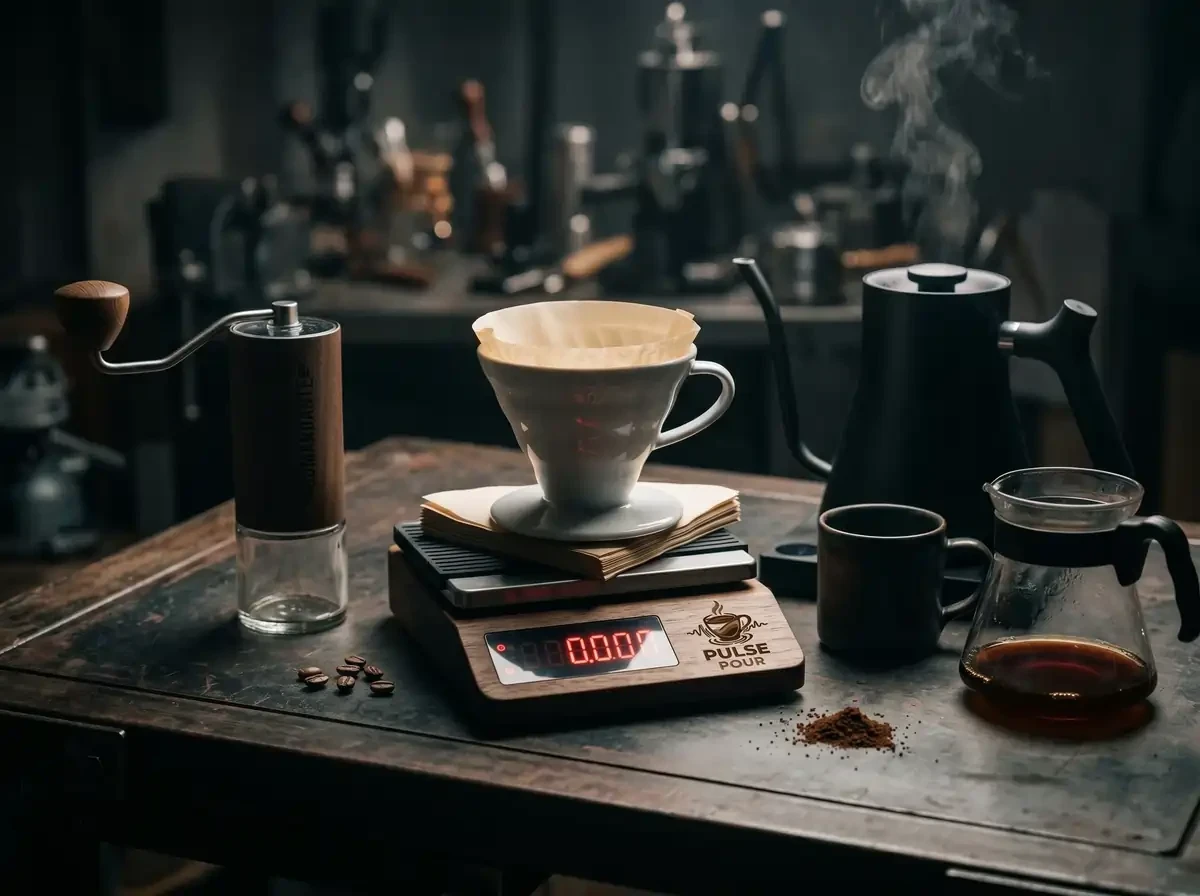
The basic V60 brewing equipment
- Hario V60 dripper (I like the glass ones but plastic is affordable and works just fine)
- Paper V60 filters (usually size 01 for 12 cups or 02 for larger amounts)
- A mug or carafe to brew into
- Kettle (a gooseneck kettle gives you more control, but a regular pour spout works in a pinch)
- Coffee grinder (burr grinders work best for consistency, but you can use a blade grinder if you’re just starting out)
- Digital scale (recommended for precise measurements but you can use measuring spoons at first)
The best coffee beans for a beginner V60 recipe
Go for fresh, whole bean coffee. Light or medium roasts usually shine in a V60, bringing out those complex flavors. Local roasters often label beans as “filter” or “drip” roast, which are perfect for V60. I like trying single origin coffees to really showcase the unique notes the V60 can bring out, but honestly, any good quality beans will work. The freshness of the beans really boosts the taste; old, pre-ground supermarket coffee simply won’t do the trick.
Why your grinder, kettle, and filter matter
A consistent grind size is really important for good V60 brewing. Burr grinders are the gold standard because they crush beans evenly, reducing over or under-extracted flavors. A gooseneck kettle makes pouring slow, even circles a breeze, giving you more control over extraction. Paper filters help trap tiny coffee grounds, leaving you with that crisp, clear cup that the V60 is known for. Even though a metal mesh filter can work, most beginners who want that signature V60 clarity stick with paper filters.
The Simple Beginner V60 Recipe To Start With
If you look up V60 recipes online, you’ll see a lot of fancy ratios and pouring techniques. Here’s a beginner V60 coffee recipe that’s reliable, easy to memorize, and delivers good results without any fuss.
Burr grinders
Coffee to water ratio for an easy V60 recipe
Start with a 1:16 coffee to water ratio (that means for every gram of coffee, use about 16 grams of water). For most mugs:
- 15g ground coffee
- 240g hot water (that’s about 1 cup)
Not into scales? Use roughly 2 level tablespoons of ground coffee for every 1 cup (8oz) of water. Consistency matters more than exact numbers, so stick to one method for more predictable results.
Recommended grind size for V60 brewing
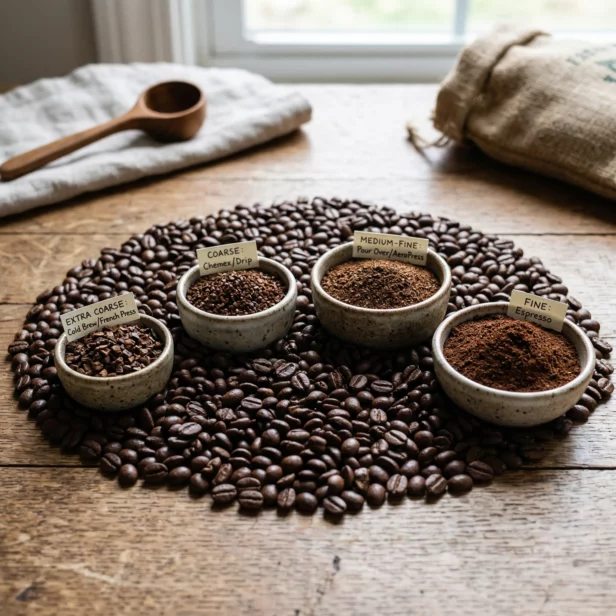
TheHario V60 likes a grind that looks like table salt—not as fine as espresso, but finer than French press. If your coffee runs through in under 2 minutes, your grind is probably too coarse. If it’s taking ages to drain, it might be too fine. Most home grinders will list a “drip” or “pour over” setting, which is a good starting point. Adjust from there based on taste.
Water temperature and brew time to aim for
Aim for water just off the boil, around 195°F to 205°F (90°C to 96°C). If you don’t have a thermometer, just let freshly boiled water sit for 30 seconds before pouring. Pour times should land between 2:30 to 3:00 minutes for a typical cup with this V60 pour over recipe. Most electric kettles auto shutoff at ideal ranges, but letting it cool off for half a minute after boiling usually puts you in the right spot for great V60 coffee.
A beginner friendly recipe you can repeat
- Grind 15g of coffee (about 2 tablespoons) medium-fine
- Place a filter in your V60 and rinse it (see below)
- Add ground coffee to the filter and level the coffee bed
- Start a timer and pour just enough water (about 30g) to wet all the grounds
- Wait 30-45 seconds (this is the bloom. more on this later)
- Slowly pour the rest of your water in circles, keeping the water level about halfway up the dripper
- Let the coffee finish draining, then enjoy
How To Use A V60 Step By Step
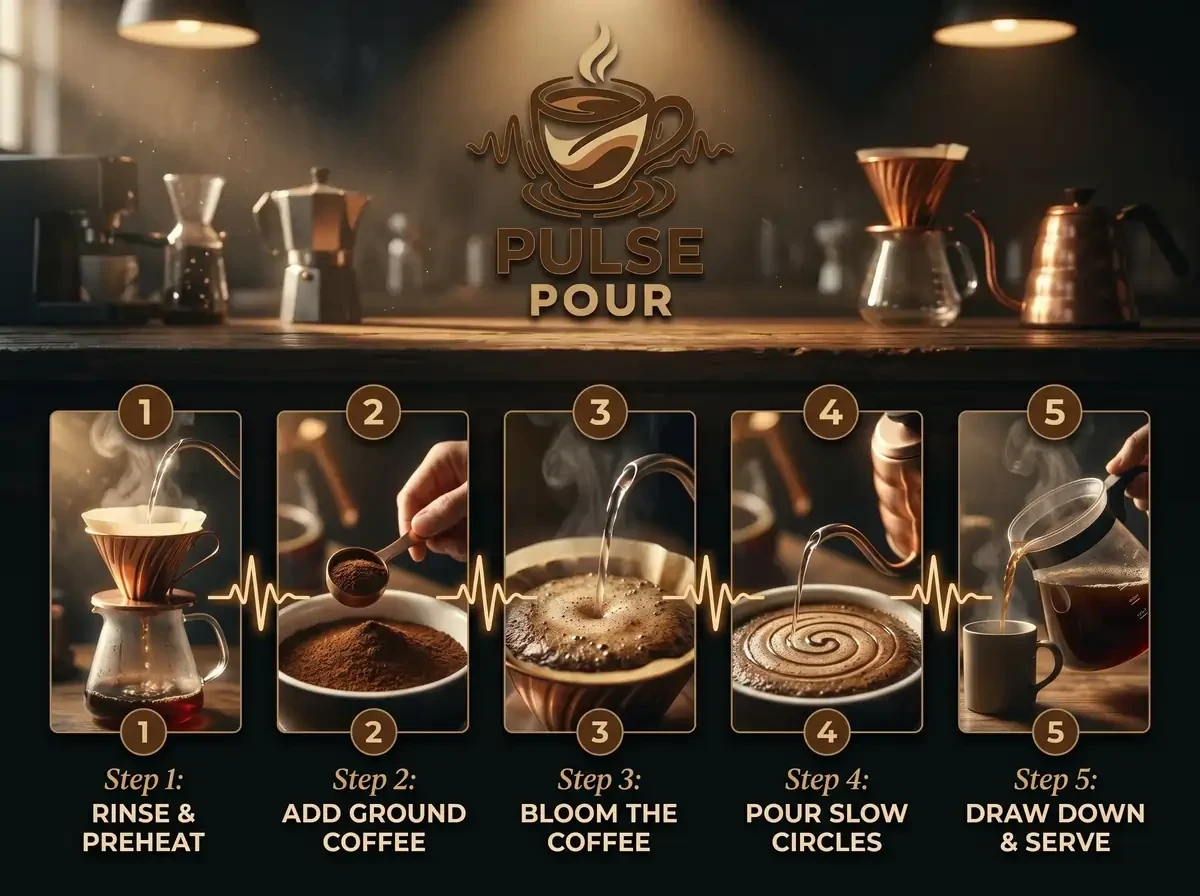
Here’s the fun part. the actual brewing process. The beginner V60 coffee recipe I shared above breaks down into these clear steps.
Step 1: Rinse the paper filter and preheat the brewer
Place the V60 on your mug or carafe, drop in a paper filter, and pour hot water through it. This helps get rid of any papery taste and preheats your mug, so your coffee stays nice and hot. Discard the rinse water before brewing. Don’t skip this. a cold dripper can suck heat out of your coffee, dulling the best flavors in your cup.
Step 2: Add ground coffee and level the bed
Tip your ground coffee into the wet filter and gently shake or tap the V60 until the coffee bed looks flat. This helps the water hit the grounds evenly, improving extraction in your V60 recipe. If you want to be extra careful, use a spoon to make the grounds as level as possible so water flows through at an even pace.
Step 3: Bloom the coffee for even extraction
Set your timer. Pour just enough hot water over the grounds to wet them (about double the weight of coffee, so 30g for 15g of coffee). The coffee will puff up and bubble as trapped gas escapes—a process called the bloom. Let it sit for 30 to 45 seconds to make sure all the grounds get saturated and those gases escape.
Step 4: Pour in slow circles with control
After blooming, pour the rest of your hot water very slowly. Move in small, steady circles, starting in the middle and moving out, then back in. Try not to pour down the sides or disturb the coffee bed too much. Pouring slowly and evenly is key in how to brew V60 coffee for consistent results. Some people split their pour into several stages; as a beginner, just focus on a steady, circular pour for best results.
Step 5: Let the coffee draw down and serve
After you’ve poured all your water, let it completely drip through the grounds. You’re aiming for a total brew time of about 2:30 to 3:00 minutes. Remove the V60, swirl your cup to mix the flavors, and take a sip. it’s ready to enjoy. There’s no need to rush or press down the coffee bed; gravity does all the work for you. Enjoy your clean, bright homemade cup.
Common Beginner V60 Mistakes And How To Avoid Them
Don’t stress if your first cup isn’t cafe-level. Here are some common hiccups and how to fix them for your V60 recipe for beginners.
Grinding too fine or too coarse
If your coffee tastes bitter or drains too slowly, the grind is too fine. If it’s watery or sour and drains in less than 2 minutes, it’s too coarse. Adjust your grinder a notch at a time until the brew time and taste hit that sweet spot. Sometimes, old burrs on a grinder might make the grind uneven, so give your grinder a quick clean if problems persist.
Pouring too fast or unevenly
Dumping water in quickly or aiming mostly for the edges can wash grounds up the sides and leave areas over or under-extracted. Take your time and pour gently, keeping the stream centered or in slow circles. If you notice channeling (where water runs down the sides too quickly), slow your pour and keep it off the edges.
Skipping the bloom
The bloom does more than add flair to brewing; it lets trapped gases escape, which helps the rest of the water extract better flavors. Skipping this can leave your brew tasting flat or sour. Always let the coffee bloom before dumping in all your water.
Using water that is too hot or too cool
Boiling water can burn the coffee, while water that’s too cool won’t pull out enough flavor. Aim for water that’s just off the boil (around 200°F/93°C). Let your kettle sit for 30 seconds after boiling before pouring if needed. Too hot, and it burns. Too cold, and you get weak, underwhelming coffee.
Changing too many variables at once
If you change brew time, grind size, water temp, and pour style all together, it’s hard to know what fixed or messed up your coffee. Try only changing one thing per brew. It makes it way easier to dial in your beginner V60 coffee recipe. This “one tweak” rule leads to more control as you find your ideal cup.
How To Adjust Your V60 Recipe Based On Taste
Tasting and tweaking is part of the fun of pour over brewing. Here’s how I change things up depending on what I taste in the cup. If you taste something off, don’t worry. A minor adjustment often fixes it.
What to change if your coffee tastes sour
Sour or sharp flavors usually mean your coffee is under-extracted. Try grinding a bit finer, using water a little hotter, or letting your brew go just a bit longer. Don’t be afraid to adjust in small increments and take notes each time.
What to change if your coffee tastes bitter
Bitter, dry, or astringent flavors mean you’ve extracted too much. Use a coarser grind, lower the water temp, or speed up your pour just a bit. This way, you tone down the over-extraction and balance your flavor.
What to change if your coffee tastes weak
Watery or bland coffee often just needs a little more coffee or a slightly finer grind. Try adding an extra gram or two of coffee to your V60 pour over recipe or adjusting the grind a notch finer. Sometimes, the solution is simply to use fresher beans or filtered water.
How to make your V60 coffee smoother and more balanced
Getting that sweet, balanced cup is all about small tweaks. Take notes on your ratio, grind size, and pour style so you can spot what helps. Swirl your mug after brewing to mix the flavors together for an even, rounded taste. The more times you brew, the closer you’ll get to your perfect flavor. It’s all about paying attention to the details.
Tips To Make Better V60 Coffee At Home
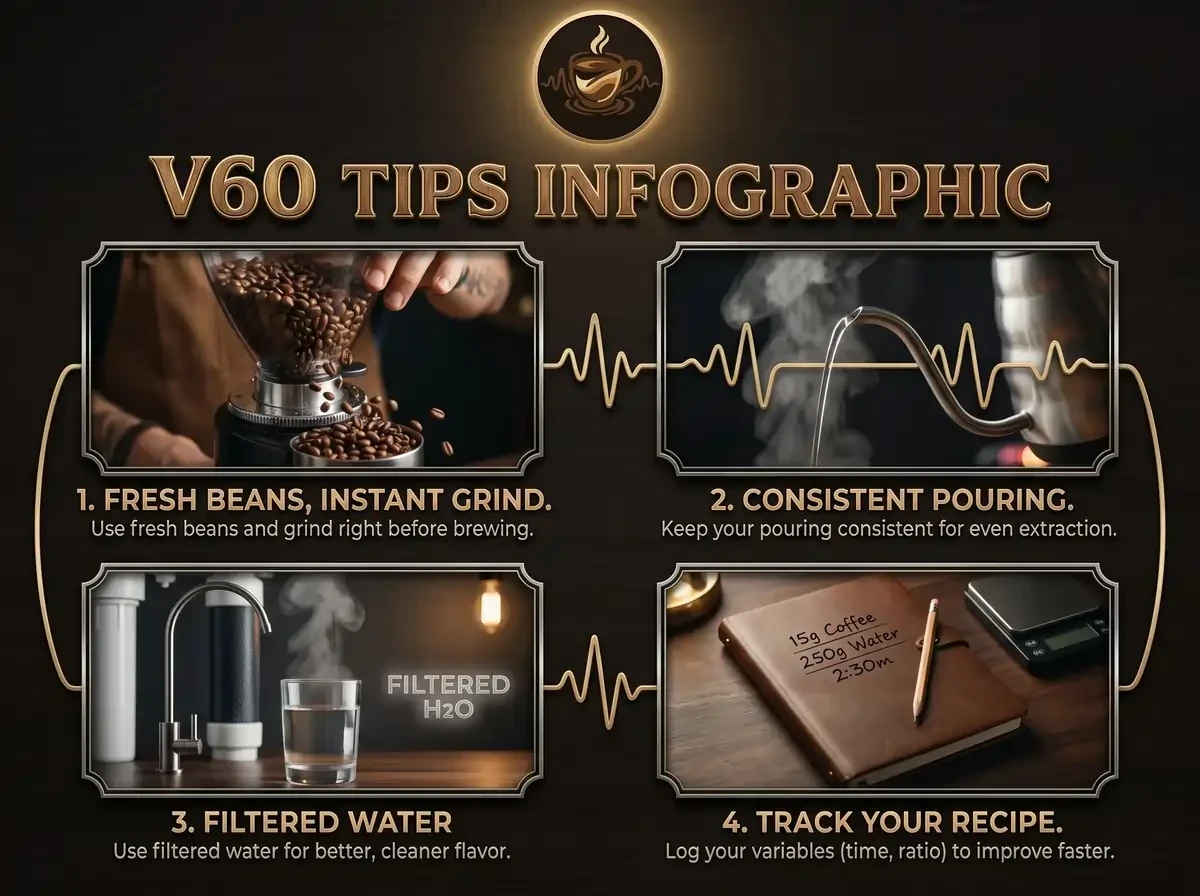
These tips are pretty handy for taking your home pour over coffee from “good enough” to “dang, that’s tasty.”
Use fresh beans and grind right before brewing
Whole beans start losing flavor about 15 minutes after grinding. Grind just before you brew to keep those tasty notes in your cup. Don’t be tempted by convenience. Pre ground coffee can’t compete with fresh ground beans for flavor or aroma.
Keep your pouring consistent
As you practice, work on keeping your pouring even and gentle. It helps the water interact with all the grounds for the best extraction. If your hand gets tired, pause for a second; there’s no rush. Practice makes perfect.
Use filtered water for better flavor
Water makes up almost all of your cup, so if you don’t like how your tap water tastes on its own, it probably won’t taste great in coffee either. Using filtered or bottled water can make a huge difference. Water quality is a simple switch that can give your cup a big boost without any extra effort or expense once you set it up.
Track your recipe so you can improve faster
Write down your coffee amount, grind setting, total brew time, and how it tasted. Keeping notes helps you spot what works and what needs adjusting for future V60 pour over recipes. Over time, you’ll build a list of personal tweaks, tips, and ratios that make every brew even better than before.
V60 Beginner Recipe FAQ
What is the best grind size for V60 coffee?
A medium-fine grind that feels a bit like table salt works really well for this V60 recipe for beginners. If your coffee drains too quickly or tastes weak, go finer. If it drains too slowly or gets bitter, go coarser.
How much coffee should I use in a V60?
Start with 15g (about 2 tablespoons) of coffee for a standard mug, using a 1:16 coffee to water ratio. Adjust a gram or two at a time based on taste. That’s the simplest place to begin.
How long should a V60 brew take?
A good V60 brew usually takes 2:30 to 3:00 minutes after you start pouring. Shorter brew times can taste sour or weak, while much longer times can taste bitter. This will differ depending how much coffee you plan on making.
Do I need a gooseneck kettle for a V60?
Gooseneck kettles give you more precision, but you definitely don’t need one to get started. A regular kettle with a narrow spout will work; just pour slowly and carefully. If you get serious about pour over brewing, a gooseneck is a fun upgrade down the road.
Final Thoughts On Learning How To Use A V60
Brewing with a V60 is less about fancy gear and more about enjoying the process and finding what you like. Anyone can make great pour over coffee at home, especially when starting with a simple V60 recipe for beginners. Even if your first few cups are just okay, you’re learning what makes coffee shine. and that’s pretty cool no matter where you’re starting from.
Start simple and build consistency first
- Get your basic recipe and steps down. Brew the same way a few times so you know what a “normal” cup tastes like.
- Take notes, taste, and tweak one thing at a time.
Small adjustments lead to better pour over coffee
- Experiment with grind size, pour style, or slightly different water temps as you go.
- Celebrate the progress. Every brew is a step closer to your perfect cup.
Make sure to grab your free copy of my tasting journal and flavor wheel so you can track each tweak and get closer to your perfect cup.
Happy brewing!
Continue Learning
Perfecting Pour Over
Want to perfect your pour over coffee? It may seem simple, but there’s a lot that can go wrong on your path to perfection. Try this instead.
How to Clean A Pour Over Coffee Maker

If your pour over coffee has started tasting a little flat, bitter, or just not as clean as it used to, your gear could be part of the problem. Coffee oils, residue, and mineral buildup can build up faster than most people realize, and even great beans will struggle to shine if your setup is not clean.