
Are your pour over brews tasting bitter, sour, or just kind of flat, chances are, being unfamiliar with how to grind coffee beans for pour over has something to do with it. There’s an art to grinding beans just right, and avoiding a few classic mistakes can make a big difference, whether you’re using a fancy burr grinder or a simple hand grinder.
In this guide, I’m breaking down the five common mistakes people make when grinding beans for pour over, and giving some practical tips to help you get the perfect cup every time you brew.
Disclaimer: This page contains affiliate links. If you make a purchase after visiting a link I may receive a small commission. This in no way affects my recommendations and carries no impact on price.
1. Using The Wrong Grind Size
The grind size is probably the most important thing to get right for pour over coffee. It changes how quickly water flows through your grounds, and that totally affects the taste. For the Hario V60, medium-fine grind, Chemex, a medium-coarse grind, or Kalita Wave, a medium grind. Think: somewhere between table salt and beach sand.
For a deeper look at How to use these brewers, check out
Grind For Pour Over: Why Grind Size Matters
- If the grounds are too fine, the water flows too slowly. That can mean over-extraction, which makes your coffee turn out bitter and heavy.
- If the grounds are too coarse, water flows too fast, leading to under-extracted, weak, or sour coffee.
I’ve noticed every grinder is a bit different. Even if you use “medium” on two grinders, you might get slightly different results. Always check your grind visually. It should feel gritty between your fingers, not powdery or chunky.
Signs You Might Need To Adjust Your Grind
- Bitter, harsh, or dry taste? Try a coarser grind.
- Sour or super sharp? Try a finer grind.
- Brewing faster than 2-4 minutes? Make it finer.
- Brewing slower? Go coarser.
Sometimes it takes tweaking the grind size a few times before you notice an improvement, but it truly makes a difference in your cup. Don’t be afraid to experiment to spot that sweet spot.
2. Grinding Coffee Beans Too Far In Advance
Grinding coffee beans too early is a pretty common mistake. Coffee starts losing its flavor and aroma within minutes after you grind it, thanks to oxygen and moisture in the air. That flat, stale taste? Usually, it’s a sign your beans sat around ground for too long.
The Freshness Rule
- Grind your beans right before you brew. Even waiting 30 minutes can make a noticeable difference.
- Store whole beans in an airtight container away from light and heat to lock in freshness and taste.
For a deeper look into bean selection, check out this article on The Best Beans For Pour Over Coffee.
If you’re short on time in the morning, I totally get it. But, I recommend grinding just enough for each brew, not a whole week’s worth in advance. You’ll get way better flavor and aroma; your taste buds will definitely notice.
Sometimes even using preground beans in emergencies is fine, but making grinding right before brewing your usual habit can give a boost to your overall coffee experience.
3. Using A Blade Grinder Instead Of A Burr Grinder
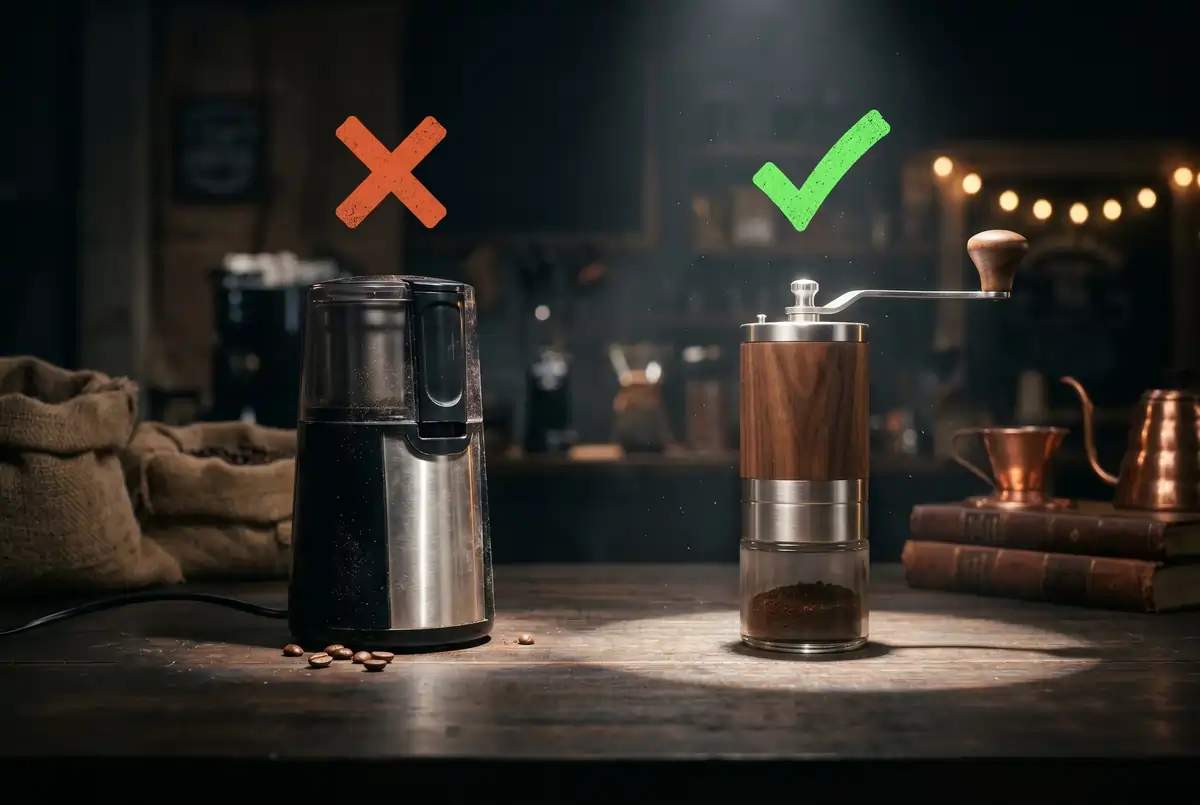
Blade grinders are everywhere, and they do the job in a pinch. But for pour-over, they’re not the best option. Blade grinders chop beans unevenly, giving you a mix of fine powder and big chunks, which means uneven extraction and an unpredictable cup.
Why Burr Grinders Are Better For Pour Over
- Burr grinders crush beans to a consistent size, so water extracts evenly through all your grounds. The flavor ends up way more balanced.
- You can easily adjust the grind size to match your brewer and beans.
If you’re not ready to buy a burr grinder, that’s totally fair. But if you’re passionate about making better pourover, saving up for one is really worth considering. In the meantime, you can shake your blade grinder between pulses to even out the grind a little, though it’ll never be perfect.
You’ll be surprised at how quickly you spot a difference in consistency, aroma, and taste when switching up to a burr grinder. Even an inexpensive hand burr grinder is a smart upgrade for home baristas.
4. Ignoring Coffee And Water Ratios
Getting your coffee-to-water ratio right is huge, and grind size actually links up with this more than people think. If you use the right grind, but too much or too little coffee for your water, you’ll still miss out on that balanced pour-over flavor.
Recommended Pour Over Ratios
- A simple starting ratio: 1 gram of coffee for every 16 grams (or ml) of water. For about 350 ml (12 ounces) of water, use 22 grams (about 3 tablespoons) of coffee.
- I always use a kitchen scale to measure both my beans and water. Scoops can be inconsistent, because coffee beans aren’t always the same size or density.
Add more coffee if your brew tastes weak, or use less if it’s too strong. Play around with your ratio once you get the grind dialed in. Sometimes it takes a few tries to nail both, but it pays off when you get a cup you love.
If you want to mix things up, try using a slightly higher ratio for a stronger cup or a lighter ratio for something more mellow.
5. Not Cleaning Your Grinder Regularly
Old coffee grounds and oils can get stuck in your grinder, leading to stale or off flavors in your pour-over. If your coffee tastes way different from one brew to the next, even though you use the same beans, it might just be a dirty grinder.
How To Clean Your Grinder
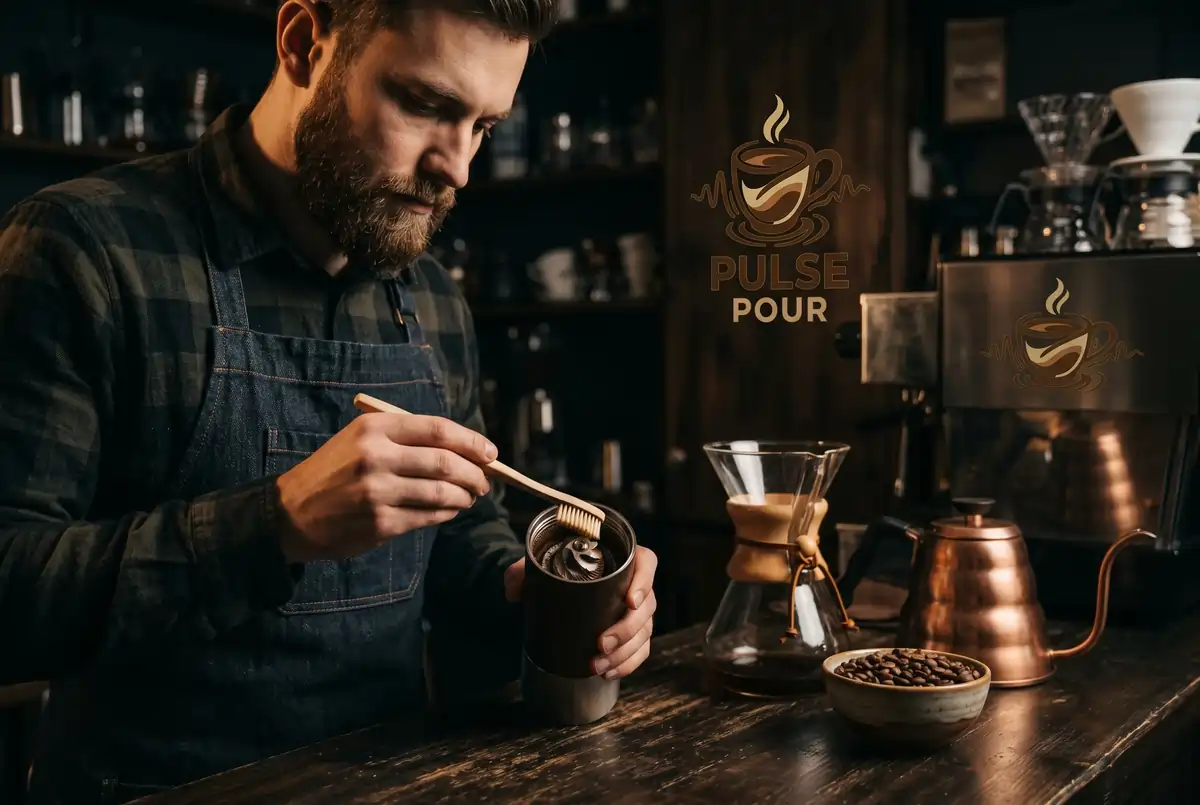
- For burr grinders, brush out loose grounds at least once a week. There are special grinder cleaning brushes, but a soft paint brush or toothbrush works too.
- Run grinder cleaning pellets through your machine every couple of months, or follow the cleaning instructions in your grinder’s manual.
- For blade grinders, wipe out any residue with a dry paper towel or soft brush after each use.
Taking a few minutes to clean up will keep old flavors from getting into your fresh brews. It’s a simple habit that keeps your coffee tasting the way it’s supposed to.
As an extra tip, mark your calendar or set a reminder so regular cleaning becomes part of your barista routine. You’ll spot improved flavor after each cleanup.
Key Gear And Tools For Better Grinding
I’ve found that a few good tools make all the difference when grinding for pour-over. Here’s what I find works best and why:
- Burr Grinder: Consistent grind size, more control, and better-tasting coffee overall. Manual hand grinders are great if you’re on a budget or have a small kitchen.
- Coffee Scale: Perfect for measuring beans and water, way more accurate than scoops or spoons.
- Brush: For cleaning and maintaining your grinder. (Toothbrush or artists brush works fine)
- Fresh, Quality Beans: No grinder can fix stale beans, so make sure you’re starting with good stuff.
Consider a timer to measure your brew time for even more consistency. Most coffee scales will have an added timer with them. Small investments in gear can give a boost to your daily coffee ritual.
Common Questions & Troubleshooting
How do I know if my grind is too fine or too coarse?
If your coffee is brewing really slowly (or tastes bitter/dry), your grind for pour over is likely too fine. If it’s running through too quick (or tastes sour/weak), it’s probably too coarse. Adjust a little at a time and note how it affects the taste and flow.
Why does my pour-over taste different every time?
- Double check your grind consistency and freshness.
- Use a scale for both beans and water.
- Keep your grinder clean to avoid old grounds mixing with fresh beans.
Can I use pre-ground coffee for pour-over?
You can, but keep in mind it loses flavor pretty fast. Most store bought ground coffee is also ground for drip coffee makers, so it may not be the ideal medium grind for pour-over brewers. Grinding fresh gives you a much better cup.
Simple “Grind Better” Action Plan
Improving your pour-over setup doesn’t need to be complicated. Here’s what I’d focus on next:
- Use a consistent, medium grind for your chosen pour-over brewer.
- Grind right before brewing for max freshness.
- Measure your coffee and water with a scale, tweaking the ratio till you find what you like.
- Clean your grinder regularly to keep flavors on point.
Making small tweaks to your grind pays off in smoother, more flavorful pour-over coffee. You can keep track of changes and brewing variables in the Pulse Pour Tasting Journal. It also comes with a flavor wheel to help you learn exactly what notes you’re tasting. It’s free, so grab it today!
Continue Learning
The Best Pour Over Coffee Methods
The best pour over coffee methods don’t require expensive gear or fancy equipment. You can get by with just the essentials and make extraordinary cups of coffee

How To Enhance Your Pour Over Coffee
Want better-tasting pour over coffee? Learn how to enhance pour over coffee flavors with easy tips for grind size, water temperature, bloom, and pouring method
I enjoy grinding my own beans, and just recently noticed how much grind size and freshness affect the flavor of my pour-over.
What I find fascinating is how much experimentation it takes to dial in the perfect grind for different beans and brewers. For me, even switching from a V60 to a Chemex changes the sweet spot. Do you think certain beans (like lighter roasts vs. darker roasts) benefit from slightly different grind sizes when brewing pour-over, or is it more about sticking to one consistent medium grind and adjusting brew time instead?
Hey!
That’s awesome that you’re grinding your own beans — it really does make a huge difference, doesn’t it? Fresh grinding is one of the biggest upgrades you can make to pour-over.
You’re also right that switching brewers (like V60 vs. Chemex) can change the sweet spot quite a bit. Chemex filters are thicker, so they usually benefit from a slightly coarser grind, while a V60 often works best a bit finer.
As for roast level, lighter roasts sometimes benefit from a slightly finer grind because they’re denser and a bit harder to extract. Darker roasts extract more easily, so a slightly coarser grind can help avoid bitterness.
That said, I definitely wouldn’t stick to one grind size for everything. Part of the fun of pour-over is the discovery process. I usually dial in a grind size each time I open a new bag of beans, because small adjustments can really bring out different flavors and notes that might otherwise stay hidden.
Happy brewing — that experimentation is where the magic happens!
Hi there,
Really enjoyed this—super clear and practical. I’ve definitely made a few of these mistakes without realizing it (especially grinding too far in advance and not paying enough attention to consistency). The way you explained how grind size affects extraction made it much easier to understand what’s actually going wrong in the cup.
I also liked the simple action plan at the end—it makes it feel less overwhelming to improve step by step instead of changing everything at once.
One thing I’m curious about: how much does water temperature play into all of this? If the grind size is correct but the water is too hot or too cool, can it still throw off the taste significantly?
Thanks so much — I really appreciate that.
You’re definitely not alone there. Grinding too far in advance and overlooking consistency are both easy mistakes to make early on, but they can have a surprisingly big impact on the cup. I’m glad the explanation helped make that part feel easier to understand.
And yes — water temperature matters a lot, even when grind size is dialed in. If the water is too hot, you can still end up with a bitter or overly sharp cup. If it’s too cool, the coffee may taste under-extracted, which usually comes across as sour, thin, or lacking sweetness. So even if one variable is right, the wrong temperature can still throw the balance off.
That’s why making small adjustments step by step usually works best. It keeps the process from feeling overwhelming and makes it easier to figure out what’s actually improving your brew.
Thanks again for the thoughtful comment.
As a single mom, those few minutes of peace before the kids wake up are sacred, and learning how to properly grind my beans has totally elevated my morning coffee ritual. I love that this guide explains the “why” behind the grind size, because I definitely don’t have the time or budget to waste good coffee on a sour brew. It’s a small, simple way to treat myself to a cafe-quality cup right in my own kitchen while I gear up for the daily chaos!
I love that — and honestly, that’s such a big part of why pour over becomes more than just making coffee. Once you understand the why behind things like grind size, it gets so much easier to make better cups without wasting beans in the process.
And that little morning ritual before the daily chaos kicks in? That’s one of the best parts. It really is such a simple way to make home coffee feel a little more special.
I often get bitter tasting coffee and I thought it was just the type of coffee I was buying, not the technique I was using to grind the beans. In my case I think I made the beans too fine. I think I also try and save time by grinding enough to use for future cups of coffee, and I see that you say one should grind fresh for each use. How long should one keep the beans for before they go stale?
That makes a lot of sense, and you’re definitely not the only one. A grind that’s too fine can absolutely push a cup toward bitterness, and pre-grinding for future brews can make the flavor fall flat faster than most people expect.
As for whole beans, they’re usually at their best within a few weeks of opening if you keep them in an airtight container away from heat, light, and moisture. They do not go bad overnight, but they gradually lose the freshness that helps pour over taste more vibrant and balanced.
That’s why grinding right before brewing can make such a noticeable difference. Even a good coffee can taste a lot less exciting once it’s been ground and sitting around for a while.